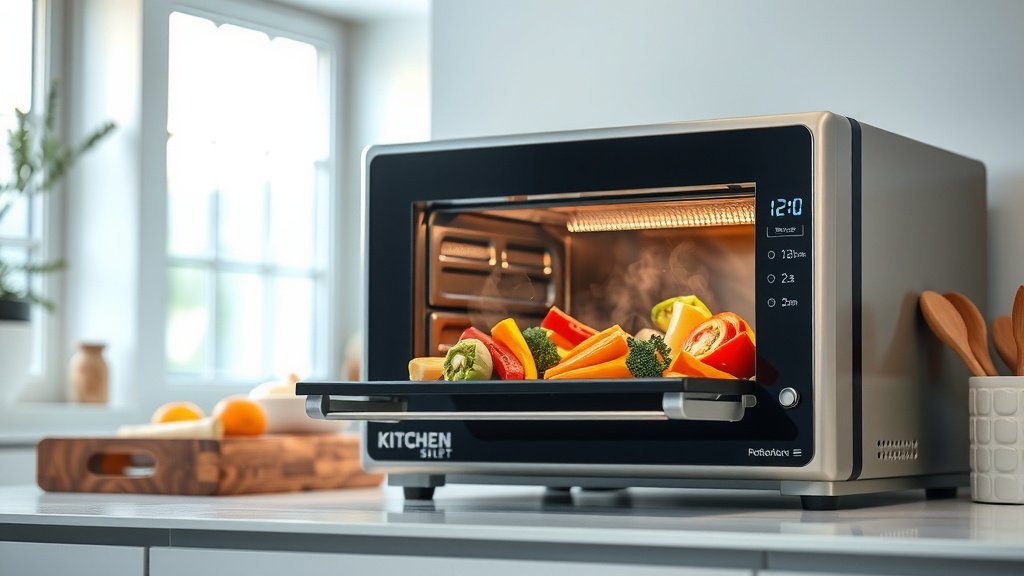
Most vegetables cook in a steam oven within 5 to 20 minutes, varying by type, size, and desired tenderness. For optimal results, denser vegetables like potatoes will need longer than delicate greens like spinach.
Thinking about steaming vegetables? Here’s a quick overview of what you’ll learn in this guide:
- Expect cooking times from 5 to 20 minutes, depending on the vegetable.
- Cutting your vegetables uniformly helps them cook evenly and faster.
- Don’t overcrowd the oven; proper steam circulation is key for good results.
- Steam ovens preserve nutrients, color, and flavor beautifully.
- Achieve your ideal texture, from crisp-tender to wonderfully soft.
How Long To Cook Vegetables In A Steam Oven?
Cooking vegetables in a steam oven typically takes between 5 and 20 minutes. The exact time depends on the vegetable’s type, how it’s cut, and your desired level of tenderness.
You’re aiming for that perfect balance, right? Maybe you love your broccoli crisp-tender, or perhaps you prefer your carrots a bit softer. Your steam oven makes it easy to hit that sweet spot every time.
Why Steam Your Veggies Anyway?
Steaming isn’t just a cooking method; it’s a way to truly celebrate your vegetables. Have you noticed how steamed veggies retain their vibrant colors?
It’s like magic! Research shows that steaming helps vegetables keep more of their precious nutrients compared to boiling (NIH). Plus, the flavors stay pure and bright, which is a big win in our book.
It’s gentle, fast, and brings out the natural goodness in every bite. Your taste buds will thank you!
Getting Started: Your Steam Oven Setup
Before you toss in your veggies, a little preparation helps. Always ensure your steam oven has enough water in its reservoir. It needs this water to create the steam, of course!
Many experts say preheating your steam oven is a good habit. Just like a regular oven, preheating ensures a consistent cooking environment from the start. This helps keep your cooking times accurate.
Set your temperature to the suggested range, usually around 212°F (100°C), for most vegetable steaming. Then, let the steam do its work!
General Guidelines for Popular Veggies
Think about the density of your vegetables. Denser items like root vegetables will naturally need more time than lighter, leafy greens. This common sense approach helps you estimate.
For example, a thick potato will always take longer than a delicate handful of spinach. It’s like comparing a big, sturdy log to a small twig – different burning times!
Always remember, these are guidelines. Your specific oven and the freshness of your produce might mean slight adjustments.
| Vegetable | Preparation | Approximate Steam Time | Tenderness Tip |
|---|---|---|---|
| Broccoli florets | Cut into 1-inch pieces | 5-8 minutes | Tender-crisp |
| Carrots | Sliced 1/4-inch thick | 8-12 minutes | Slightly firm to tender |
| Asparagus spears | Trimmed ends | 4-7 minutes | Bright green and crisp |
| Green beans | Trimmed ends | 6-9 minutes | Vibrant and snappy |
| Potatoes (diced) | 1-inch cubes | 15-20 minutes | Fork-tender |
| Spinach | Whole leaves | 2-4 minutes | Just wilted |
| Cauliflower florets | Cut into 1-inch pieces | 7-10 minutes | Soft but not mushy |
The “Doneness” Factor: How You Like It
Your personal preference is the real boss here. Do you like your vegetables with a little bite, or do you prefer them softer, almost melting in your mouth?
We found that cooking to a “tender-crisp” stage usually keeps the best texture and flavor for many vegetables. This means they are cooked through but still have a slight resistance when you bite.
If you like them softer, just add another minute or two. Don’t be afraid to experiment to find your perfect doneness!
Small Chunks vs. Whole: Size Matters
The size of your vegetable pieces makes a huge difference in cooking time. Think of a big whole potato versus small diced cubes.
Smaller, more uniform pieces will cook much faster and more evenly. If you have different sized pieces, the smaller ones might overcook while the larger ones are still firm. Try to keep your cuts consistent.
This simple trick ensures all your vegetables are perfectly done at the same time. It’s about being smart with your prep!
Batch Cooking: Don’t Overcrowd Your Oven
When you’re eager to steam a lot of vegetables, it’s tempting to pile them high. Resist that urge! Overcrowding your steam oven can actually extend cooking times and lead to uneven results.
Steam needs space to circulate freely around each piece of food. If your oven racks are too packed, some parts might cook faster than others. Give your veggies a little breathing room.
If you have a large batch, consider cooking in two smaller rounds rather than one giant, crowded one. Patience often leads to better outcomes.
Quick Tips for Perfect Steam Oven Veggies
Here’s a quick checklist to help you get great results every time:
- Cut Evenly: Ensure all vegetable pieces are roughly the same size.
- Don’t Overload: Give space for steam to move freely around your food.
- Preheat: Always preheat your steam oven for consistent cooking.
- Fresh Water: Use fresh, filtered water in your oven’s reservoir.
- Taste Test: Always test a piece for doneness before removing the batch.
- Season Later: Add salt, pepper, and other seasonings after steaming.
Troubleshooting Common Steam Oven Questions
Sometimes things don’t go exactly as planned, and that’s okay. We’ve all been there!
Ever wonder why your vegetables came out soggy? Most likely, you either cooked them for too long, or perhaps the oven was overcrowded. Overcooking breaks down cell walls too much, making them mushy.
Can you steam different vegetables together? Yes, absolutely! Just group vegetables that have similar cooking times. For example, broccoli and cauliflower work well together, but perhaps not spinach and potatoes.
Adjusting for Altitude or Oven Variations
Did you know that altitude can slightly affect cooking times? At very high altitudes, water boils at a lower temperature. This means things might take a little longer to cook through.
Also, every steam oven is a bit different. Your specific model might run slightly hotter or cooler than another. After a few uses, you’ll get a feel for your oven’s quirks.
Don’t be afraid to make small adjustments based on your experiences. Cooking is a journey of learning and adapting!
Beyond Basic Steaming: Seasoning and Flavor
Once your vegetables are beautifully steamed, that’s when the real fun begins! Steaming preserves their natural flavors, offering a blank canvas for your creativity.
A drizzle of good olive oil, a squeeze of fresh lemon juice, a sprinkle of sea salt and freshly cracked pepper – these simple additions can transform your veggies. Fresh herbs like parsley or dill are also wonderful.
Consider a dash of balsamic glaze or a sprinkle of toasted sesame seeds for an extra pop. The possibilities are endless!
The Role of Freshness and Quality
The saying “you can’t make a silk purse out of a sow’s ear” applies to vegetables too. The fresher and higher quality your vegetables are, the better they will taste and texture after steaming.
Old, limp vegetables might cook unevenly and lack that vibrant color and crisp texture we all love. We found that choosing produce at its peak ripeness truly makes a difference.
Think about visiting your local farmers’ market. The shorter journey from farm to plate often means fresher, more flavorful produce, ideal for your steam oven!
Conclusion
Steaming vegetables in your steam oven is a simple, healthy, and incredibly effective way to bring out their best. By understanding cooking times, prep methods, and the subtle art of “doneness,” you’re well on your way to culinary success.
Remember, it’s about paying attention to your ingredients and learning what works best for your specific oven. Enjoy those vibrant, nutrient-packed vegetables you’re creating!
How do I know when my steamed vegetables are done?
The best way to check for doneness is with a fork. It should pierce through the vegetable with slight resistance if you prefer it crisp-tender, or easily if you like it softer. Visual cues like vibrant color also help, especially for green vegetables.
Can I use frozen vegetables in a steam oven?
Yes, you can absolutely steam frozen vegetables in your steam oven! They generally need a few extra minutes of cooking time compared to fresh vegetables, often around 2-4 minutes longer. There’s no need to thaw them first.
What temperature is best for steaming vegetables?
For most vegetables, a steam oven temperature of around 212°F (100°C) is ideal. This temperature creates sufficient steam to cook the vegetables thoroughly while preserving their texture and nutrients.
Do I need to add salt to the water when steaming?
No, you do not need to add salt to the water in your steam oven’s reservoir. The salt would not transfer flavor to the vegetables through the steam. Instead, season your vegetables after they are cooked to your liking.
How does a steam oven differ from steaming on a stovetop?
A steam oven provides a consistent, controlled steaming environment, often resulting in more even cooking and better nutrient retention. Stovetop steaming can be effective but might have more temperature fluctuations and can sometimes lead to soggy results if not monitored closely.