
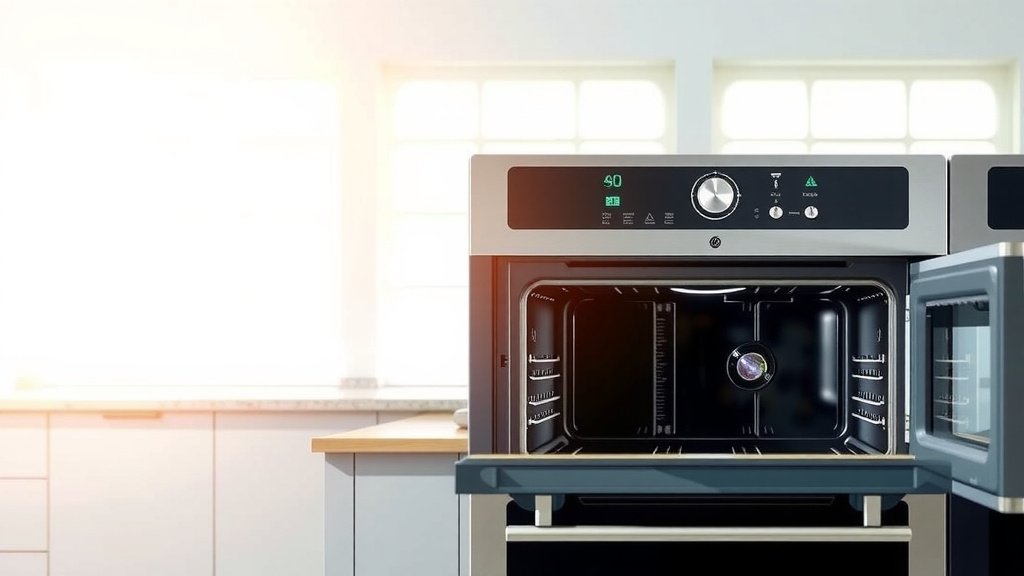
To adjust gas oven temperature, you typically use a trusted oven thermometer to check for inaccuracies, then locate and turn a hidden calibration screw on your oven’s thermostat or behind the control panel. Make small, careful adjustments and re-test.
This process helps synchronize your oven’s internal temperature with the dial setting, ensuring your food bakes or roasts at the correct heat.
- You’ll need an accurate oven thermometer and a small screwdriver.
- Always prioritize safety by turning off the oven and allowing it to cool.
- Most gas ovens have a calibration screw on the thermostat or behind the control panel.
- Make tiny adjustments, re-test the temperature, and fine-tune as needed.
- If adjustments don’t work, consider professional help or a sensor replacement.
How To Adjust Gas Oven Temperature?
You can adjust your gas oven’s temperature by calibrating its thermostat, usually with an oven thermometer and a small screwdriver. This helps align the actual internal temperature with the setting you select.
The goal is to ensure your oven heats accurately, providing consistent baking and cooking results every time.
Why Adjust Your Gas Oven’s Temperature?
Have you ever baked cookies that burn on the outside but stay raw inside? Or maybe your roasts never quite reach that perfect tenderness? An inaccurate oven is often the culprit.
Adjusting the temperature brings your oven back into sync, ensuring your recipes turn out just as they should. It saves food and frustration.
Common Signs of an Inaccurate Oven
Spotting an inaccurate oven can save your next meal. Look for signs like uneven baking, food cooking too fast or too slow, or consistent discrepancies with recipe times. Many home chefs notice their dishes are not matching recipe expectations.
A reliable oven thermometer is your best friend here. It provides an independent reading, showing the true temperature inside your oven.
Before You Start: Safety First
Working with gas appliances calls for caution. Your safety is paramount. We found that most appliance guidelines point to certain safety steps (Appliance Safety Council).
- Turn off your oven and ensure it’s completely cool.
- Unplug the oven from its power source or turn off the circuit breaker.
- If you smell gas, stop immediately, ventilate your home, and call your gas provider.
- Always read your oven’s specific owner’s manual for guidance.
Gathering Your Essential Tools
You won’t need a whole toolbox for this task, just a few key items. Think of it like preparing for a simple home project.
You’ll certainly want a high-quality, independent oven thermometer that you trust. A small flathead or Philips screwdriver is also often necessary.
The Gas Oven Calibration Process Explained
Calibrating your gas oven might sound intimidating, but it’s a straightforward process once you understand how it works. We’re essentially teaching your oven to be more precise.
It involves a bit of patience and careful observation. You’ll become your own oven expert!
Understanding Your Oven’s Thermostat
Your oven’s thermostat is the brain behind its heating. It senses the temperature and signals the gas valve to open or close, regulating the flame. When it’s off-kilter, your oven temperature drifts.
Many experts say the thermostat’s calibration can naturally drift over time due to wear and tear or manufacturing inconsistencies.
The Bypass Screw vs. Calibration Screw
Most modern gas ovens use a calibration screw on the thermostat knob itself for adjustments. Older models might have a bypass screw, which controls the minimum flame size, not the overall temperature range. Research often connects the calibration screw directly to temperature offset adjustments (Appliance Repair Association).
Always consult your oven’s manual to find out which adjustment method your specific model uses. Guessing can lead to bigger problems.
Step-by-Step Guide to Manual Adjustment
Ready to bring your oven back to perfect harmony? Follow these steps carefully. Remember, small adjustments are key.
1. Prepare for Testing
Place your reliable oven thermometer in the center of your cold oven. Avoid placing it near the walls or door, which can give inaccurate readings. Close the door gently.
2. Test Your Current Oven Accuracy
Set your oven to a common temperature, like 350°F (175°C), and let it preheat for at least 20-30 minutes. This ensures the oven has reached a stable temperature. Note the reading on your oven thermometer.
3. Locate the Adjustment Mechanism
Turn off and cool your oven. If your oven has a calibration screw on the thermostat knob, gently pull the knob off. You’ll often see a tiny screw inside or on the back. For models without this, you might need to carefully remove the back panel of your oven’s control console to find the adjustment point.
4. Make Small, Careful Adjustments
If your oven thermometer read low, turn the calibration screw slightly clockwise to increase the temperature. If it read high, turn it counter-clockwise to decrease it. Many experts recommend turning it no more than a quarter turn at a time (Home Appliance Institute).
5. Re-Test and Verify
Reassemble any parts you removed, then repeat step 2. Check the thermometer again. Does it match your setting now? If not, cool the oven, make another tiny adjustment, and re-test. It’s like tuning a guitar—small tweaks get the best result.
Decoding Oven Temperature Variances
Even a perfectly calibrated oven can have slight temperature swings. This is normal. What matters is the average temperature it maintains.
Understanding these variations helps manage your expectations for perfect baking results. Consistent fluctuations might point to a sensor issue.
| Oven Dial Setting | Typical Acceptable Range (Internal Thermometer) |
|---|---|
| 300°F (150°C) | 290°F – 310°F (143°C – 154°C) |
| 350°F (175°C) | 340°F – 360°F (171°C – 182°C) |
| 400°F (200°C) | 390°F – 410°F (199°C – 210°C) |
What If Adjustment Doesn’t Help?
Sometimes, despite your best efforts, the oven remains inconsistent. This could mean a component has failed. Don’t worry, there are still options.
A faulty temperature sensor or a worn-out thermostat might be the true problem, beyond simple calibration.
When to Call a Technician
If you’ve tried calibrating and your oven still misbehaves, it might be time for a professional. Gas ovens involve gas lines and electrical components, which can be tricky. Many appliance repair companies offer diagnostic services.
A qualified professional technician can diagnose and replace faulty parts safely and efficiently. Your peace of mind is worth it.
Maintaining Your Oven for Optimal Performance
A little care goes a long way in keeping your oven working well. Regular maintenance can prevent future temperature issues.
Think of it as routine car maintenance, just for your kitchen appliance. It prolongs its life and accuracy.
- Keep your oven clean from spills and debris.
- Avoid harsh cleaners on the temperature sensor.
- Periodically check door seals for damage; good seals mean less heat loss.
- Ensure adequate ventilation around your oven.
- Use an oven thermometer occasionally to monitor accuracy.
- Don’t overload your oven; proper air circulation aids even heating.
Conclusion
Adjusting your gas oven’s temperature can feel like a big job, but with the right tools and a careful approach, it’s very manageable. You can take control of your oven’s accuracy, leading to happier cooking and baking experiences.
Remember to always put safety first and don’t hesitate to seek professional help if things feel beyond your comfort zone. Happy cooking!
Frequently Asked Questions About Gas Ovens
How do I know if my gas oven is calibrated correctly?
The best way to check is by placing a reliable, independent oven thermometer inside your oven and comparing its reading to your oven’s dial setting after the oven has preheated and stabilized for about 20-30 minutes. Significant differences indicate a need for calibration.
Can a gas oven’s temperature drift over time?
Yes, it’s quite common for a gas oven’s temperature to drift over time. Factors like regular use, component wear, and even minor power fluctuations can cause the thermostat to become less accurate. This is why periodic checks with an oven thermometer are a good idea.
Where is the calibration screw usually located on a gas oven?
On many modern gas ovens, the calibration screw is located behind the temperature control knob; you often need to pull the knob straight off to reveal it. For some older models, it might be behind the main control panel, requiring careful removal of screws to access.
Is it normal for my gas oven’s temperature to fluctuate a little?
Yes, some temperature fluctuation is normal for all ovens, including gas models. Ovens cycle on and off to maintain an average temperature, so the reading on an internal thermometer might swing by 10-20 degrees Fahrenheit above or below the set temperature. The average should be correct.
When should I call a professional to adjust my gas oven?
You should call a professional if you are uncomfortable attempting the adjustment yourself, if your oven’s manual advises against user calibration, or if your attempts to adjust the temperature don’t resolve the issue. Persistent problems might indicate a faulty thermostat or temperature sensor that needs replacement by an expert.
