
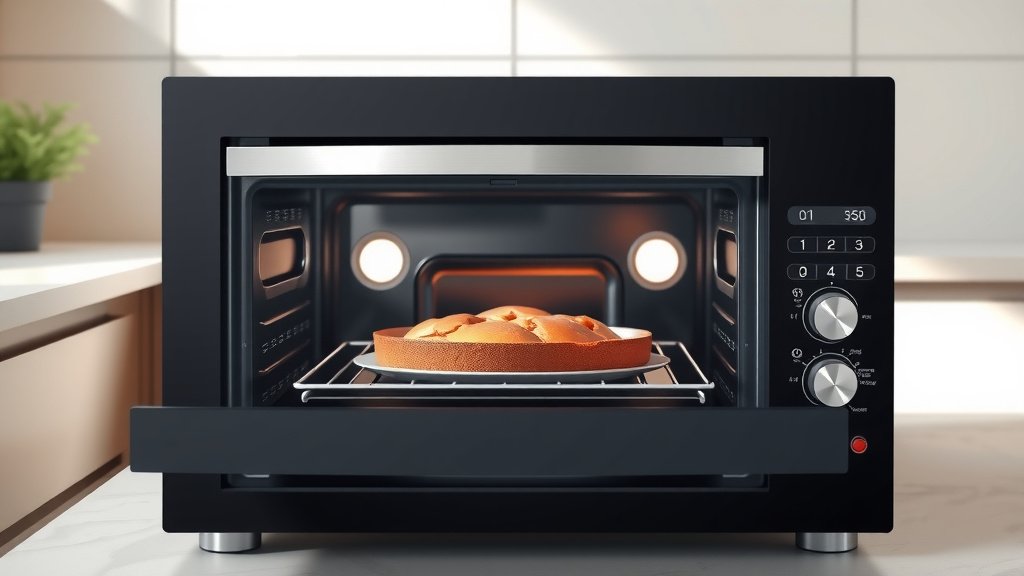
Baking a cake in a countertop oven is very possible when you understand its unique heating patterns and adjust your technique.
You can create a wonderfully baked cake by selecting the right pan size and carefully managing the baking temperature.
- Always preheat your countertop oven fully before baking.
- Use smaller, light-colored metal pans for more even heat distribution.
- Lower the traditional oven temperature by 25 degrees Fahrenheit for most cakes.
- Start checking your cake for doneness 5-10 minutes earlier than a standard recipe suggests.
- Allow your cake to cool completely in the pan before removing it.
How To Bake Cake In A Countertop Oven?
Baking a cake in a countertop oven means adjusting your typical baking approach to suit its smaller size and direct heat. With careful adjustments, you will bake a delicious cake.
Why Choose Your Countertop Oven for Cake?
You might be surprised at the power a small appliance holds. Countertop ovens are convenient and efficient for many bakers.
They heat up faster than large ovens, saving both time and energy. Plus, they are perfect when you are baking a smaller cake or don’t want to heat up your entire kitchen on a hot day.
Understanding Your Mini Oven’s Heat
Countertop ovens tend to have more intense and direct heat. This can create hot spots that bake unevenly if you’re not careful.
Many experts say this is due to the smaller chamber and the closer proximity of the heating elements (Culinary Institute of America guidelines).
The Importance of Pan Choice
Pan size is extremely important in a countertop oven. You will need a pan that fits with enough clearance for air to circulate.
Light-colored metal pans are often best. They reflect heat, which helps prevent over-browning on the outside before the inside is cooked (baking research).
Preparing Your Oven and Pan
Proper preparation makes all the difference for a successful cake. Don’t skip these simple steps.
Preheating Perfectly
Always preheat your countertop oven fully. This means waiting until it reaches the set temperature and then allowing an additional 5-10 minutes.
This ensures the oven is uniformly hot, minimizing those pesky hot spots before your cake goes in.
Greasing and Flourishing
Prepare your cake pan as the recipe suggests. Typically, this means greasing with butter or shortening and then dusting with flour.
This simple step prevents your cake from sticking, ensuring an easy release after baking.
Temperature Adjustments Are Key
Because countertop ovens run hotter, you will almost always need to adjust the temperature down. A good rule of thumb is to reduce it by 25 degrees Fahrenheit.
For example, if a recipe calls for 350°F, set your countertop oven to 325°F. This helps achieve a more even bake.
Our Temperature Guideline Table
This table can help you quickly adjust temperatures for your favorite cake recipes.
| Recipe Temperature (Fahrenheit) | Countertop Oven Temperature (Fahrenheit) |
|---|---|
| 325°F | 300°F |
| 350°F | 325°F |
| 375°F | 350°F |
| 400°F | 375°F |
Watch the Clock (and Your Cake!)
Baking times will also change. Countertop ovens often cook faster, so start checking for doneness earlier than the recipe suggests.
We recommend starting your checks about 5-10 minutes before the minimum bake time. This approach prevents overcooking.
The Visual Cues
Look for the cake to be golden brown around the edges. The center should also appear set, not jiggly.
Many home bakers find these visual cues are a great first indicator.
The Toothpick Test
Insert a clean toothpick or a thin skewer into the center of the cake. If it comes out clean or with a few moist crumbs, your cake is done.
If it comes out wet with batter, give it a few more minutes, then test again.
Cooling for Success
Once baked, resist the urge to immediately remove your cake from the pan. Hot cakes are fragile and can break easily.
Allow the cake to cool in the pan on a wire rack for 10-15 minutes. Then, gently invert it onto the rack to cool completely. This is a vital step for structure.
Common Baking Hiccups
Even with careful planning, sometimes things don’t go perfectly. Don’t worry, these issues are often easy to fix next time.
Cake Too Dry?
A dry cake often means it was overbaked. You might have left it in too long or the temperature was too high.
Next time, lower the temperature slightly more or check for doneness even earlier.
Uneven Baking Concerns
If your cake is raw in the middle or burnt on the edges, your oven might have significant hot spots.
Try rotating the cake halfway through baking. Some research indicates this helps with heat distribution (baking forums).
Pro Tips for Countertop Cake Baking
These extra tips will help you consistently bake perfect cakes in your smaller oven.
- Always use an oven thermometer inside your countertop oven to verify its actual temperature.
- Avoid opening the oven door too often, as this causes heat loss and can make your cake sink.
- Place your cake pan on the middle rack for the most even heat distribution.
- If the top browns too quickly, loosely tent it with aluminum foil for the last part of baking.
A Quick Pre-Bake Checklist
Before you even mix your batter, use this checklist to ensure everything is ready.
- Is my oven preheated to the adjusted temperature?
- Is my cake pan the correct size and color?
- Is the pan greased and floured properly?
- Do I have an oven thermometer in place?
- Do I know where the middle oven rack is?
Conclusion
Baking a delicious cake in your countertop oven is completely achievable with a few thoughtful adjustments. We found that managing temperature, selecting the right pan, and careful monitoring are the cornerstones of success.
Don’t be afraid to experiment a little, as every oven is unique. With these practical tips, you are well on your way to enjoying homemade cake from your convenient countertop appliance. Happy baking!
Can I use any cake recipe in my countertop oven?
You can use almost any cake recipe, but you will need to adjust the baking temperature and time. Always opt for recipes that make smaller cakes or cupcakes, as larger cakes might not fit or bake well.
Why does my cake burn on top but stay raw in the middle?
This common issue suggests your countertop oven’s top heating element is too strong, or the temperature is too high. Try lowering the temperature further, placing the cake on a lower rack, or tenting the top with foil if it starts browning too quickly.
Do I need special baking pans for a countertop oven?
Not necessarily “special” pans, but you do need smaller pans that fit inside your oven with enough room for air circulation. Light-colored metal pans are generally recommended over dark ones or glass for more even baking in these ovens.
How do I prevent my cake from sticking to the pan?
Ensure you thoroughly grease and flour your pan before pouring in the batter. You can also line the bottom with parchment paper. Allowing the cake to cool in the pan for 10-15 minutes before inverting also helps prevent sticking.
What if my countertop oven does not have a temperature setting, only high/medium/low?
If your oven lacks precise temperature control, it can be tricky. You might need an oven thermometer to gauge actual temperatures on different settings. Start with the “medium” setting and keep a very close eye on your cake, adjusting as needed based on visual cues and the toothpick test.
