
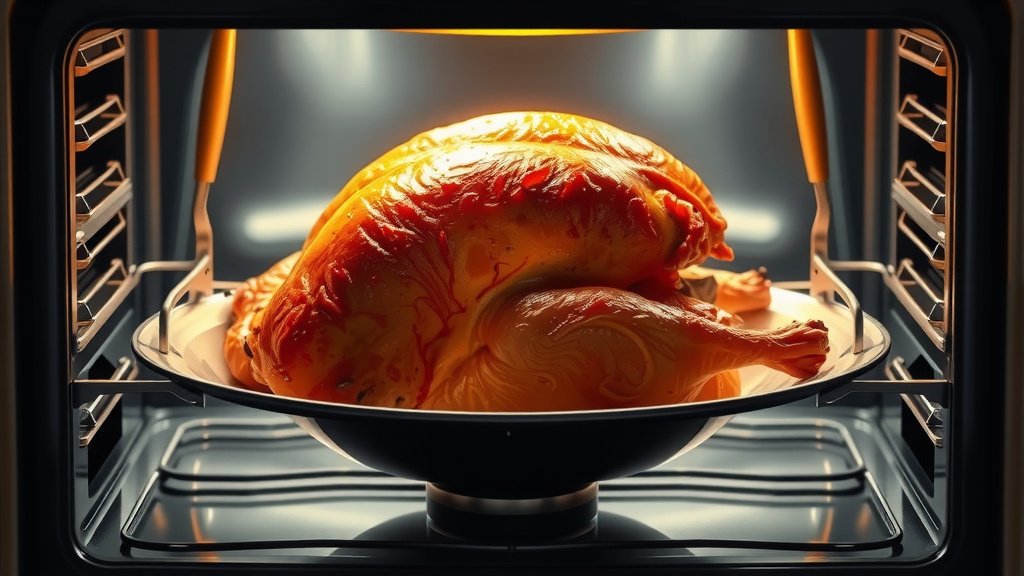
To cook turkey breast in a rotisserie oven, thread it onto the spit, secure it, and roast at 325-350°F (160-175°C) until an internal temperature of 165°F (74°C) is reached.
Expect about 15-20 minutes per pound for a moist, evenly cooked result with a beautiful, crispy skin.
- Cooking turkey breast in a rotisserie oven gives you incredibly moist meat and crispy skin.
- Start by choosing a turkey breast that fits your rotisserie spit and preparing it with a flavorful rub.
- Ensure the breast is trussed tightly to cook evenly and prevent flapping.
- Set your oven to a moderate temperature and let the rotisserie do the work, checking for doneness with a meat thermometer.
- Always rest the turkey breast after cooking to lock in all those delicious juices.
How To Cook Turkey Breast In Rotisserie Oven?
Cooking turkey breast in a rotisserie oven means enjoying a juicy, flavorful bird with crisp skin. You just need to prepare the breast, set your oven, and let the rotating motion work its magic.
Why Rotisserie for Turkey Breast?
Have you ever wondered what makes rotisserie chicken so good? The same magic applies to turkey breast! The constant turning cooks the meat evenly. It allows the natural juices to redistribute continually. This keeps your turkey breast incredibly moist and tender inside (Many culinary experts agree).
Plus, that direct, circulating heat gives the skin a wonderful, even crispness. You won’t find dry spots or soggy patches. It is a fantastic way to cook poultry.
Choosing the Perfect Turkey Breast
Picking the right turkey breast is your first step to a delicious meal. Think about how many people you are feeding. A typical turkey breast can range from 3 to 7 pounds. Make sure it will fit comfortably on your rotisserie spit. You don’t want it scraping the sides of your oven.
Fresh vs. Frozen
Should you go fresh or frozen? Many experts suggest fresh turkey breasts often have better texture. If you pick a frozen one, remember to thaw it completely. Thawing takes time, usually 24 hours per 5 pounds in the refrigerator. We found that a well-thawed breast cooks more evenly.
Bone-In or Boneless?
This is a common question. A bone-in turkey breast offers more flavor. The bone helps conduct heat and keeps the meat from drying out. Boneless breasts cook faster and are easier to carve. Both options work well on a rotisserie, so choose what you prefer.
Essential Tools You’ll Need
Before you start, gather your tools. You will need your rotisserie oven and its spit. A good meat thermometer is a must for checking doneness. Kitchen twine is also handy for trussing. Some folks also like a basting brush. It helps apply marinades or butter.
Preparing Your Turkey Breast for the Rotisserie
Proper preparation is key to rotisserie success. First, pat your turkey breast dry with paper towels. This helps the skin get super crispy. Trim any excess skin or fat that might flap around while rotating. This simple step prevents uneven cooking.
Brining or Dry Rub?
This is where you infuse big flavor into your turkey. You have two main choices: brining or a dry rub. Both methods add moisture and taste. Which one is right for you? It often comes down to personal preference and time.
Many chefs say brining makes the turkey extra juicy. This involves soaking the breast in a salty water solution. Dry rubs, on the other hand, create a crispy, seasoned crust. Research often connects brining with more tender results (Cook’s Illustrated).
| Method | Benefit | Consideration |
|---|---|---|
| Brining | Adds moisture, very juicy meat | Requires refrigerator space, longer prep time (hours) |
| Dry Rub | Creates crispy, flavorful skin | Faster prep, less messy, flavor stays on surface |
Tying it Up
Trussing is vital for rotisserie cooking. You want the turkey breast to be compact. Use kitchen twine to tie the breast securely. This prevents parts from dangling. Loose bits can burn or cook unevenly. A tightly trussed breast will spin smoothly and cook perfectly. Think of it like a neatly wrapped package.
Setting Up Your Rotisserie Oven
Before you hit start, check your oven. Make sure the rotisserie spit is clean. Position a drip pan directly beneath the turkey. This catches all the delicious drippings. You can use these for gravy or to baste your turkey later. It is a simple step that saves a lot of mess.
Temperature Settings
What temperature should you use? Many experts suggest preheating your rotisserie oven to 325-350°F (160-175°C). This moderate heat allows the turkey to cook slowly. It helps avoid overcooking the outside before the inside is done. A steady temperature is your friend here.
Catching the Drips
Don’t forget the drip pan! As your turkey breast rotates, fats and juices will fall. The pan collects these flavorful drippings. You can use them to make a fantastic gravy. Some cooks also use them for basting. It adds back moisture and flavor. Always keep an eye on the pan; empty it if it gets too full.
The Rotisserie Cooking Process
Once your turkey breast is on the spit and spinning, the fun begins. Watch it slowly turn, smelling amazing. Resist the urge to open the oven too often. Each time you open the door, heat escapes. This lengthens your cooking time. Let the rotisserie do its job quietly.
How Long Will It Take?
Cooking time varies based on the size of your turkey breast. A good rule of thumb is 15-20 minutes per pound. So, a 5-pound breast might take 1 hour 15 minutes to 1 hour 40 minutes. Always cook to temperature, not just time. Every oven is a little different.
Basting Tips
To baste or not to baste? Some people swear by it. Others say the rotisserie motion keeps the turkey moist enough. If you choose to baste, use melted butter or the pan drippings. Apply it every 30 minutes or so. This helps achieve a lovely, golden skin. Just remember not to open the oven too often.
Checking for Doneness
This is the most critical step for food safety and deliciousness. You want your turkey breast cooked perfectly. Undercooked turkey is unsafe, and overcooked turkey is dry. No one wants a dry bird, right?
Temperature is Key
Always use a meat thermometer. Insert it into the thickest part of the turkey breast. Make sure it doesn’t touch any bones. The USDA recommends a safe internal temperature of 165°F (74°C). Take the temperature in a couple of spots to be sure.
Resting Your Turkey Breast
Once your turkey breast reaches 165°F, take it off the rotisserie. Do not slice it immediately! This is a common mistake. You need to let it rest. Place it on a cutting board and tent it loosely with foil. We found that a 15-20 minute rest allows the juices to redistribute. This results in a much juicier bird. It’s like letting a tired runner catch their breath.
Slicing and Serving
After resting, carve your turkey breast against the grain. This makes the slices more tender. Serve it warm with your favorite sides. Think gravy made from those pan drippings. Enjoy the fruits of your rotisserie labor!
Troubleshooting Common Rotisserie Issues
Sometimes, things don’t go exactly as planned. But don’t worry, many common rotisserie issues have simple fixes. Here is a quick checklist:
- Is your turkey breast cooking unevenly? Check your trussing; it might be loose.
- Is the skin not getting crispy? Increase the temperature slightly towards the end.
- Is your turkey drying out? You might be overcooking; always rely on the meat thermometer.
- Is there smoke coming from the oven? Your drip pan might be overflowing or placed incorrectly.
- Is the spit not turning smoothly? Ensure the turkey is balanced and not too heavy.
Conclusion
Cooking a turkey breast in a rotisserie oven is a fantastic way to prepare a flavorful, juicy, and beautifully browned meal. From choosing the right breast to careful preparation, proper cooking, and that essential resting period, each step plays a role. With a little care and a reliable meat thermometer, you will achieve delicious results every time. So go ahead, give it a spin, and enjoy a memorable meal!
How do I prevent my rotisserie turkey breast from drying out?
To prevent drying, brine the turkey breast before cooking or use a flavorful dry rub with some fat. Most importantly, always cook to a final internal temperature of 165°F (74°C) using a meat thermometer, and allow it to rest for at least 15 minutes after cooking. Overcooking is the main cause of dryness.
Can I rotisserie a frozen turkey breast?
You should never rotisserie a turkey breast that is still frozen or partially frozen. It must be completely thawed before cooking to ensure even cooking and food safety. Thaw it in the refrigerator for about 24 hours per 5 pounds of weight.
What kind of rub or seasoning works best for rotisserie turkey breast?
A classic poultry seasoning blend with herbs like sage, thyme, and rosemary works wonderfully. You can also use garlic powder, onion powder, paprika, salt, and black pepper. Many people like to add a bit of brown sugar for extra browning and a hint of sweetness. Experiment to find your favorite!
How do I get crispy skin on my rotisserie turkey breast?
For crispy skin, pat the turkey breast very dry before applying any rub or seasoning. Cook at a consistent temperature, ideally around 325-350°F (160-175°C). You can also brush the skin with melted butter or oil during the last 30 minutes of cooking. Some chefs will turn up the heat slightly at the very end.
How can I make gravy from the drippings?
To make gravy, pour the drippings from your rotisserie drip pan into a saucepan. Skim off excess fat. Whisk in a tablespoon or two of flour or cornstarch to create a roux. Gradually add chicken broth or water, whisking constantly until it thickens. Season with salt and pepper to taste for a rich, flavorful gravy.
