
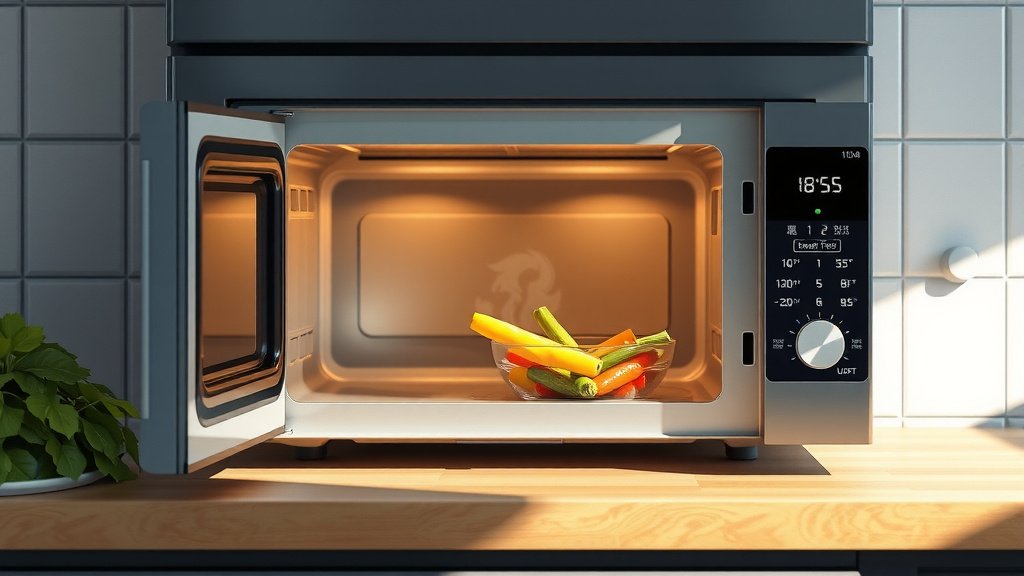
To steam vegetables in a microwave oven, place washed and chopped veggies in a microwave-safe dish with a tablespoon or two of water, cover tightly, and cook on high for 2-5 minutes depending on the vegetable’s density.
This method locks in nutrients and flavor efficiently, making it a quick and healthy cooking option for your busy schedule.
- Steaming vegetables in your microwave is super fast and keeps nutrients intact.
- You’ll need a microwave-safe dish with a lid and just a little bit of water.
- Chop your veggies evenly for consistent cooking results.
- Cooking times vary, so start with less time and check for doneness.
- Always allow a short resting period after cooking for best texture and safety.
How To Steam Vegetables In A Microwave Oven?
Steaming vegetables in a microwave oven is a remarkably simple and efficient process, requiring only a microwave-safe dish, a small amount of water, and a tight-fitting lid to create perfect, tender-crisp results.
Why Microwave Steaming is a Quick Win
Are you short on time but still want healthy food? Microwave steaming might be your best friend. It’s a lightning-fast way to get nutritious meals on the table.
Many busy individuals find this method a true time-saver. You can go from raw veggies to ready-to-eat in just minutes.
Convenience and Speed You Can Trust
Think about it: no big pots, no waiting for water to boil. You simply toss your veggies in, add water, and zap.
This quick process means less cleanup and more time for other things. It’s perfect for weeknights or quick meal prep.
Nutrient Retention That Matters
One of the best parts? Microwave steaming actually helps preserve nutrients. We found that cooking methods using minimal water often retain more vitamins.
Research often connects shorter cooking times and less water with higher vitamin content (Journal of Food Science).
Essential Tools for Your Steaming Success
You don’t need fancy gadgets for this cooking method. A few basic kitchen items are all you need.
Having the right tools ready makes the process smooth and enjoyable. Let’s gather what you’ll use.
Microwave-Safe Dish is a Must
Choose a glass bowl or a ceramic plate that’s safe for your microwave. Plastic containers also work, but make sure they are labeled microwave-safe.
Using the correct dish prevents melting or chemicals leaching into your food. Safety first, right?
A Lid or Plate to Trap the Steam
A tight-fitting lid is essential. If you don’t have one, another microwave-safe plate turned upside down works perfectly.
The lid traps the steam, allowing the vegetables to cook evenly. It’s like a mini sauna for your veggies.
Just a Splash of Water
You only need a small amount of water, usually 1-3 tablespoons. This creates the steam that cooks your food.
Too much water can boil your vegetables instead of steaming them. We want steam, not a soup!
Preparing Your Vegetables for Optimal Results
Getting your vegetables ready is a simple but important step. A little prep ensures everything cooks evenly.
Think of it as setting the stage for perfectly steamed goodness. Let’s get chopping!
Washing and Chopping Smartly
Always wash your vegetables thoroughly before cooking. Then, chop them into similar-sized pieces.
Smaller, uniform pieces cook faster and more consistently. Larger chunks might mean some pieces are raw while others are overcooked.
Consistency is Your Best Friend
If you’re steaming mixed vegetables, try to group those with similar cooking times. Harder veggies like carrots take longer than soft ones like broccoli florets.
Or, cut denser vegetables into smaller pieces. This balances out the cooking time for everyone.
Ideal Vegetable Choices for Microwaving
Almost any vegetable can be steamed in the microwave. From broccoli to green beans, it’s all fair game.
Some veggies, like leafy greens, cook incredibly fast. Root vegetables need a bit more time and water.
| Vegetable | Prep Suggestion | Approx. Microwave Time (High) |
|---|---|---|
| Broccoli Florets | 1-inch pieces | 2-3 minutes |
| Green Beans | Trimmed whole | 3-4 minutes |
| Carrot Slices | 1/4-inch thick | 4-5 minutes |
| Asparagus Spears | Trimmed, 1-inch pieces | 2-3 minutes |
Your Step-by-Step Guide to Microwave Steaming
Ready to steam? Follow these simple steps for perfectly cooked vegetables every time. It’s easier than you think!
This process is straightforward and guarantees a healthy side dish quickly. Let’s get cooking.
The Water Trick: Just Enough
Place your prepped vegetables in the microwave-safe dish. Add 1-3 tablespoons of water, depending on the quantity of veggies.
For example, a cup of chopped broccoli might need just one tablespoon. More veggies might need a bit more water.
Covering for Steaming Success
Place the lid or an inverted plate tightly over the dish. A small vent is okay, but largely sealed is better to trap steam.
This creates an efficient steaming environment within your microwave. The steam does all the work!
Microwave Settings: High and Mighty
Cook on high power. Most microwaves are 800-1200 watts. Adjust timing based on your microwave’s strength.
Start with the lower end of the time range given for your vegetable. You can always add more time.
Checking for Doneness
After the initial cooking time, carefully remove the dish and lift the lid away from your face to avoid steam burns. Use a fork to test the vegetables for tenderness.
They should be tender-crisp, not mushy. If not done, stir them and microwave for another 30 seconds to a minute.
Resting Period: Patience Pays Off
Once cooked, let the vegetables sit, still covered, for 1-2 minutes. This carryover cooking helps them finish perfectly.
It also allows the steam to dissipate slightly before serving. This step really improves the texture.
Tips for Perfect Steamed Vegetables Every Time
Even though it’s simple, a few extra tips can elevate your microwave steaming game. Think of these as insider secrets.
These small adjustments can make a big difference in taste and texture. You’ll be a pro in no time.
Don’t Overcrowd Your Dish
Resist the urge to pack too many vegetables into one dish. Overcrowding can lead to uneven cooking.
If you have a large batch, steam them in two smaller portions. This ensures every piece gets its fair share of steam.
Adjust Water Levels by Vegetable Type
Leafy greens release a lot of their own water, so they need very little added water. Dense root vegetables need a bit more.
Start with less water and add more if needed. It’s better to add than to have soggy veggies.
Season After Steaming for Best Flavor
Salt and pepper, herbs, or a drizzle of olive oil are best added after steaming. This preserves their fresh taste.
Adding seasoning beforehand can sometimes draw out too much moisture. We want vibrant flavors!
Know Your Microwave’s Power
Every microwave is a little different. Get to know yours by experimenting with cooking times.
What works in one microwave might need slight adjustment in another. Practice makes perfect.
What About Steam Bags?
Pre-packaged steam bags are a convenient option. They are designed to cook veggies right in the bag.
Just follow the package directions. It’s another great way to get quick, healthy sides.
Common Mistakes to Sidestep
Nobody’s perfect, and mistakes happen. But knowing what to avoid can save you from less-than-ideal results.
Let’s learn from common pitfalls and ensure your veggies are always delicious.
Under-Steaming Can Be Fixed
If your vegetables are still too hard, they are under-steamed. No problem! Just pop them back in for another 30 seconds.
It’s always better to undercook and add time than to overcook. You can’t un-mush a veggie!
Over-Steaming Leads to Mush
Mushy vegetables are usually a sign of over-steaming. This happens when they cook too long or with too much water.
Remember, tender-crisp is the goal. Use shorter cooking times and check often.
Using the Wrong Dish
Metal bowls, or dishes with metallic trim, are a big no-no in the microwave. They can cause sparks and damage.
Always double-check that your container is genuinely microwave-safe. Look for the microwave-safe symbol.
Health Benefits of Steamed Vegetables You’ll Appreciate
Beyond convenience, steaming offers fantastic health advantages. It’s a gentle cooking method that respects your food.
Eating more steamed vegetables is a simple way to boost your overall health. Your body will thank you.
Nutrient Preservation: A Key Advantage
Many experts say that steaming helps retain more water-soluble vitamins like Vitamin C and B vitamins (Harvard Health).
Unlike boiling, where nutrients can leach into the water, steaming keeps them locked in the food.
Digestive Health Support
Steamed vegetables are generally easier to digest than raw ones. The cooking process softens tough fibers.
This can be especially helpful for people with sensitive digestive systems. They are gentle on your gut.
Creative Ways to Enjoy Your Steamed Veggies
Steamed vegetables are incredibly versatile. Don’t just eat them plain! There are so many ways to enjoy them.
Think beyond a simple side dish. Let’s explore some delicious ideas.
Quick Meals and Flavor Boosters
Add steamed veggies to pasta dishes, stir-fries, or even scrambled eggs. They instantly upgrade any meal.
Toss them with a little lemon juice, fresh herbs, or a sprinkle of Parmesan cheese for extra zing.
Quick Steaming Success Checklist
- Choose microwave-safe dish with lid.
- Wash and chop vegetables evenly.
- Add 1-3 tablespoons of water.
- Cover tightly to trap steam.
- Microwave on high, check for doneness.
- Allow a short resting period.
Conclusion
Steaming vegetables in a microwave oven is a truly simple, fast, and remarkably healthy cooking method. It’s an ideal choice for anyone looking to enjoy tender, nutritious vegetables without fuss or extensive cleanup. By following these straightforward steps, selecting the right tools, and understanding your microwave, you can consistently achieve perfect results. Embrace this efficient technique to bring more vibrant, wholesome foods into your daily meals with minimal effort. Your journey to quick, healthy eating just got a lot easier!
How do I know if my dish is microwave-safe?
Look for a microwave-safe symbol, often a microwave with wavy lines, on the bottom of the dish. If unsure, you can do a quick test: place the empty dish in the microwave with a cup of water next to it. Heat on high for one minute. If the dish remains cool and the water is hot, it’s generally safe. If the dish gets hot, it’s not microwave-safe.
Can I steam frozen vegetables in the microwave?
Yes, absolutely! Frozen vegetables are excellent for microwave steaming. You usually don’t need to add extra water as the ice crystals will melt and provide the necessary steam. Just place them in a covered microwave-safe dish and cook according to package directions, or for about 3-6 minutes, stirring halfway through.
What’s the best way to prevent steam burns when checking vegetables?
Always lift the lid away from your face and body when removing it from the hot dish. The trapped steam can be very hot and cause burns. Use oven mitts or a towel to handle the hot dish, and always lift the lid slowly from the side furthest from you.
Why are my microwave-steamed vegetables sometimes soggy?
Soggy vegetables usually result from too much water, overcooking, or both. Try reducing the amount of water you add and shorten the cooking time. It’s always best to start with less time and add more if needed. Remember, the goal is tender-crisp, not mushy.
Can I use a microwave steamer basket?
Yes, a dedicated microwave steamer basket is an excellent tool for steaming vegetables. These baskets typically have a perforated bottom and a lid, allowing the steam from the water below to circulate evenly. They are designed specifically for this purpose and often yield consistent, great results.
