
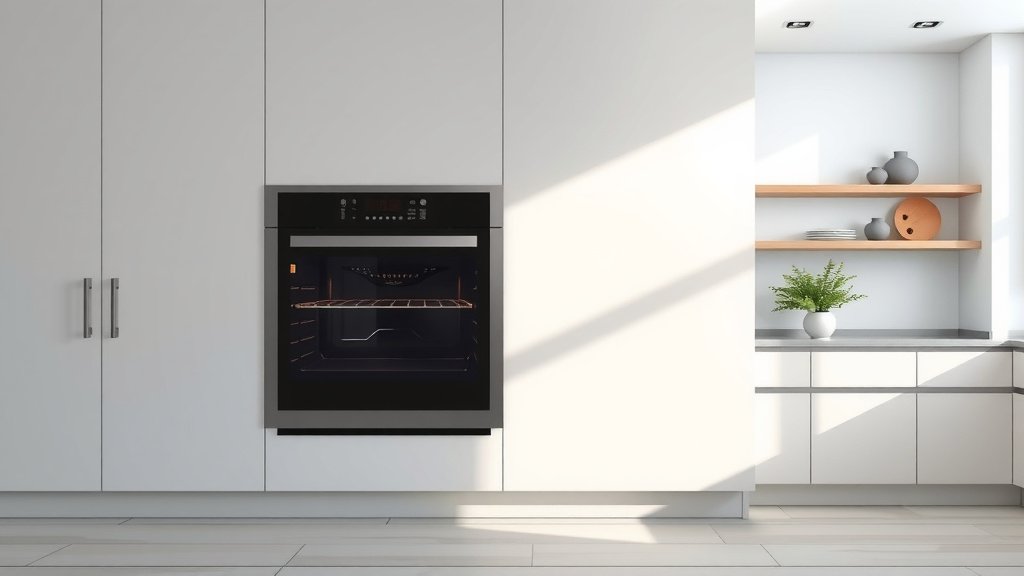
When your single wall oven is not heating, the most common culprits are a tripped circuit breaker, a faulty heating element (for electric models), or a malfunctioning igniter (for gas models). You can often identify the issue by checking these components first.
To troubleshoot a single wall oven not heating, begin by verifying its power supply, then visually inspect the heating elements or igniter, and finally consider temperature sensor or thermal fuse failures before calling a professional.
- First, always check if your oven is getting power.
- Then, inspect heating elements (electric) or the igniter (gas).
- A faulty temperature sensor can also prevent proper heating.
- Sometimes, a blown thermal fuse is the safety culprit.
- If these fail, a control board or door switch could be the problem.
How To Troubleshoot A Single Wall Oven Not Heating?
Troubleshooting a single wall oven not heating means systematically checking common problem areas like power, heating elements, and sensors. Most issues can be found by carefully inspecting these parts.
Start with the Basics: Power and Settings
When your oven goes cold, it’s easy to feel frustrated. But don’t worry, we’ve found that starting with the simplest checks often solves the mystery. Think of it like checking if your car has gas before calling a mechanic.
Is Your Oven Getting Power?
First, check your home’s circuit breaker box. Did a breaker for the oven trip? Sometimes, an oven draws too much power, causing it to flip. Simply switch it off, then on again. If it trips again quickly, there might be a deeper electrical issue, and it’s time for an electrician.
Double-Check Your Oven Settings
Are you sure the oven is set correctly? We know it sounds simple, but it happens. Make sure it’s not on a timer or a delayed start. Confirm the mode (Bake, Broil, Roast) and temperature are what you expect. A quick glance can save you a lot of headache.
Electric Oven? Check the Elements
If you have an electric single wall oven, the heating elements are often the first things to go. They are the workhorses, after all, and they don’t last forever. Research often connects heating failures to these parts (Appliance Repair Pros Association).
Inspect the Bake Element
Open your oven and look inside. Do you see the element at the bottom? It should look smooth and intact. If it’s broken, warped, or has visible holes, that’s likely your problem. A damaged bake element means it can’t generate heat.
What About the Broil Element?
The broil element is at the top of the oven. Even if you primarily use the bake function, a faulty broil element can sometimes prevent the oven from heating at all. Give it the same visual check as the bake element. Any signs of damage? It might need replacing.
Gas Oven? Look at the Igniter
For gas ovens, the igniter is the key component for starting the flame. It needs to glow bright orange to ignite the gas. If it’s weak or not glowing, your oven won’t heat up.
The Igniter’s Role
When you turn on a gas oven, the igniter should begin to glow. This glow heats up to a specific temperature, allowing the gas valve to open and ignite the gas. If it doesn’t glow or glows faintly, the gas won’t release or light. You might hear a clicking but no flame, or nothing at all.
The Unsung Heroes: Sensors and Fuses
Beyond the obvious elements, there are smaller, crucial parts that ensure your oven heats correctly and safely. These parts often go unnoticed until they fail.
Understanding the Temperature Sensor
Your oven has a temperature sensor that monitors the internal heat. If this sensor is faulty, it can send incorrect readings to the control board. This might cause your oven to overheat, underheat, or not heat at all. Many experts say a sensor problem often leads to inaccurate oven temperatures (Consumer Reports).
The Thermal Fuse: A Safety Net
Think of the thermal fuse as a tiny but mighty bodyguard for your oven. It’s a safety device designed to blow if the oven gets too hot, preventing damage or fire. If it blows, your oven won’t turn on. If your oven completely lost power and won’t respond, we’ve found that a blown thermal fuse is a strong possibility.
Door Issues and Control Panel Glitches
Sometimes, the problem isn’t inside the oven’s heating mechanism itself, but with its external controls or safety features.
Is the Oven Door Closed Properly?
Modern ovens have safety switches that prevent them from heating if the door isn’t fully closed. A broken door latch or a misaligned door can trick the oven into thinking it’s open. Give the door a good firm close and check for any obstructions. Maybe a child’s toy got wedged in there?
When the Control Board Acts Up
The control board is the brain of your oven. It sends signals to all the components. If the board is faulty, it might not tell the elements to heat or the igniter to glow. This can be tricky to diagnose without specialized tools. A blank display or erratic behavior often points to control board issues.
A Quick Troubleshooting Checklist
Before you pick up the phone to call for service, run through this quick checklist. It helps you organize your findings and can be very useful for a technician.
- Did the circuit breaker trip?
- Are the oven settings correct?
- Are electric heating elements visibly damaged?
- Does the gas igniter glow bright orange?
- Is the temperature sensor rod clean and secure?
- Is the oven door fully latched?
Common Oven Problems & Solutions at a Glance
Here’s a helpful table summarizing the common issues you might face with a single wall oven not heating, along with potential solutions.
| Problem Symptom | Likely Cause | What You Can Do |
|---|---|---|
| Oven completely dead, no lights | Tripped circuit breaker, Blown thermal fuse, Power cord issue | Reset breaker, Check fuse (requires multimeter), Inspect cord |
| Electric oven not heating, elements dull | Faulty bake or broil element | Visually inspect elements for damage, replace if necessary |
| Gas oven not igniting, no flame | Weak or faulty igniter | Observe igniter glow (should be bright orange), replace if weak |
| Oven heats inconsistently or not to temp | Faulty temperature sensor | Check sensor for damage, test with multimeter if comfortable |
| Oven works sometimes, sometimes not | Loose wiring, Control board glitch, Door switch issue | Check wiring connections (with power off), Examine door latch |
Conclusion
Dealing with a single wall oven that won’t heat can be a real hassle, especially when you’re planning a meal. By systematically checking the power, heating elements or igniter, sensors, and safety features, you can often pinpoint the problem yourself. Remember, safety first! Always unplug the oven or turn off the breaker before performing any inspections or repairs. If you’re uncomfortable with any step or if the problem persists, calling a certified appliance technician is always the safest and most efficient path. They have the tools and expertise to diagnose and fix more complex issues, getting your oven back to baking perfection.
What is the most common reason an electric oven stops heating?
For an electric oven, the most common reason it stops heating is a faulty bake or broil heating element. These elements can break or short out over time due to wear and tear from repeated heating and cooling cycles.
Can a dirty oven cause it not to heat properly?
While a very dirty oven can sometimes affect cooking performance or cause smoke, it’s generally not the direct cause of an oven completely failing to heat. However, excessive grease buildup can sometimes obstruct airflow or even impact sensor readings, so keeping your oven clean is always a good idea.
How can I tell if my oven’s temperature sensor is bad?
A bad temperature sensor often leads to inaccurate oven temperatures (too hot or too cold) or the oven not heating at all. Visually, it might look corroded or have a broken tip. Experts often test it with a multimeter for proper resistance readings to confirm if it’s faulty.
Is it safe to replace an oven heating element myself?
Replacing an oven heating element is a common DIY repair, and it can be safe if you follow proper safety precautions. Always ensure the power to the oven is completely off by unplugging it or tripping the circuit breaker before you start. If you’re unsure or uncomfortable, it’s always best to call a professional technician.
Why might my single wall oven suddenly stop working after a power outage?
After a power outage, your single wall oven might not heat if a circuit breaker tripped during the surge, or if the control board experienced a power surge and became damaged. Less commonly, a power surge could also blow the oven’s thermal fuse, which is designed to protect it from overheating or electrical faults.
