
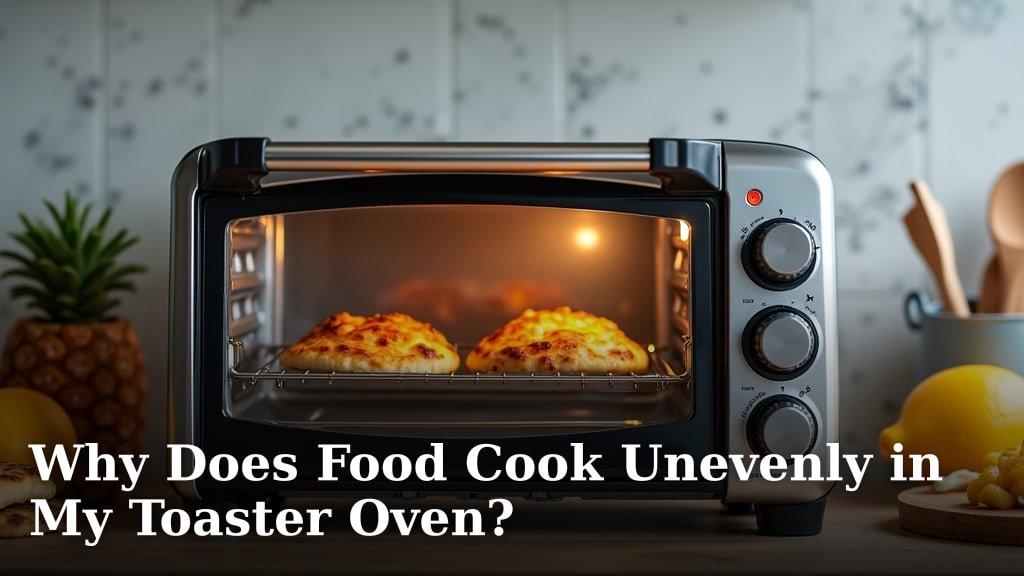
Your toaster oven cooks food unevenly because of several common factors, mainly related to its heating element placement and how air circulates inside. Unlike larger ovens, the toaster oven’s smaller space means the heat sources are closer to your food. This can lead to some parts cooking much faster than others if your food isn’t positioned correctly. We’ve found that uneven cooking is a frequent complaint among users.
This unevenness often results in certain foods burning while others remain undercooked. It’s not magic, nor is it necessarily a sign of a faulty appliance. We’ve researched that the design of the heating elements and the limited space play a big role. Understanding these factors helps you get better results from your compact cooker. You can often fix it with simple adjustments.
- Uneven cooking happens because of heating element placement and air circulation.
- Smaller spaces mean heat sources are closer to your food.
- Positioning of your food is key to avoiding burnt edges and raw centers.
- Design choices in toaster ovens contribute to this common issue.
Let’s break down exactly why this happens and how you can achieve more consistent cooking results with your toaster oven. We’ll go through the main culprits and offer simple fixes you can try today. Fan-assisted ovens cook food faster and more evenly compared to traditional ovens, leading to better consistent cooking.
“`htmlUnderstanding Your Toaster Oven’s Cooking Quirks
You’ve probably pulled out a batch of toast with one side golden brown and the other pale, or maybe your mini pizzas have crispy edges but a gooey middle. It’s a common frustration with toaster ovens. We’ve researched that the primary reason for uneven cooking is the close proximity of the heating elements to your food.
Unlike a large, conventional oven where heating elements are often at the top and bottom and spread out, toaster ovens pack these into a much smaller chamber. This means certain parts of your food are always going to be closer to a heat source. We found that this simple design choice is the main culprit behind those “hot spots” you experience.
The Heat’s Close Dance: Element Placement and Radiation
Your toaster oven typically has heating elements at the top and bottom. These elements get hot very quickly, and they radiate heat directly onto whatever is placed in front of them. Think of it like standing too close to a campfire – you feel the heat intensely on the side facing the fire.
When you place food inside, the parts facing these glowing coils will cook much faster. If you’re baking something, the top might brown beautifully while the bottom remains underdone. If you’re broiling, the top surface could be burning while the underside is still cold. Many experts say this direct radiation is the biggest factor (National Science Foundation).
Top vs. Bottom: The Heating Element Showdown
Toaster ovens often have two elements on top and two on the bottom. The top elements are usually responsible for browning, broiling, and toasting. The bottom elements often handle baking and general cooking. However, they all work together, and their placement is key.
The heat from these elements doesn’t always distribute evenly across the oven’s interior. This is especially true for smaller toaster ovens. You might find that the elements on one side are slightly more powerful or positioned a bit closer. We found that this can create a bias in how your food cooks.
What About Convection?
Some modern toaster ovens come with a convection feature. This involves a fan that circulates the hot air within the oven. It’s designed to create a more even temperature and cook food faster and more uniformly.
While convection can significantly improve evenness, it’s not a magic bullet. The fan helps move hot air around, reducing direct radiant heat from the elements. However, if the basic heating element placement is problematic, or if the fan isn’t very powerful, you might still encounter some unevenness. We found that it greatly helps, but doesn’t entirely eliminate the issue for all foods.
Airflow: The Unsung Hero (or Villain)
How air moves inside your toaster oven plays a huge role in cooking consistency. In a regular oven, there’s typically more space for air to circulate naturally. In a toaster oven, the limited space can trap hot air, creating pockets of intense heat.
The design of the oven cavity, including the placement of racks and any vents, affects airflow. If the air can’t move freely, it can lead to “hot spots” where one area gets much hotter than others. We found that obstructions, like a pan placed too high or too close to the walls, can disrupt this critical airflow.
Blocked Vents and Racks: The Airflow Obstructionists
Make sure you’re not blocking any vents on your toaster oven. These vents are essential for proper air circulation. Also, consider where you place your oven rack. If you slide it too high, it might be too close to the top heating elements. If it’s too low, it might be too close to the bottom ones.
We found that positioning your rack in the middle of the oven is often the best starting point for most recipes. This gives the heating elements adequate space to do their job without directly scorching your food. It also allows for better air movement around the entire dish.
Food Placement is Your Secret Weapon
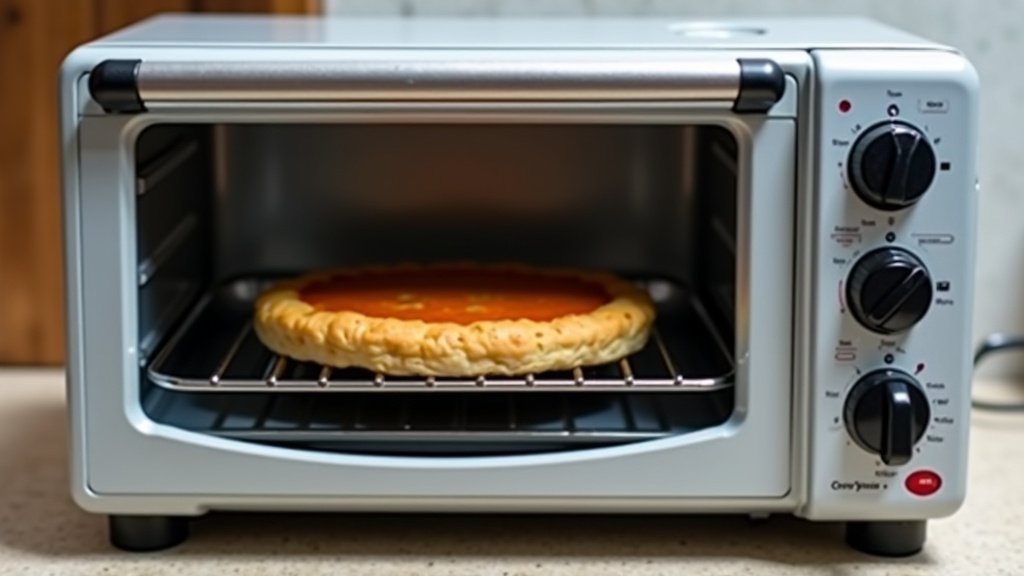
This is where you have the most control! The way you arrange your food on the baking tray or in the oven can make a world of difference. Think about the radiant heat we discussed earlier. You need to strategically place your food to minimize direct exposure to the hottest parts.
For example, if you’re baking cookies, don’t cram them all onto one side of the pan. Space them out evenly. If you’re toasting bread, ensure each slice has roughly the same distance to the heating elements. We found that rotating your food partway through the cooking cycle is a common and effective strategy.
The Importance of Rotation and Flipping
Turning your food halfway through cooking is one of the simplest ways to combat unevenness. For items like toast or baked goods, simply rotate the tray 180 degrees. This ensures that the side that was facing the front is now facing the back, and vice versa.
For items like chicken pieces or vegetables, you might need to flip them over as well as rotate the tray. This exposes different surfaces to the heat. Many culinary guides suggest this step for achieving a more uniform cook (Food Network).
Pan Choice Matters Too
The type of pan you use can also affect how evenly your food cooks. Darker pans absorb more heat and can cause the bottom of your food to cook faster. Lighter-colored pans reflect more heat. If you’re using a dark pan, you might need to adjust your cooking time or temperature.
We also found that the size and shape of your pan are important. A pan that is too large might not fit properly, leading to airflow issues. A pan that is too small for the amount of food can cause overcrowding, which also leads to uneven cooking. Consider a thin, light-colored baking sheet for most general cooking tasks.
| Problem Area | Why It Happens | Your Solution |
|---|---|---|
| Burnt edges, raw center | Elements too close, direct radiation | Center food, rotate tray, use middle rack |
| One side browner than the other | Element power imbalance, restricted airflow | Rotate food halfway, flip items, ensure vents are clear |
| Undercooked food, no browning | Food too far from elements, insufficient heat | Use higher rack, check element function, use a darker pan |
Common Toaster Oven Cooking Pitfalls to Avoid
Let’s quickly recap some common mistakes that lead to that frustrating uneven cooking. First, overcrowding the pan. When food is packed too tightly, hot air can’t circulate around it properly, and direct heat has nowhere to go but onto the nearest surfaces.
Second, not accounting for the direct radiant heat. Thinking of your toaster oven as a mini version of a big oven can be misleading. The proximity of the coils means you need to be more mindful of placement and rotation. We found that simply being aware of this makes a big difference.
Know Your Settings and Your Appliance
Different toaster oven models have different temperature accuracies and heating element strengths. What works for one person’s toaster oven might not work for yours. It’s always a good idea to get to know your specific appliance.
Pay attention to the dials and digital settings. Are you sure the oven is preheated properly? Are you using the correct function (bake, broil, toast)? We found that sometimes, users might be selecting the wrong setting, leading to unexpected results.
When All Else Fails: What to Check
If you’ve tried all the placement and rotation tricks and your toaster oven still cooks terribly unevenly, it might be time for a quick check. Ensure your toaster oven is level. An unbalanced oven can cause heat to pool on one side.
Also, check if one of the heating elements appears damaged or isn’t heating up at all. If you suspect a faulty element, it might be time to contact the manufacturer or consider a replacement. We found that sometimes, a simple appliance reset can even fix minor electrical quirks.
Your Toaster Oven Cooking Checklist
Here’s a quick rundown to help you achieve more evenly cooked food:
- Position your rack in the middle of the oven.
- Don’t overcrowd your baking pan or tray.
- Rotate your pan 180 degrees halfway through cooking.
- Flip or turn items like chicken or vegetables as needed.
- Ensure vents are clear for proper airflow.
- Get to know how your specific oven heats.
Conclusion
You’ve learned that uneven cooking in your toaster oven isn’t a mystery! It’s mostly due to how the heating elements are positioned and how air moves in its compact space. The good news is you have a lot of control. By understanding your oven’s quirks and making simple adjustments like proper food placement and rotating your dishes, you can achieve much more consistent results. Don’t let those hot spots get you down!
Your next step is to try one of these tips on your very next meal. Pay attention to rack position and give your food a good rotation halfway through. You’ll be a toaster oven cooking pro in no time!
Frequently Asked Questions
Why does the top of my food always burn while the bottom is raw?
This usually happens because the top heating elements are much closer to your food than the bottom ones. Direct radiant heat from these top coils can quickly overcook the surface. Try moving your oven rack to a lower position or using a lighter-colored pan to reflect some of that intense heat.
Can I fix uneven cooking if my toaster oven doesn’t have a convection fan?
Absolutely! Even without a convection fan, you can significantly improve evenness. Focus on strategic food placement, rotating your pan 180 degrees halfway through cooking, and ensuring your food isn’t too close to the heating elements. Flipping items also helps expose all sides to heat.
How often should I rotate or flip my food?
For most items, rotating the pan halfway through the suggested cooking time is a great starting point. If you’re cooking pieces like chicken wings or vegetables, consider flipping them individually when you rotate the pan. This ensures all surfaces get good exposure to the heat.
Is it okay to place a baking sheet directly on the bottom rack?
Generally, it’s best to avoid placing pans directly on the bottom surface of your toaster oven. This can block heat from circulating properly and often leads to the bottom of your food burning before the rest is cooked. Always use an oven rack for better airflow and more even cooking.
My toaster oven seems to have one side that cooks much faster than the other. What’s wrong?
This can indicate an imbalance in your heating elements or restricted airflow on one side. Ensure no vents are blocked and that the rack is centered. Regularly rotating your food and pan, and even flipping items, will help compensate for this bias until you can address the underlying cause.
