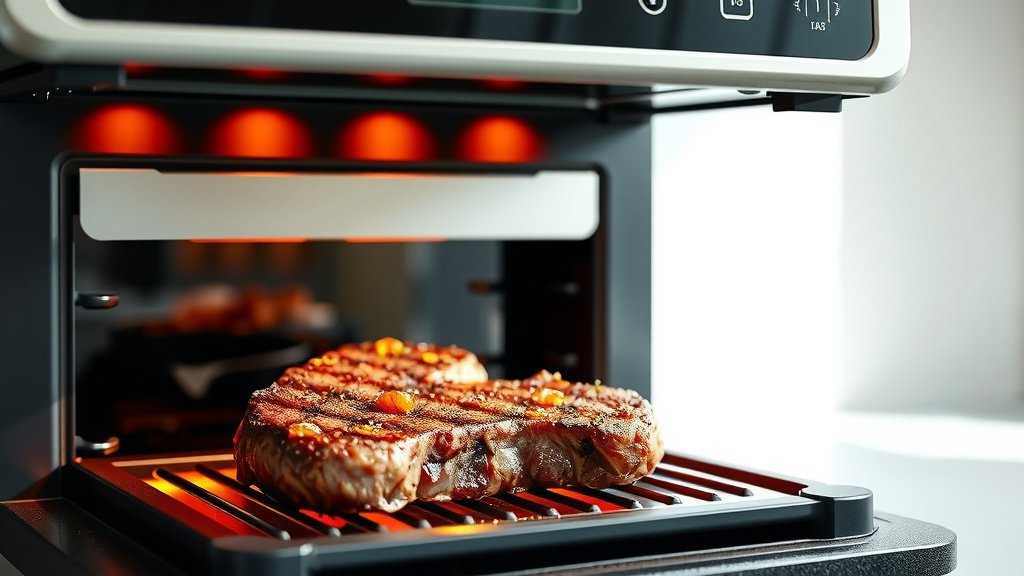
The time needed to cook steak in an infrared oven varies based on steak thickness and your preferred doneness. For a 1-inch thick steak, expect 8-15 minutes total to achieve a beautiful medium-rare to medium, flipping halfway through.
Always use a meat thermometer to guarantee perfect results, aiming for the right internal temperature for how you like your steak.
Here’s the quick lowdown on cooking steak in an infrared oven:
- Infrared ovens get super hot fast, creating a great sear.
- Cooking times depend on your steak’s thickness and desired doneness.
- Always preheat your oven fully before placing the steak inside.
- A meat thermometer is your best friend for perfect results every time.
- Don’t skip resting the steak; it helps keep the juices inside.
How Long To Cook Steak In Infrared Oven?
Cooking steak in an infrared oven usually takes between 8 to 15 minutes for a 1-inch thick cut. This will give you a delicious steak, ranging from medium-rare to medium doneness. Remember, this timing is a guide, and your specific oven and steak can change things.
What Makes Infrared Ovens Great for Steak?
Infrared ovens are like a secret weapon for steak lovers. They use radiant heat, much like how the sun warms your skin. This direct heat cooks very quickly and at high temperatures.
What does this mean for your steak? You get an amazing, crispy sear on the outside. Meanwhile, the inside stays tender and juicy. It’s a fantastic way to create a restaurant-quality steak right in your own kitchen.
Understanding Infrared Heating
Instead of hot air, infrared ovens use electromagnetic waves. These waves heat the food directly, not the air around it. This process cooks food more evenly and often much faster than conventional ovens.
Think of it as having an intense broiler all around your steak. This method really locks in the flavors and creates that desirable crust.
Factors That Change Your Steak’s Cooking Time
While we can give you general guidelines, several things impact how long your steak needs to cook. Thinking about these points can help you fine-tune your cooking process.
- Steak Thickness: A thicker steak will naturally need more time to reach its target temperature.
- Desired Doneness: Do you like it rare, medium, or well-done? Each level has a specific internal temperature.
- Starting Temperature: A steak taken straight from the fridge will cook slower than one allowed to warm up on the counter for a bit.
- Infrared Oven Model: Different ovens have varying power levels and heat distribution.
Prepping Your Steak for Infrared Cooking
Good preparation is key to a wonderful steak. Don’t just throw it in the oven; take a few moments to set it up for success. This extra step really makes a difference.
Bring Your Steak to Room Temperature
Many culinary experts recommend letting your steak sit out for about 30 minutes before cooking. This helps it cook more evenly. A cold steak hitting a hot oven can lead to an uneven cook.
Seasoning Your Steak
Keep it simple or go gourmet; the choice is yours. A good sprinkle of salt and black pepper is often all you need. You can also add garlic powder, onion powder, or your favorite steak rub. Apply your seasonings generously.
Drying the Surface is important
Use paper towels to pat your steak dry on all sides. A dry surface helps achieve that beautiful, crispy sear. Excess moisture can steam the steak instead of searing it, which is not what we are aiming for.
The Infrared Cooking Process: Step-by-Step
Ready to cook? Here’s a simple guide to using your infrared oven for steak. Following these steps will help you get delicious results consistently.
Preheat Your Infrared Oven
This step is non-negotiable! Infrared ovens get very hot. We found that most models need about 10-15 minutes to reach their optimal searing temperature. A fully preheated oven ensures an immediate and powerful sear.
Placing Your Steak in the Oven
Carefully place your seasoned steak directly on the oven rack or a broiler pan. Try to position it evenly under the infrared element. This allows for uniform heating and searing across the surface.
Monitoring and Flipping
Infrared ovens cook fast, so stay close! For most 1-inch steaks, we found that flipping it once after about half the cooking time works well. This helps both sides get a fantastic sear and cook evenly.
Use a Meat Thermometer
This is the most accurate way to know when your steak is ready. Insert the thermometer into the thickest part of the steak, avoiding any bone. Relying on visual cues alone can be tricky, especially with new cooking methods.
Steak Doneness Temperature Guide (Internal)
Knowing your desired internal temperature is key to cooking a perfect steak. Here’s a general guide. Research often connects these temperatures with specific doneness levels (Food Safety Guidelines).
| Doneness Level | Internal Temperature | Appearance |
|---|---|---|
| Rare | 125-130°F (52-54°C) | Cool red center |
| Medium-Rare | 130-135°F (54-57°C) | Warm red center |
| Medium | 135-140°F (57-60°C) | Warm pink center |
| Medium-Well | 140-150°F (60-65°C) | Slightly pink center |
| Well-Done | 150°F+ (65°C+) | Little to no pink |
The Vital Step: Resting Your Steak
Once your steak reaches its target temperature, remove it from the oven immediately. Place it on a cutting board and cover it loosely with foil. Let it rest for 5-10 minutes.
Why rest? This crucial step allows the juices to redistribute throughout the meat. If you cut into it too soon, those delicious juices will run out, leaving you with a drier steak. Patience here pays off!
Tips for Best Results with Your Infrared Oven
Want to get the most out of your infrared oven for steak? Here are some simple suggestions we found to be very helpful. These small changes can significantly lift your steak game.
Here’s a quick checklist for a better steak experience:
- Choose good quality steak for the best flavor.
- Always preheat your oven thoroughly.
- Use a reliable meat thermometer every time.
- Don’t be afraid to experiment with seasonings.
- Remember to rest your steak for juicy results.
- Clean your infrared oven regularly for peak function.
Don’t Crowd the Oven
If you’re cooking multiple steaks, make sure there’s enough space between them. Crowding can reduce the effectiveness of the infrared heat, leading to uneven cooking and less searing.
Consider the Thickness of Your Cut
Thicker cuts like a T-bone or porterhouse might need a slightly lower temperature for a longer time after the initial sear. This helps the inside cook without burning the outside. For thinner cuts, cook times will be much shorter.
Conclusion
Cooking steak in an infrared oven is a fantastic way to achieve a beautifully seared and juicy result. The key is understanding that cooking times, typically 8-15 minutes for a 1-inch steak, are guides. Your journey to steak perfection involves proper preparation, careful monitoring with a meat thermometer, and the golden rule of resting your steak. Embrace these steps, and you’ll enjoy delicious, restaurant-quality steaks right from your own kitchen. It’s a method that truly celebrates the flavor of a good cut of meat.
How do infrared ovens cook steak differently from conventional ovens?
Infrared ovens cook steak using radiant heat, which directly warms the food, similar to a broiler. Conventional ovens use convection heat, circulating hot air. This direct heat method allows infrared ovens to achieve a much better and faster sear on the steak’s surface while keeping the inside tender.
Is it necessary to flip the steak when cooking in an infrared oven?
Yes, it is generally recommended to flip your steak once, halfway through the cooking time. This ensures that both sides of the steak receive an even sear and cook uniformly, contributing to better texture and doneness.
Can I cook frozen steak in an infrared oven?
While technically possible, it is best to thaw your steak completely before cooking in an infrared oven. Cooking from frozen can lead to uneven cooking, where the outside might burn before the inside reaches the desired temperature. Thawing ensures a more even and safer cook.
How do I prevent my steak from drying out in an infrared oven?
To prevent your steak from drying out, monitor its internal temperature carefully with a meat thermometer and avoid overcooking. Additionally, letting the steak rest for 5-10 minutes after cooking is vital. This process allows the juices to redistribute, keeping the meat moist and tender.
Do I need any special equipment to cook steak in an infrared oven?
Beyond the infrared oven itself, the most crucial piece of equipment is a reliable meat thermometer. This tool helps you accurately gauge doneness, preventing under or overcooking. A broiler pan or a sturdy oven-safe rack is also useful for proper airflow and searing.