
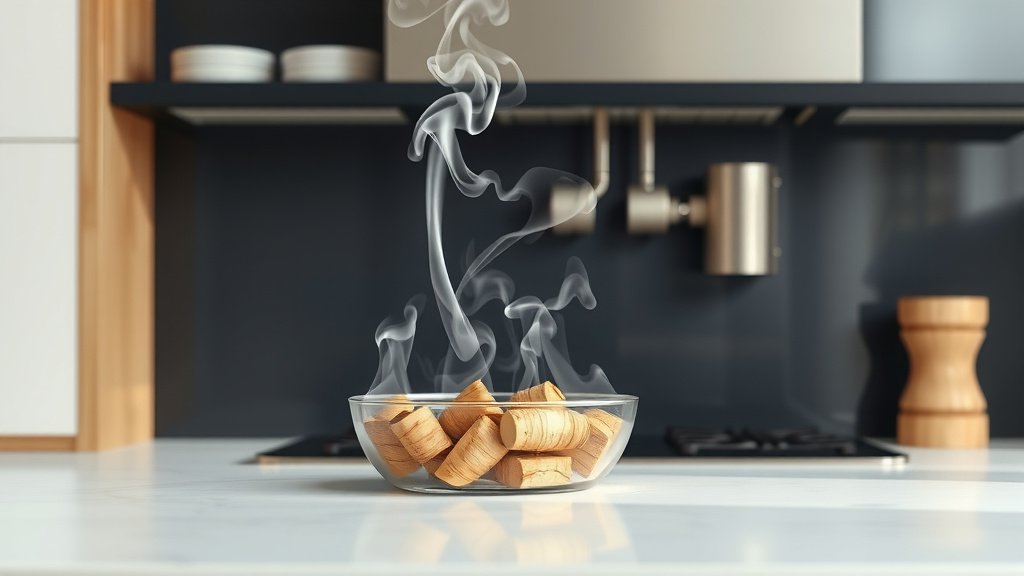
Yes, you can technically use a gas oven for smoking food, but it’s generally not recommended for true, low-and-slow smoking due to temperature control and ventilation challenges.
While possible for a quick smoke flavor, achieving authentic smoked results often requires dedicated equipment to manage smoke production and maintain consistent low temperatures safely.
- Using a gas oven for smoking is possible but comes with significant challenges.
- Temperature control is often too high for traditional smoking methods.
- Proper ventilation is key to prevent dangerous carbon monoxide buildup.
- You’ll need a safe way to generate smoke inside the oven.
- For the best results and safety, a dedicated smoker is usually the superior choice.
Can Gas Oven Be Used For Smoking Food?
While it is technically possible to use a gas oven for smoking food, it’s not ideal for traditional low-and-slow smoking methods due to inherent design limitations.
You can infuse some smoky flavor, but getting that deep, consistent smoke ring and tender texture found in a dedicated smoker is very difficult.
Why Is It Tricky to Smoke in a Gas Oven?
Trying to smoke food in a gas oven is a bit like trying to sail a bathtub. It might work for a moment, but it’s not built for the journey.
Several factors make this process challenging, especially when aiming for authentic smoked flavors.
The Temperature Tug-of-War
Most gas ovens aren’t designed to maintain the very low temperatures (typically 225-275°F) that smoking demands.
Oven thermostats often cycle, heating up and cooling down, which means your food will experience temperature swings, not the steady warmth needed for slow cooking.
Ventilation Vexations
One of the biggest concerns is ventilation. Ovens are sealed units, designed to keep heat in, not to vent smoke out efficiently.
This can lead to a kitchen full of smoke and, more importantly, a risk of carbon monoxide buildup if proper precautions aren’t taken.
What You Need for “Oven Smoking”
If you decide to try this, you’ll need a few specific items to create even a basic smoking setup in your gas oven.
These tools help manage the smoke and protect your food from direct heat, which is vital.
Picking Your Smoke Source
You’ll need a way to generate smoke. Options include wood chips, wood pellets, or a smoke tube. These need to be placed in a heat-resistant container.
Always use food-grade smoking wood and never use anything treated or painted.
- A sturdy, heat-safe metal pan for wood chips
- A small wire rack to elevate your food
- An accurate oven thermometer
- An instant-read meat thermometer
- A drip pan to catch juices
A Step-by-Step Guide (with Heavy Caveats)
Here’s a general approach if you’re set on trying, but remember, this is a compromise, not a true smoking experience.
Always prioritize safety and ventilation above all else when attempting this method.
Safety First, Always!
Before you begin, ensure you have a working carbon monoxide detector in your kitchen. Open windows and use your range hood to provide as much ventilation as possible.
Never leave your oven unsupervised during this process (Consumer Product Safety Commission).
1. Preheat your oven to its lowest possible setting, usually around 170-200°F. If your oven goes lower, great!
2. Prepare your wood chips: Soak them in water for about 30 minutes, then drain. This helps them smolder rather than burn too quickly.
3. Place the damp wood chips into a heavy-duty foil packet or a cast-iron pan. Poke a few holes in the foil to let the smoke out.
4. Put the wood chip packet/pan directly on the oven floor or the lowest rack. You want it close to the heat source to start smoking.
5. Place your food on a rack in the middle of the oven, with a drip pan underneath.
6. Close the oven door, but leave it slightly ajar (just a tiny crack) if your oven allows, to prevent too much heat buildup and allow some smoke to escape.
7. Monitor the temperature and smoke. You might need to add more wood chips every hour or so, replacing the spent ones.
8. Cook until your food reaches the desired internal temperature (USDA guidelines).
The “Flavor Profile” – What to Expect
Don’t expect the deep, smoky flavor and bark you get from a traditional smoker.
The smoke generated in an oven might be lighter, and the cooking method won’t create the same texture.
Not Your Grandpa’s Smoker
Many experts say that achieving true barbecue texture requires consistent low temperatures over many hours (Kansas City Barbecue Society).
Your gas oven will give you a smoky aroma and some flavor, but likely not the tender, pull-apart results of dedicated smoking.
Gas Oven Smoking vs. Dedicated Smoker
Let’s look at how these two methods compare so you can make an informed decision.
| Feature | Gas Oven Smoking | Dedicated Smoker |
|---|---|---|
| Temperature Control | Difficult, inconsistent low temps | Precise, consistent low temps |
| Smoke Production | Limited, hard to maintain | Steady, controlled volume |
| Ventilation | Poor, potential CO risk | Designed for smoke exhaust |
| Flavor & Texture | Mild smoke, oven-cooked texture | Deep smoke ring, tender, bark |
| Safety | Requires constant vigilance | Generally safer by design |
| Convenience | Uses existing appliance | Dedicated equipment, takes up space |
When Might You Consider Oven Smoking?
There are a few niche situations where using your gas oven for a touch of smoke might make sense.
It’s not for every dish, but it can add a little something special in a pinch.
Quick Flavor Infusion
If you’re looking to add a very light, almost subtle smoky note to something that’s already mostly cooked, or to a quick-cooking item, it might work.
Think of it as adding a “hint” of smoke, rather than full-on smoked flavor.
Here’s a small checklist for when oven smoking might be an option:
- You only need a light smoke flavor.
- You lack access to a dedicated smoker.
- You’re short on time for traditional smoking.
- You prioritize convenience over authentic results.
- You are smoking small food items, not large cuts.
Conclusion
While you can technically use a gas oven for smoking food, it’s generally not the optimal or safest method for achieving true, delicious smoked results.
The challenges with temperature control, proper ventilation, and consistent smoke generation often lead to less-than-ideal outcomes.
For authentic smoky flavor and tender texture, a dedicated smoker is always the superior choice. If you do try oven smoking, always prioritize safety with proper ventilation and carbon monoxide detectors.
Can a regular oven create a smoke ring?
No, a regular gas oven typically cannot create a smoke ring. A true smoke ring, often seen in slow-smoked meats, develops from the reaction of nitric oxide and carbon monoxide (found in wood smoke) with myoglobin in the meat’s surface at low temperatures. A gas oven’s heat source and lack of consistent wood smoke usually prevent this chemical reaction.
Is it safe to put wood chips directly in a gas oven?
It is generally not safe to put wood chips directly into a gas oven, especially near the open flame of a gas burner, as they can easily catch fire. Always place wood chips in a sealed foil packet with holes or a cast-iron pan to ensure they smolder and produce smoke, rather than ignite into flames. Even then, constant supervision is vital.
How do I prevent my kitchen from filling with smoke?
To prevent your kitchen from filling with smoke when attempting oven smoking, ensure you have maximum ventilation. Open windows wide, turn on your range hood to its highest setting, and if possible, place a fan near an open window to help draw air out. Leaving the oven door slightly ajar can help release some smoke, but always monitor the situation closely.
What’s the best alternative if I don’t have a smoker?
If you don’t have a dedicated smoker, a pellet tube or smoke box used in a charcoal grill (if you have one) can often provide a much better smoking experience than an oven. You can also explore electric smokers, which are often more affordable and easier to use for beginners, providing consistent low temperatures and smoke.
Will oven smoking make my oven smell permanently smoky?
After oven smoking, your oven and potentially your kitchen may retain a smoky smell for a while. This smell typically dissipates over time with good ventilation and normal oven use. You can also clean the oven thoroughly after smoking, paying attention to any grease or residue, to help reduce lingering odors.
