
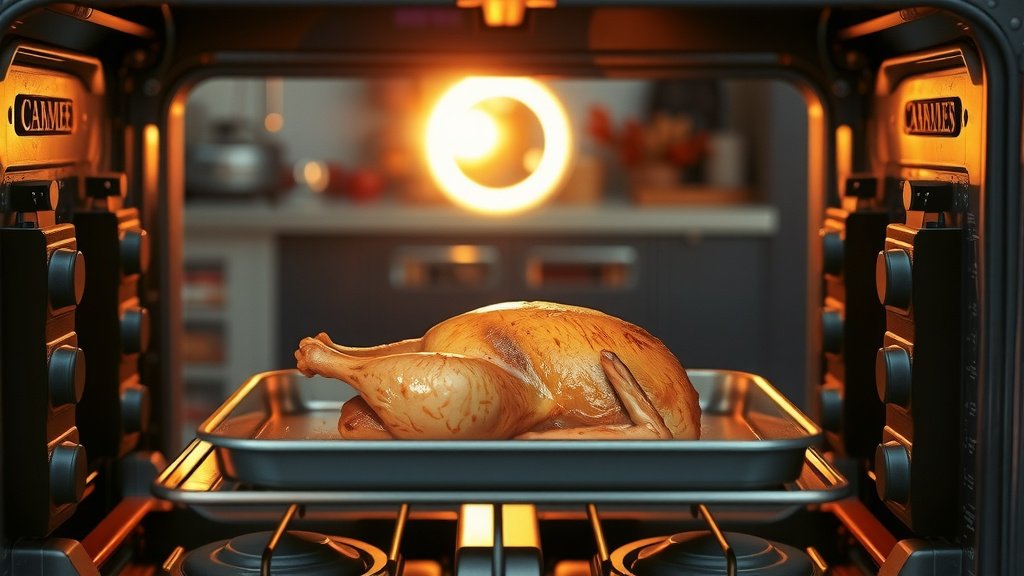
To get crispy skin on chicken in a gas oven, start by thoroughly drying the chicken, salting it liberally, and cooking it on a wire rack over a baking sheet at a high temperature. This setup allows air to circulate evenly around the chicken for optimal browning.
Preheating your gas oven to a high temperature, around 400-425°F (200-220°C), creates an initial blast of heat that renders the fat beneath the skin quickly, preventing it from steaming and ensuring a super crispy finish.
TL;DR: Your Quick Guide to Crispy Chicken Skin
- Dry it well: Pat your chicken skin extremely dry to remove surface moisture.
- Salt generously: Season with salt and let it sit to draw out more moisture.
- Use a rack: Cook on a wire rack for all-around air circulation.
- High heat start: Begin with a hot oven (400-425°F) for rapid browning.
- Don’t overcrowd: Give chicken pieces space to prevent steaming.
How To Get Crispy Skin On Chicken In Gas Oven?
Getting that perfect crispy skin on chicken in a gas oven means understanding how moisture and heat work together. The secret lies in removing surface moisture and using high, consistent heat to render the fat, turning it golden and crunchy.
Understanding Your Gas Oven’s Nuances
Gas ovens can be a bit different from electric models. They often have a “moister” heat because gas combustion produces water vapor. This can make achieving crispy results feel like a challenge sometimes.
But don’t worry, you can easily overcome this. The key is to create the right environment for your chicken. We found that managing moisture is the biggest hurdle to a truly crispy skin in a gas oven.
The Science of Crispy Skin: It’s All About Moisture
Crispy skin is essentially fat that has rendered and browned without excess moisture present. If the skin stays wet, it will steam instead of crisp, leaving you with rubbery results. Many culinary experts agree that moisture is the enemy of crispy skin.
Your goal is to get rid of every bit of moisture from the chicken skin before it even touches the heat. Think of it like drying your hair before styling; you want it ready for the heat.
Patting Dry Is Non-Negotiable
This might seem simple, but it’s a game-changer. Take paper towels and thoroughly pat down every inch of the chicken skin. You want it as dry as possible, almost squeaky clean.
Many kitchen professionals say this step is often overlooked, but it’s perhaps the most important. A dry surface allows browning to happen much faster and more effectively.
Salt: Your Moisture-Wicking Ally
After patting dry, generously season the chicken skin with salt. Salt pulls moisture out of the skin. If you have time, let the salted chicken sit uncovered in the refrigerator for at least a few hours, or even overnight.
This “dry brining” method allows the salt to work its magic, drawing moisture to the surface where it then evaporates in the cool air. This process contributes significantly to a much crispier result, research often connects this method with superior texture (Cook’s Illustrated). Just be sure to pat it dry again right before cooking.
Oven Prep for Peak Performance
Your oven setup plays a huge role in how crispy your chicken turns out. A well-prepared oven ensures even cooking and maximum crispness.
The Right Rack Position Makes a Difference
Place your oven rack in the middle position. This ensures the chicken is exposed to consistent heat from both the top and bottom elements. Too high, and it might burn; too low, and it might not crisp evenly.
You also need a wire rack placed inside a baking sheet. This lifts the chicken, allowing hot air to circulate all around it. Without a rack, the bottom skin might steam in its own juices, becoming soggy.
Preheat, Preheat, Preheat!
Don’t rush this step. Preheat your gas oven to a high temperature, typically between 400-425°F (200-220°C). Allow it to preheat for at least 20-30 minutes after it reaches the set temperature.
A super hot oven at the start provides an immediate burst of heat. This quickly renders the fat under the skin, initiating the browning process before the chicken can steam itself. It’s like hitting the ground running for crispiness.
Cooking Techniques for That Golden Crunch
Once your chicken is prepped and your oven is hot, it’s time to cook! These techniques will guide you to that perfect crunch.
High Heat Start, Then Adjust (The Two-Stage Cook)
Start your chicken at the high temperature (400-425°F) for about 20-30 minutes. This is your crisping phase. You’ll notice the skin getting beautifully golden and bubbly.
After this initial blast, you can reduce the oven temperature to around 350-375°F (175-190°C) to finish cooking the chicken through. This prevents the skin from burning while the interior comes to temperature. Always cook chicken to an internal temperature of 165°F (74°C) (USDA).
Convection Mode: Your Secret Weapon (If You Have It)
If your gas oven has a convection setting, use it! Convection ovens circulate hot air continuously, creating a drier, more even cooking environment. This is fantastic for crisping skin.
Many experts found that convection mode can cut cooking time slightly, so keep an eye on your chicken. It’s like having a little wind tunnel in your oven, blowing away any steaming moisture.
The Pan Makes a Difference
Choosing the right pan is more important than you might think. Here’s a quick comparison:
| Pan Type | Pros for Crispy Skin | Cons for Crispy Skin |
|---|---|---|
| Heavy-duty Baking Sheet (with wire rack) | Excellent airflow, even heat distribution, catches drips. | Requires a separate wire rack. |
| Cast Iron Skillet | Retains heat very well, can preheat on stovetop for initial sear. | Can steam bottom skin if no rack; less even air circulation. |
| Glass Baking Dish | Good for even heat, but slower to heat up. | Can trap moisture, less ideal for crispy skin unless you use a rack. |
Common Mistakes to Sidestep
Even with the right steps, small errors can derail your crispy chicken dreams. Let’s look at what to avoid.
Don’t Crowd the Pan
Resist the urge to pack too many chicken pieces onto one tray. When pieces are too close, they release moisture, and that moisture gets trapped between them. This creates steam instead of crispness.
Give each piece its space, a little breathing room. This ensures hot air can circulate freely around every side of the chicken, leading to uniform crisping.
Resist Peeking Too Much
Every time you open the oven door, a blast of hot air escapes, and the oven temperature drops. This interrupts the cooking process and can extend cooking time, potentially leading to less crispy skin.
Trust your oven and the cooking process. Use your oven light to check on progress. Only open the door if you absolutely need to rotate the tray or check the internal temperature.
A Quick Checklist for Crispy Chicken Success
Before you start, run through this mental checklist to ensure you’re on the path to crispy perfection:
- Is the chicken skin thoroughly dry?
- Did you season generously with salt?
- Is it sitting on a wire rack over a baking sheet?
- Is the oven preheated to 400-425°F?
- Is there enough space between chicken pieces?
- Are you ready to resist the urge to peek?
Conclusion
Getting irresistibly crispy chicken skin in your gas oven is absolutely achievable. It all comes down to controlling moisture and using high, direct heat effectively. By meticulously drying your chicken, salting it well, setting up your oven with a wire rack, and resisting the urge to crowd the pan, you’ll be well on your way. You’ll soon be enjoying that satisfying crackle and golden hue that makes homemade roasted chicken truly special. Happy cooking!
FAQ: Can I use oil to help crisp the skin?
Yes, a light brush of oil, like olive or avocado oil, after salting and drying can assist in crisping the skin. It helps conduct heat and encourages browning. Just don’t overdo it, as too much oil can make the skin greasy rather than truly crispy.
FAQ: How long does it typically take to get crispy skin?
The time varies based on chicken size and oven specifics, but generally, starting at 400-425°F (200-220°C) for the first 20-30 minutes is the key crisping phase. Then, you might finish at a lower temperature until the chicken reaches 165°F (74°C) internally.
FAQ: Does the type of salt matter for drying the skin?
While any salt will draw out moisture, coarse kosher salt is often preferred by culinary experts. Its larger granules adhere well to the skin and are easier to distribute evenly without oversaturating the chicken compared to fine table salt. This allows for effective dry brining.
FAQ: My chicken skin gets crispy but then gets chewy. Why?
This often happens if the chicken sits for too long after cooking, allowing residual moisture from the meat to re-absorb into the skin. To prevent this, serve the chicken soon after it’s done. You can also rest the chicken on a wire rack after cooking to maintain airflow.
FAQ: Can I achieve crispy skin with bone-in, skin-on chicken pieces?
Absolutely! The methods described work perfectly for bone-in, skin-on pieces like thighs, drumsticks, or even a whole chicken. The key steps of drying, salting, using a rack, and high heat are universal for achieving crispy skin, regardless of the cut.
