
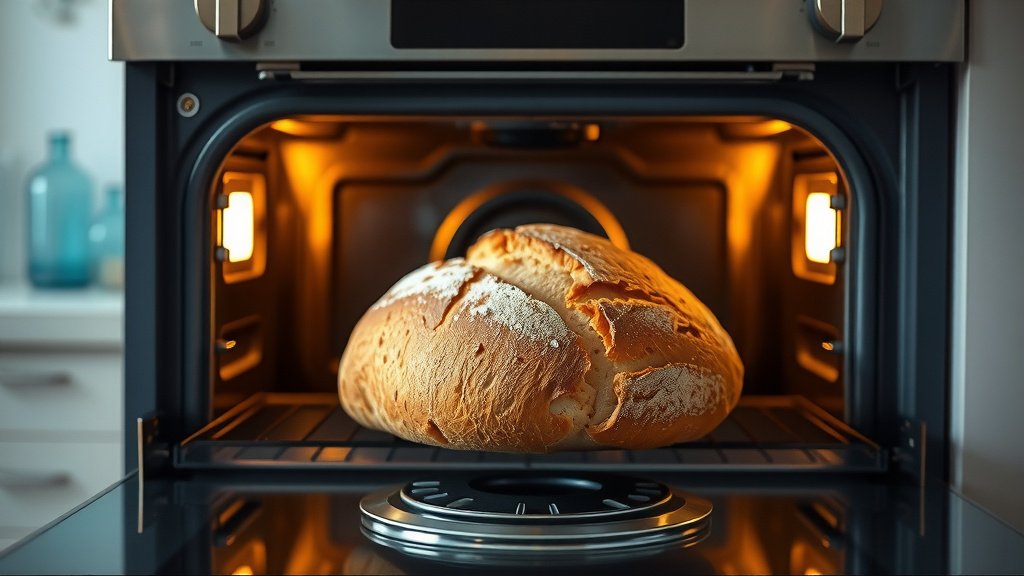
Yes, you absolutely can bake delicious bread in a gas oven! While gas ovens present unique challenges like dryer heat and potential hot spots, they are perfectly capable of producing beautiful loaves with a few smart techniques.
You can achieve fantastic results when baking bread in a gas oven by understanding its characteristics and applying simple adjustments to your baking process.
Thinking about baking bread in your gas oven? Here’s the quick scoop:
- Gas ovens can bake great bread, but they need some special care.
- Expect dryer heat and possibly uneven baking zones.
- Use an oven thermometer to know the real temperature.
- Adding steam is key to a beautiful crust.
- Baking stones or steels help distribute heat better.
Can You Bake Bread In A Gas Oven?
Yes, baking bread in a gas oven is entirely possible and many home bakers do it successfully every day. You simply need to adjust your approach to account for its distinct heating characteristics.
Don’t let anyone tell you otherwise; your gas oven can be a bread-baking champion. It’s just a matter of learning its personality. Think of it like a new dance partner – you need to learn their steps.
Understanding Your Gas Oven’s Heat
Gas ovens generate heat differently than electric models. They use a flame, which can create a different kind of baking environment. This distinct heat source is important to understand for bread making.
Why Gas Heat is Different
Gas ovens often produce a moister heat initially from the combustion, but then tend to become quite dry. This dryness can affect your bread’s crust. It might make your crust form too quickly, preventing a good oven spring.
They also cycle on and off, which means the temperature can fluctuate more. This cycling can lead to hot spots and cooler zones inside your oven. Knowing this helps you plan your bake.
Common Challenges When Baking Bread
Every oven has its quirks, and gas ovens are no exception. Knowing what to expect lets you prepare. Let’s look at the main hurdles and how to jump them.
Dealing with Uneven Heat
Have you ever noticed one side of your loaf browning faster? That’s likely an uneven heat distribution at play. Gas ovens can sometimes create these hot and cool areas.
A simple solution is to rotate your bread partway through baking. We found that a half-turn after about 20-30 minutes often makes a big difference. This helps achieve a uniform crust color.
Conquering Dryness
The dry heat inside a gas oven can be tough on bread. It can hinder a great crust development and overall texture. You want that lovely crispy crust, not a brittle one.
The key here is adding steam to your oven. Steam keeps the crust soft during the initial bake. This allows your bread to expand fully, giving you that beautiful “oven spring.” Many experts agree on the importance of steam (Cook’s Illustrated).
Essential Tools for Gas Oven Bread Baking
Having the right gear makes a huge impact on your baking success. You don’t need a professional setup, but a few items are incredibly helpful. These tools work with your oven, not against it.
The Indispensable Oven Thermometer
Your oven’s built-in thermostat can be inaccurate. We found that many ovens can be off by as much as 50 degrees Fahrenheit. An external oven thermometer tells you the true temperature.
This little gadget is a game-changer for precise baking. It ensures your oven is actually at the temperature your recipe calls for. Consistency leads to better bread.
Steam Generators for a Better Crust
Creating steam is simple. You can use a pan of hot water on the bottom rack. Alternatively, some bakers use a spray bottle to mist the oven walls (taking care not to spray the light or element).
Another popular method is using lava rocks or a cast iron pan filled with water. These methods help create a humid environment. That humidity is what your bread craves in the beginning.
Baking Stones or Steel: Your Secret Weapon
A baking stone or steel helps regulate temperature. It absorbs heat and radiates it evenly. This gives your bread a strong burst of heat from the bottom.
This steady, intense heat mimics a professional baker’s oven. It helps create a beautifully crisp bottom crust. Many culinary enthusiasts recommend using one for all types of artisan bread.
Preparing Your Gas Oven for Bread Success
Preparation is half the battle when it comes to baking. A well-prepared oven sets the stage for a perfect loaf. It’s about creating the best environment for your dough.
The Art of Thorough Preheating
Always preheat your gas oven longer than you think you need to. Aim for at least 45 minutes to an hour. This lets your oven stabilize its temperature.
It also gives your baking stone or steel ample time to heat up completely. A fully preheated oven means consistent baking from the start. Don’t rush this step; patience pays off.
Top Tips for Baking Bread in a Gas Oven
Here are some straightforward actions you can take to make your gas oven a bread-baking success story. These small adjustments lead to big improvements in your results.
- Use an oven thermometer always: Never trust the dial alone; verify the actual heat.
- Preheat for a full hour: Allow your oven and any baking surfaces to reach steady heat.
- Introduce steam early: Place a hot water pan in the oven just before baking.
- Rotate your loaf: Turn the bread halfway through baking for even browning.
- Keep the oven door closed: Opening the door releases precious heat and steam.
Comparing Gas and Electric for Bread
Each oven type brings different advantages and quirks to bread baking. Understanding these differences helps you adapt. Here’s a quick comparison:
| Feature | Gas Oven | Electric Oven |
|---|---|---|
| Heat Source | Open flame | Heating elements (top/bottom) |
| Heat Distribution | Can be uneven; hot spots | Generally more even |
| Moisture Level | Tends to be drier overall | Can hold more moisture |
| Crust Potential | Needs steam added for best results | Often produces good crust naturally |
| Temperature Fluctuation | More pronounced due to cycling | More stable once heated |
Quick Pre-Bake Checklist
Before you slide that beautiful dough into your gas oven, run through this quick checklist. It helps ensure you’ve covered all your bases for a perfect bake.
- Oven thermometer in place and verified?
- Oven (and stone/steel) fully preheated?
- Steam source ready and hot (if using)?
- Loaf scored appropriately?
- Timer set for rotation reminder?
Conclusion
Baking bread in a gas oven is not only possible but can be incredibly rewarding. You might face some initial hurdles, like managing dry heat or hot spots, but these are easily overcome.
By using simple tools like an oven thermometer and adding steam, you can master your gas oven. Embrace these techniques, and you’ll be pulling out golden, crusty loaves with confidence. Happy baking!
How do I add steam to a gas oven for bread?
You can add steam by placing a metal pan with hot water on the bottom rack of your oven before you put the bread in. Another method is to spray the oven walls with water using a clean spray bottle, but avoid spraying the light or heating element.
Why does my bread brown unevenly in a gas oven?
Uneven browning often happens because gas ovens can have hot spots and cooler zones due to how the flame cycles. To fix this, rotate your bread halfway through the baking time. This helps ensure all sides get even exposure to the heat.
Do I need a baking stone if I have a gas oven?
While not strictly mandatory, a baking stone or steel is highly recommended for gas ovens. It absorbs and radiates heat evenly, providing a stable, intense base heat for your bread. This helps create a better rise and a crispier bottom crust, compensating for potential temperature fluctuations.
Should I adjust baking temperatures for a gas oven?
Generally, you should stick to the temperatures specified in your recipe. The most important adjustment is to use an external oven thermometer to verify your oven’s true temperature. If your oven consistently runs hot or cool, then minor adjustments (like +/- 10-20 degrees) might be needed over time.
How long should I preheat a gas oven for bread?
For bread baking, preheat your gas oven for at least 45 minutes to an hour, especially if you are using a baking stone or steel. This extended preheating time allows the oven to fully stabilize its internal temperature and ensures your baking surfaces are thoroughly hot, which is crucial for a good oven spring.
