
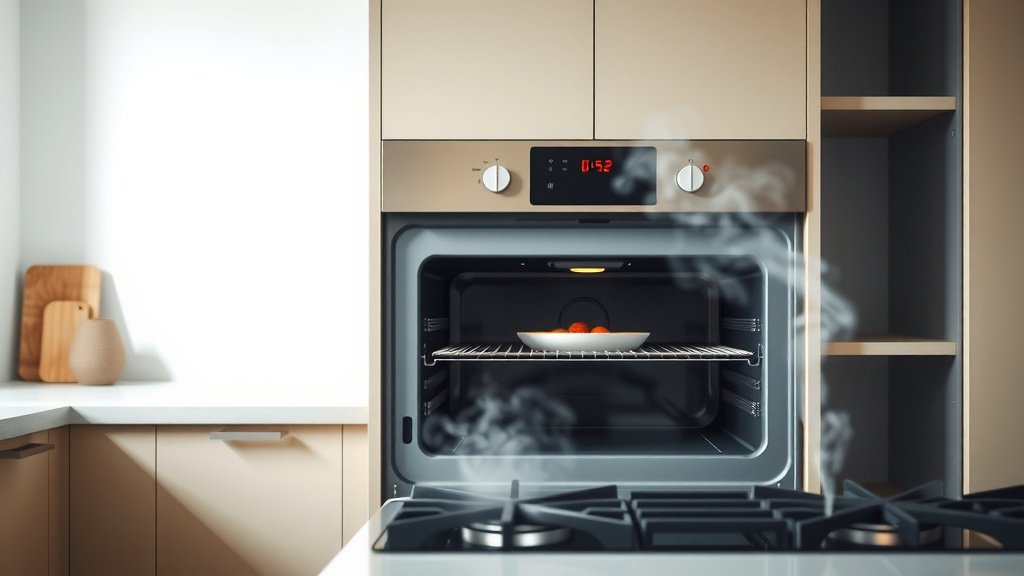
When your gas oven smells during preheating, it often indicates the burn-off of manufacturing oils from a new appliance or a minor gas leak, which needs immediate attention.
Other common reasons for a gas oven smell when preheating include food spills, carbon monoxide concerns, or issues with the igniter or gas line itself.
- A new oven smell is usually harmless manufacturing residue burning off.
- A rotten egg smell means a gas leak, requiring immediate action.
- Food spills or grease buildup can cause smoky or burnt odors.
- Ensure proper ventilation to clear smells safely.
- Regular cleaning prevents many common oven odors.
Why Does My Gas Oven Smell When Preheating?
The smell from your gas oven during preheating can range from a harmless manufacturing odor to a serious gas leak, requiring different responses.
Understanding the source of the smell is key to ensuring your safety and the proper function of your appliance.
Understanding the “New Oven” Smell
Did you just get a new gas oven? Then a strange smell during its first few uses is quite common. This is often just the protective coatings and manufacturing oils burning off the internal components.
We found that many appliance manufacturers apply these substances to prevent corrosion during shipping and storage (Appliance Standards). Think of it like a car’s “new car smell,” but for your kitchen.
Is That Smell Normal?
Yes, a faint, slightly plastic or chemical smell from a brand-new gas oven is usually normal for the first few heating cycles. It should dissipate quickly.
Many experts say to run your new oven empty at a high temperature for about 30 minutes, with good ventilation, to help burn off these residues faster.
The Dangers of a Gas Leak Smell
Now, let’s talk about a smell that is definitely not normal and needs immediate action: the smell of natural gas. This is a serious safety concern.
Natural gas, in its raw form, is odorless. Gas companies add a chemical called mercaptan to give it that distinct, easy-to-detect rotten egg or sulfur smell (Consumer Product Safety Commission).
What Does a Gas Leak Smell Like?
If you smell something like rotten eggs, sulfur, or even a dead animal near your gas oven when preheating, assume it’s a gas leak. Don’t wait or try to find the source yourself.
You should immediately open windows, leave your home, and call your gas company or emergency services from a safe location. Do not use any electrical switches or light anything.
Food Spills and Grease Buildup
Sometimes, the mystery smell is much simpler: old food or grease. Baked-on food splatters and grease can accumulate over time on the oven walls, floor, and heating elements.
When you preheat the oven, these residues heat up and burn, creating a smoky, acrid, or simply unpleasant odor. It might smell like burnt toast, smoke, or something unidentifiable.
Cleaning for Odor Prevention
Regular cleaning is your best defense against these food-related smells. A good wipe-down after spills can prevent odors from becoming a recurring issue.
Consider a deeper clean every few months, especially if you use your oven frequently. Always follow your oven’s cleaning instructions carefully.
- Wipe up spills immediately.
- Use oven cleaner for stubborn grime.
- Clean racks and oven floor.
- Ventilate well during and after cleaning.
- Never use abrasive scrubbers on self-cleaning ovens.
Carbon Monoxide: The Silent Threat
While less common as an initial smell, carbon monoxide (CO) is a serious concern with any gas appliance. It’s an invisible, odorless, and tasteless gas produced by incomplete combustion of natural gas.
A gas oven that isn’t burning fuel correctly can produce CO. While you won’t smell CO itself, poor combustion might cause other unusual smells, like a stuffy or burning odor.
Recognizing Carbon Monoxide Signs
Beyond unusual smells, watch for physical symptoms of CO poisoning: headaches, dizziness, nausea, and confusion (CDC). If you or anyone in your home feels these symptoms and your oven is running, get fresh air immediately.
Every home with gas appliances should have CO detectors installed. These devices are your early warning system for this dangerous gas.
Igniter Issues and Gas Flow
Your oven’s igniter is responsible for lighting the gas. If it’s not working correctly, you might notice a gas smell that lingers longer than usual before the oven ignites.
A weak or faulty igniter might allow a small amount of unburnt gas to escape before finally catching fire, leading to a brief gas smell when preheating.
When Your Igniter Fails
A consistently delayed ignition or a constant gas smell without the oven heating up indicates an igniter problem. This means gas is flowing but not lighting immediately.
This situation can be concerning and usually requires a professional technician to diagnose and replace the faulty igniter. Don’t try to fix this yourself if you’re not experienced.
| Smell Type | Common Cause | Action to Take |
|---|---|---|
| Slight Chemical/Plastic | New oven burn-off | Ventilate, run oven empty once. |
| Rotten Eggs/Sulfur | Gas leak | Evacuate, call gas company immediately. |
| Burnt Food/Smoke | Food spills, grease buildup | Clean oven thoroughly. |
| Stuffy/Burning (with symptoms) | Potential incomplete combustion (CO) | Get fresh air, check CO detector, call professional. |
| Lingering Gas (before ignition) | Faulty igniter | Call a professional technician. |
Proper Ventilation: Your Oven’s Best Friend
Good ventilation is key for managing all oven smells, whether they’re harmless or a sign of trouble. An open window or a functioning exhaust fan helps clear out fumes and odors.
Always use your range hood when preheating or cooking, especially with a new oven or if you’re dealing with a lingering cooking smell. It pulls those air particles up and out.
When to Call a Professional
While some smells are easily managed, others demand expert attention. If you suspect a gas leak, hear a hissing sound, or experience persistent strong odors that don’t go away, it’s time to call in the pros.
Issues related to gas lines, igniters, or potential carbon monoxide production should always be handled by a qualified appliance technician or your gas company. Your safety is most important.
Conclusion
Discovering why your gas oven smells when preheating means knowing the difference between a harmless new-appliance odor and a potentially dangerous gas leak. Always prioritize your safety and err on the side of caution.
From simple cleaning to calling in an expert, you now have a clear roadmap to address those mysterious oven smells. Keep your kitchen safe and your cooking worry-free!
What causes a burning plastic smell from my gas oven?
A burning plastic smell often indicates that something plastic, like a forgotten utensil, a bag, or even insulation, is melting inside your oven. You should immediately turn off the oven, let it cool completely, and then carefully inspect and remove the melted item. Ensure good ventilation to clear the fumes.
Can I use my gas oven if it smells faintly of gas?
If you detect even a faint gas smell, it’s generally best not to use your oven. A faint smell could still indicate a minor leak. Open windows for ventilation, and if the smell persists, call your gas company immediately. It’s always safer to have it checked than to risk a potential hazard.
How often should I clean my gas oven to prevent smells?
We recommend a light wipe-down after noticeable spills and a more thorough cleaning every 1-3 months, depending on how frequently you use your oven. Regular cleaning prevents the buildup of food particles and grease that cause unpleasant odors when heated.
Is it safe to bake with a slight odor from a new oven?
Yes, baking with a slight odor from a new oven, after its initial burn-off cycle, is generally safe. The smell usually comes from harmless manufacturing residues. However, for best results and to avoid affecting food taste, many experts suggest running the oven empty a few times with ventilation before baking.
What kind of ventilation is best for a gas oven?
The best ventilation for a gas oven involves a properly installed and vented range hood that expels air outdoors. If you don’t have an external vent, ensure you open windows and use any available internal exhaust fans to circulate air, especially during preheating and cooking.
