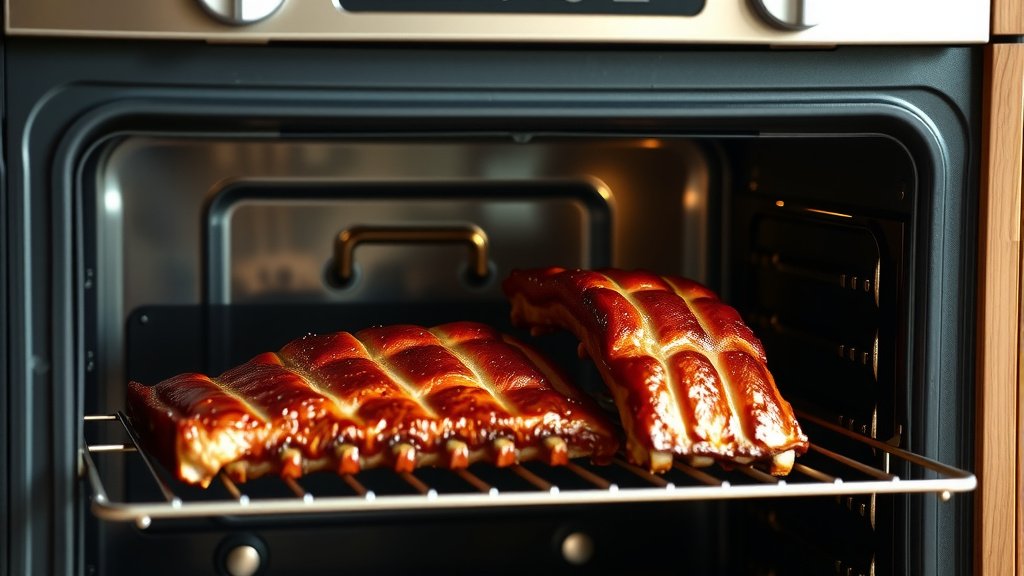
Cooking delicious, tender ribs in a gas oven involves a low-and-slow approach, typically around 275-300°F (135-150°C), often with an initial wrap in foil to lock in moisture.
The key to perfect ribs in a gas oven is consistent, gentle heat over several hours, allowing the connective tissues to break down for a fall-off-the-bone texture.
- Prepare your ribs by removing the silver skin membrane.
- Apply a generous dry rub for deep flavor.
- Set your gas oven to a low temperature, usually 275-300°F (135-150°C).
- Cook ribs wrapped in foil for most of the time, then unwrap to finish.
- Check for tenderness with the bend test or an internal temperature of 190-203°F (88-95°C).
How To Cook Ribs In A Gas Oven?
You can cook amazing ribs in your gas oven by using a low and slow method, which helps them become incredibly tender and flavorful.
This approach transforms tough cuts into succulent masterpieces, right in your kitchen.
Why A Gas Oven Is Great for Ribs
Many home cooks might think outdoor grilling is the only way for ribs, but your gas oven is a fantastic tool.
It provides a consistent, even heat, which is crucial for slow cooking.
Unlike some electric ovens, gas ovens often retain a bit more moisture, which can be a real benefit for long cooks like ribs.
The Secret to Oven Ribs: Low and Slow
We often find that the secret to incredibly tender ribs lies in cooking them at a lower temperature for an extended period.
This method slowly breaks down the tough connective tissues, making the meat melt in your mouth.
It’s like giving your ribs a spa day inside the oven.
Choosing Your Ribs: A Quick Guide
Before you even preheat your oven, picking the right ribs sets the stage for success.
Are you team baby back or a spare rib fan? Both work wonderfully in a gas oven.
Baby Back vs. Spare Ribs
Baby back ribs are smaller, leaner, and cook a bit faster, typically coming from the loin section.
Spare ribs are larger, meatier, and have more fat, which means more flavor and a longer cooking time (USDA).
Whichever you choose, look for meaty racks with good marbling, avoiding those that look too thin or bony.
Essential Prep: Getting Your Ribs Ready
Preparation is key, and two steps stand out for oven ribs: membrane removal and applying a good dry rub.
These simple actions make a big difference in the final taste and texture.
Removing the Membrane (Don’t Skip This!)
On the bone side of your ribs, you’ll find a thin, silvery membrane or “silver skin.”
We found that removing this membrane is critical for tender ribs because it becomes tough and chewy when cooked.
To remove it, just slip a knife under one edge, lift it with a paper towel for grip, and peel it off like a sticker.
The Magic of a Dry Rub
A good dry rub is your flavor foundation, turning plain ribs into something special.
Many experts say to apply your rub generously, massaging it into every crevice of the meat.
For best results, allow the rub to sit on the ribs for at least 30 minutes, or even overnight in the fridge, to let the flavors marry.
Setting Up Your Gas Oven for Ribs
Your gas oven is a controlled environment, perfect for consistent rib cooking.
Getting the temperature and rack placement right makes all the difference.
Ideal Temperature and Rack Placement
For ribs, a lower temperature like 275-300°F (135-150°C) is generally recommended.
Place your oven rack in the middle, ensuring even heat distribution around the ribs (Food Network Kitchen).
This central position prevents one side from cooking faster than the other.
Why Low and Slow Works
Imagine tough meat as a tightly wound spring; high heat makes it tense up further.
Low heat, like a gentle massage, slowly relaxes those muscles and connective tissues.
This scientific process is why your ribs become unbelievably tender, even in a gas oven.
The Cooking Process: Step-by-Step
Now that your ribs are prepped and your oven is ready, it’s time for the main event.
The cooking process is straightforward, but a few choices can affect the outcome.
Wrapping or Unwrapped? The Great Debate
This is where personal preference and desired texture come into play.
Many cooks prefer wrapping ribs in foil for most of the cooking, while others swear by unwrapped.
| Method | Description | Benefits | Considerations |
|---|---|---|---|
| Wrapped in Foil | Cook ribs tightly sealed in heavy-duty aluminum foil. | Maximizes moisture, very tender, “fall-off-the-bone.” | Less bark, can be slightly less intensely flavored on exterior. |
| Unwrapped | Cook ribs directly on a baking sheet or rack. | Develops a smoky, chewy “bark,” richer exterior flavor. | Can dry out if not basted well or cooked too long. |
We often find a hybrid approach works best: wrap for tenderness, then unwrap to finish and apply sauce.
Basting for Ultimate Flavor
Whether wrapped or unwrapped, basting can add another layer of flavor and moisture.
If you’re using a barbecue sauce, wait until the last 30-60 minutes of cooking.
This prevents the sugars in the sauce from burning during the long cook time.
A Simple Ribs Checklist
- Preheat oven to 275-300°F.
- Remove membrane from ribs.
- Apply your favorite dry rub.
- Place ribs bone-side down on a foil-lined baking sheet or rack.
- Cover tightly with foil (if wrapping).
- Cook for 2.5 to 4 hours, depending on rib type and tenderness desired.
- Unwrap and baste with sauce in the final hour (optional).
Knowing When Your Ribs Are Perfect
How do you know when your ribs have reached peak tenderness?
There are a couple of reliable methods to tell if they’re ready to come out of the oven.
The Bend Test and Internal Temperature
The “bend test” is a classic: pick up the rack of ribs with tongs in the middle.
If they bend easily and crack, with the meat almost pulling away from the bone, they’re ready.
Another method, often cited by food safety experts, is an internal temperature of 190-203°F (88-95°C), measured with a meat thermometer away from the bone (USDA).
Troubleshooting Common Rib Issues
Even with careful planning, things don’t always go perfectly.
Here are quick fixes for common problems you might encounter with oven-cooked ribs.
Ribs Too Dry? Here’s Why
Dry ribs usually mean they lost too much moisture during cooking.
This can happen if they weren’t wrapped tightly enough, or if your oven runs hot.
Next time, ensure a good foil seal or consider adding a little liquid (apple juice, broth) to the foil packet (Serious Eats).
Ribs Not Tender Enough?
If your ribs are still tough, they simply haven’t cooked long enough.
The connective tissues need more time to break down.
Put them back in the oven, re-wrapped, and give them another 30-60 minutes, checking for tenderness again.
Conclusion
Cooking ribs in a gas oven is a straightforward and rewarding process, yielding wonderfully tender results every time. By following the “low and slow” method, properly prepping your ribs, and knowing how to check for doneness, you’re well on your way to a delicious meal. Don’t be afraid to experiment with rubs and sauces to find your perfect rib recipe. Your gas oven is a powerful tool for creating amazing, fall-off-the-bone ribs, right in the comfort of your home.
How long do you cook ribs in a gas oven at 275 degrees?
You generally cook ribs in a gas oven at 275 degrees Fahrenheit for about 3 to 4 hours for baby back ribs and 4 to 5 hours for spare ribs, depending on their thickness and desired tenderness. The key is to cook until they are very tender and almost falling off the bone.
Should I wrap ribs in foil in a gas oven?
Yes, many people find that wrapping ribs in foil for most of the cooking time in a gas oven helps to lock in moisture, promoting extra tenderness and preventing them from drying out during the long cooking process. You can unwrap them towards the end to develop a nice bark or glaze with sauce.
What is the ideal internal temperature for cooked ribs?
While pork is safe to eat at 145°F (63°C), ribs need to reach a higher internal temperature, typically between 190°F and 203°F (88°C and 95°C), for the connective tissues to fully break down and achieve that desired tender, fall-off-the-bone texture.
Can I use barbecue sauce from the start when cooking ribs in a gas oven?
It’s generally not recommended to apply barbecue sauce from the very beginning of cooking ribs in a gas oven. Many sauces contain sugar, which can burn and blacken over a long cooking period, leading to a bitter taste. Instead, apply the sauce during the last 30 to 60 minutes of cooking.
How do I prevent ribs from drying out in a gas oven?
To prevent ribs from drying out in a gas oven, make sure to cook them at a low temperature (275-300°F), wrap them tightly in heavy-duty aluminum foil for most of the cooking duration, and consider adding a small amount of liquid, like apple juice or broth, to the foil packet.