
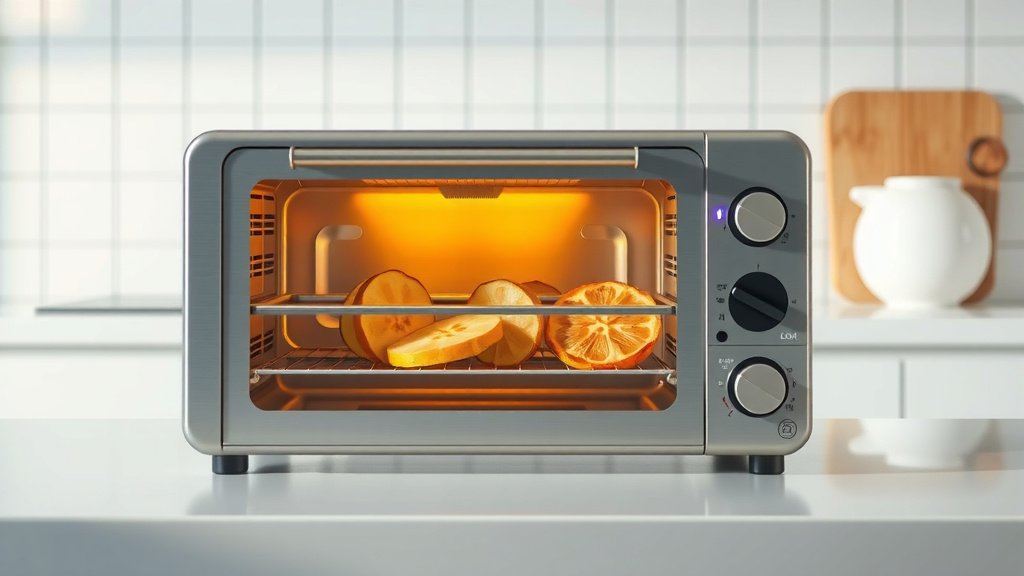
Yes, you can absolutely dehydrate fruit in a toaster oven, transforming fresh slices into delicious, chewy snacks.
This method works by using a low, consistent heat setting over several hours, slowly removing moisture from the fruit.
- You can successfully dehydrate fruit in most toaster ovens.
- The process requires low temperatures and good airflow for best results.
- Slice fruits thinly and evenly to ensure uniform drying.
- Expect longer drying times compared to a dedicated dehydrator.
- Your homemade dehydrated fruit makes a healthy, portable snack.
Can A Toaster Oven Dehydrate Fruit?
Yes, a toaster oven can definitely dehydrate fruit. It’s a fantastic alternative if you don’t own a specialized dehydrator.
The key is understanding how your specific toaster oven works and setting it to the lowest possible temperature.
Why Dehydrate Fruit at Home?
Making your own dried fruit offers many benefits. You control what goes into it, avoiding added sugars or preservatives.
It’s a wonderful way to preserve seasonal produce, making fresh flavors last longer in your pantry (University of California Agriculture and Natural Resources).
Imagine having a supply of chewy apple rings or sweet banana chips ready for snacking. It feels good to create something wholesome yourself.
The Science Behind Toaster Oven Dehydration
Dehydration is simply removing water from food. This process inhibits mold and bacteria growth, preserving the food naturally.
When you dehydrate fruit in your toaster oven, you’re using gentle heat to evaporate moisture slowly.
The Role of Low Heat
You need a low temperature, typically between 130°F to 170°F (55°C to 77°C). Many experts agree this range is optimal (National Center for Home Food Preservation).
Higher temperatures cook the fruit instead of drying it, which isn’t what we want for dehydration.
Airflow is Key
Good airflow helps carry away the evaporating moisture. Without it, your fruit might steam rather than dry.
Leaving the toaster oven door slightly ajar can improve ventilation. Some models have a “keep warm” or convection setting that helps.
Choosing the Right Fruits
Almost any fruit can be dehydrated, but some work better than others. Apples, bananas, berries, and citrus slices are popular choices.
Fruits with high water content, like watermelon, will take much longer. Consider starting with easier options first.
Preparing Your Fruit for Dehydration
Preparation is vital for successful dehydration. Proper washing, peeling, and slicing make a big difference.
Always start with fresh, ripe fruit that isn’t bruised or overripe. This ensures the best flavor and texture.
Slicing Techniques
Slice your fruit thinly and uniformly. Aim for about 1/8 to 1/4 inch thick slices.
Uniform slices dry at the same rate. This avoids some pieces being done while others are still soggy.
Pre-Treatment Options
Some fruits, like apples and bananas, can brown during drying. A quick dip in lemon juice or a citric acid solution can prevent this.
This step isn’t strictly necessary but helps maintain the fruit’s appealing color, which is nice for snacking.
Here’s a quick checklist before you start:
- Choose ripe, blemish-free fruit.
- Wash fruit thoroughly.
- Peel if desired (optional for some fruits like apples).
- Slice all pieces to a consistent thinness.
- Pre-treat browning fruits with lemon juice.
Step-by-Step Guide to Dehydrating Fruit
Let’s walk through the process. It’s simpler than you might think, just requires a little patience.
1. Preheat your toaster oven to its lowest setting, usually around 130°F-170°F (55°C-77°C).
2. Arrange fruit slices in a single layer on your toaster oven’s wire rack or a parchment-lined baking sheet.
3. Leave the door slightly ajar using a wooden spoon or heat-safe object to allow moisture to escape.
4. Rotate trays every few hours if your toaster oven has multiple racks. This helps with even drying.
Monitoring and Flipping
Check your fruit every 1-2 hours. You’ll notice it shrinking and becoming less pliable.
Flip the fruit slices occasionally. This exposes all sides to the circulating air, ensuring even dehydration.
Knowing When Your Fruit is Done
Your fruit is done when it’s leathery and pliable, but not sticky. It should not have any soft, moist spots.
Some fruits, like apples, will snap if fully dried. Berries might feel a bit more chewy. Always cool a piece before testing its dryness.
Toaster Oven vs. Dedicated Dehydrator
While a toaster oven works, a dedicated dehydrator often offers more consistent results and capacity. Think about your needs.
A dehydrator usually has better airflow design and precise temperature controls, but a toaster oven is a good starting point.
| Feature | Toaster Oven Dehydration | Dedicated Dehydrator |
|---|---|---|
| Temperature Control | Basic, often limited low settings | Precise digital control usually |
| Airflow | Requires door propped open | Designed for optimal circulation |
| Capacity | Small batches, 1-2 trays | Multiple trays, larger batches |
| Cost | No extra cost if you own one | Initial investment required |
| Convenience | Versatile, multi-use appliance | Single-purpose, specialized tool |
Storing Your Dehydrated Treats
Once your fruit is fully dry and cooled, store it in airtight containers. Glass jars or vacuum-sealed bags work well.
Keep your dried fruit in a cool, dark place. It can last for several months, providing a healthy snack whenever you want.
Conclusion
Dehydrating fruit in a toaster oven is a very practical and rewarding kitchen project. It’s a great way to enjoy healthy, homemade snacks and reduce food waste.
While it might take a bit more time and attention than using a specialized dehydrator, the results are just as delicious. Give it a try!
Can I dehydrate vegetables in a toaster oven too?
Yes, you can dehydrate many vegetables in a toaster oven using the same low-heat, slow-drying method as for fruit. Think about making kale chips or dried tomato slices.
How long does it typically take to dehydrate fruit in a toaster oven?
The drying time varies significantly depending on the fruit type, slice thickness, and your toaster oven’s efficiency. It can range from 4 hours for thin berries to 12 hours or more for thicker apple slices or mango.
Do I need to blanch fruits or vegetables before dehydrating them?
Blanching is not always necessary for fruits but can help preserve color and nutrients for some vegetables. For fruits like apples, a quick dip in lemon water helps prevent browning, but blanching isn’t typically required for dehydration.
What are common mistakes to avoid when dehydrating fruit in a toaster oven?
Common mistakes include slicing fruit unevenly, using too high a temperature (which bakes instead of dries), not allowing proper airflow, and not checking the fruit regularly. Patience and consistent monitoring are key.
How can I make sure my dehydrated fruit is safe to eat?
Ensure your fruit is thoroughly dried, without any remaining moisture that could promote mold growth. Store it in airtight containers in a cool, dark place. Any signs of mold mean the fruit should be discarded.
