
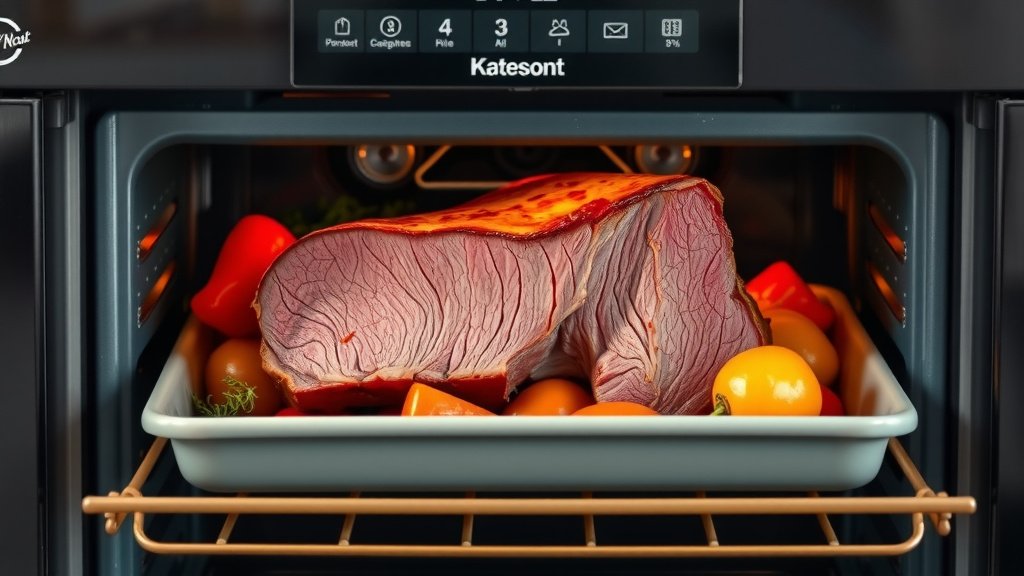
To cook a rib roast in an electric oven, you will typically sear it at a high temperature first, like 450°F (232°C), then reduce the heat to a lower setting, such as 325°F (163°C), to finish roasting until your desired internal doneness is reached.
The key to a perfectly cooked rib roast in an electric oven involves proper seasoning, using a reliable meat thermometer, and allowing ample resting time after roasting.
TL;DR: Here’s a quick overview of how to cook a rib roast in your electric oven:
- Sear the roast first at a very high temperature for about 15-20 minutes to develop a beautiful crust.
- Reduce the oven temperature significantly for a slower, more even roast.
- Always use a meat thermometer to track the internal temperature accurately.
- Pull the roast from the oven when it’s about 5-10 degrees below your target doneness.
- Rest the roast for at least 20-30 minutes before carving to keep it juicy.
How To Cook A Rib Roast In Electric Oven?
Cooking a rib roast in an electric oven involves a two-stage temperature approach: a hot sear followed by a slow roast, ensuring a crusty exterior and tender interior.
Understanding Your Electric Oven’s Nuances
Electric ovens can sometimes be a bit different from gas. We find that electric ovens often maintain a very consistent heat. Knowing your oven’s true temperature can be a game-changer.
Many experts recommend using an oven thermometer to verify accuracy. This simple tool helps prevent under or overcooking your valuable roast.
Selecting Your Perfect Rib Roast
Choosing the right cut makes all the difference. Look for a rib roast with good marbling throughout, which is the white flecks of fat. This marbling melts during cooking, adding incredible flavor and moisture.
Do you prefer bone-in or boneless? Bone-in roasts often cook a bit more evenly and add flavor. However, boneless roasts are easier to carve.
Preparing Your Roast for Roasting Day
Bringing your roast to room temperature is an often-overlooked step. We found that a roast straight from the fridge cooks less evenly.
Allowing it to sit out for about two to four hours helps. Just make sure the roast is not left out for too long for safety (USDA).
Seasoning for Maximum Flavor
Seasoning is where you build the foundation of flavor. A generous coating of salt and pepper is essential. Don’t be shy!
Many chefs suggest a mix of fresh herbs. Garlic and rosemary, for example, pair wonderfully with beef.
Here are some popular seasoning ideas:
- Coarse sea salt and freshly cracked black pepper for a classic taste.
- Minced garlic and fresh rosemary for an aromatic touch.
- Thyme and a pinch of paprika for a smoky, earthy flavor.
- A dry rub with onion powder, garlic powder, and a hint of cayenne.
- Mustard powder and crushed coriander seeds for a bold, savory crust.
The Two-Stage Roasting Method Explained
This method is tried and true for electric ovens. You start hot to get that gorgeous crust, then reduce the heat to cook the inside gently.
We found that this approach locks in juices. It also gives you more control over the final doneness.
High-Heat Sear: Getting That Golden Crust
Preheat your electric oven to a scorching 450°F (232°C). Place the seasoned roast fat-side up on a rack in a shallow pan. A roasting pan with a rack allows for even heat circulation.
Roast at this high temperature for about 15-20 minutes. This quick sear creates a beautiful, flavorful crust. Keep an eye on it to avoid burning.
Lower Temperature Roasting: Gentle Cooking
After the initial sear, reduce your oven temperature to 325°F (163°C). Do not open the oven door during this transition if possible.
Continue roasting until your desired internal temperature is almost reached. This slower cooking ensures a tender and juicy interior.
The Indispensable Meat Thermometer
This is arguably the most important tool you’ll use. Guessing doneness often leads to disappointment.
Insert the thermometer into the thickest part of the roast. Make sure it doesn’t touch any bones (USDA).
Target Internal Temperatures for Doneness
What’s your perfect doneness? We’ve gathered some common targets. Remember, the temperature will rise after you remove it from the oven.
| Doneness | Pull Temp (Electric Oven) | Resting Temp |
|---|---|---|
| Rare | 120-125°F (49-52°C) | 130-135°F (54-57°C) |
| Medium-Rare | 125-130°F (52-54°C) | 135-140°F (57-60°C) |
| Medium | 130-135°F (54-57°C) | 140-145°F (60-63°C) |
| Medium-Well | 140-145°F (60-63°C) | 150-155°F (66-68°C) |
The Critical Resting Period
Once your roast hits the target pull temperature, remove it from the oven immediately. Transfer it to a cutting board.
Cover it loosely with foil and let it rest for at least 20-30 minutes. This rest allows the juices to redistribute, leading to a much more tender and flavorful slice.
Cutting it too soon lets all those delicious juices run out. It’s tough to be patient, but it’s truly worth it!
Carving Your Masterpiece
After resting, it’s time to carve. Use a sharp carving knife. Slice against the grain for the most tender bites.
If you have a bone-in roast, first remove the bones by running your knife along them. Then slice the meat.
Checklist for Rib Roast Success
Keep these points in mind for an amazing roast:
- Bring roast to room temperature.
- Season generously.
- Preheat oven accurately to 450°F.
- Sear for 15-20 minutes.
- Reduce heat to 325°F.
- Use a reliable meat thermometer.
- Pull roast 5-10 degrees before target.
- Rest for at least 20-30 minutes.
Conclusion
Cooking a rib roast in your electric oven doesn’t have to be intimidating. By following these steps—from proper seasoning and the two-stage roasting method to using a meat thermometer and that all-important resting period—you’re well on your way to creating a memorable and delicious meal.
Remember, patience and precision are your best friends in the kitchen. Enjoy the process and the fantastic results!
Frequently Asked Questions
How long does it take to cook a 5-pound rib roast in an electric oven?
For a 5-pound rib roast, after an initial high-heat sear, expect the low-temperature roasting phase to take approximately 1.5 to 2.5 hours at 325°F (163°C) to reach medium-rare, though an accurate meat thermometer is your best guide.
What temperature should I cook rib roast to for medium doneness?
For medium doneness, you should pull your rib roast from the electric oven when its internal temperature reaches about 130-135°F (54-57°C). It will then rise to the target 140-145°F (60-63°C) after resting.
Can I use a convection setting for a rib roast in an electric oven?
Yes, you can use a convection setting, but you’ll need to adjust the temperature and possibly the cooking time. Many experts suggest reducing the oven temperature by 25°F (about 15°C) and checking for doneness sooner, as convection cooks faster and more evenly.
How do I prevent my rib roast from drying out in an electric oven?
To prevent drying, ensure you don’t overcook it by closely monitoring with a meat thermometer, using the two-stage cooking method to retain moisture, and crucially, allowing the roast to rest adequately before carving.
Is it better to cook a rib roast fat-side up or down?
It is generally better to cook a rib roast fat-side up. This allows the fat to slowly render and baste the meat below as it cooks, keeping it moist and adding flavor to the exterior crust.
