
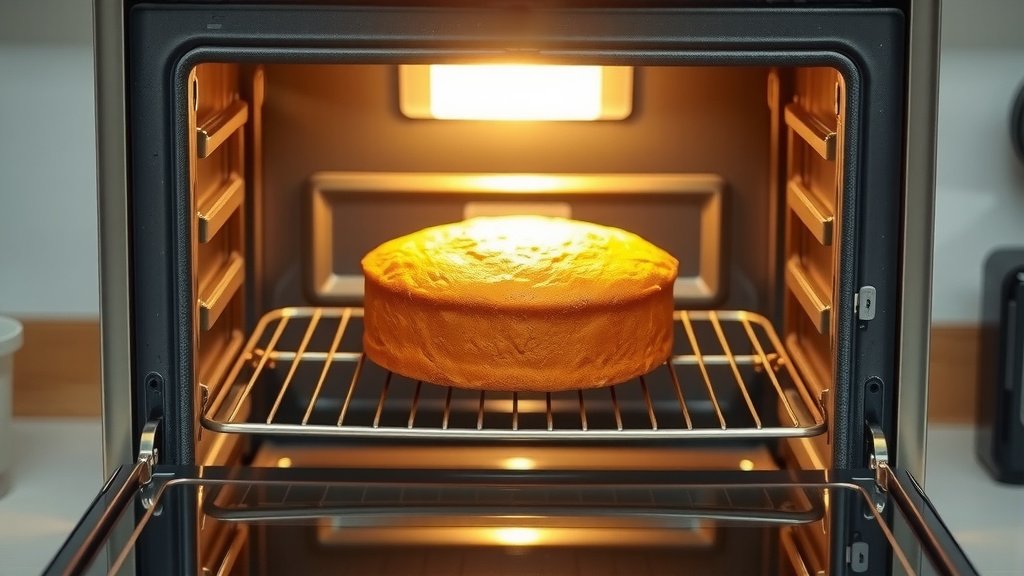
To bake a cake in an electric oven, always preheat your oven thoroughly to the recommended temperature for at least 15-20 minutes to ensure even heating. Place your cake pan on the middle rack for optimal air circulation and consistent baking results.
Monitor your cake closely and avoid opening the oven door too often, as this can cause temperature fluctuations and lead to a collapsed cake.
TL;DR: Baking a cake in an electric oven means you need to:
- Preheat your oven correctly to the recipe temperature.
- Use the middle rack for the best heat distribution.
- Avoid opening the oven door too early or too often.
- Check for doneness using a toothpick or by gentle pressing.
- Cool your cake properly to prevent it from getting soggy.
How To Bake A Cake In An Electric Oven?
Baking a cake in an electric oven is simpler than you might think when you know the key steps. We found that the biggest secrets are understanding your oven and following your recipe precisely.
Understanding Your Electric Oven
Electric ovens offer consistent heat, which is fantastic for baking. Unlike gas ovens, they don’t have open flames that can create hot spots. Your electric oven typically heats using elements at the top and bottom.
Even Heat Distribution
Electric ovens are known for their ability to distribute heat evenly. This means your cake should bake uniformly without one side cooking faster than the other. Proper preheating is crucial for this consistency.
Temperature Accuracy
Many experts say that electric ovens often hold their set temperature more accurately. However, it’s a good idea to use an oven thermometer to verify your oven’s true temperature, as factory calibrations can vary over time.
Gathering Essential Baking Tools
Before you even think about mixing, have your tools ready! You’ll need mixing bowls, measuring cups and spoons, a whisk or electric mixer, your chosen cake pan, and parchment paper if desired. Don’t forget an oven mitt!
- Mixing bowls (at least two)
- Measuring cups and spoons for accuracy
- Whisk or electric mixer for smooth batter
- Your specific cake pan (greased and floured, or lined)
- Oven mitts for safety
- Cooling rack for after baking
Preparing Your Cake Batter
Follow your cake recipe steps carefully. Accuracy in measurements is a baker’s best friend. Overmixing can lead to a tough cake, so mix until just combined, especially after adding flour.
We found that sifting dry ingredients helps to prevent lumps and ensures a lighter texture. This tiny step makes a big difference in your final cake’s crumb.
The Importance of Oven Preheat
Imagine jumping into a cold pool versus a perfectly warm one – the cake feels the same way! Always preheat your electric oven for at least 15-20 minutes beyond when the light indicates it’s ready. This allows the internal elements and walls to fully reach and stabilize at the target temperature (NIH).
Choosing the Right Rack Position
For most cakes, the middle rack is your sweet spot. It provides the most balanced heat from both the top and bottom elements. If you’re baking multiple cakes, you might need to rotate them halfway through for even results, as some research suggests.
Baking Time and Temperature
Every recipe specifies a temperature and baking time. Trust your recipe, but use it as a guide. Electric ovens can sometimes bake a little faster or slower than expected. Research often connects precise temperatures with specific cake outcomes (Mayo Clinic).
| Cake Type | Typical Oven Temp | Approximate Bake Time |
|---|---|---|
| Layer Cake | 350°F (175°C) | 25-35 minutes |
| Bundt Cake | 325-350°F (160-175°C) | 45-60 minutes |
| Cupcakes | 350°F (175°C) | 18-22 minutes |
| Sheet Cake | 350°F (175°C) | 30-40 minutes |
How to Check for Doneness
Resist the urge to open the oven door too early! Wait until the baking time is almost up. When you do check, here’s what to look for:
- The cake edges pull away slightly from the pan.
- A light golden-brown color on top.
- If you gently press the center, it springs back.
- A wooden skewer or toothpick inserted into the center comes out clean.
- It smells heavenly and fills your kitchen with joy!
Cooling Your Cake Properly
Once your cake is done, let it cool in the pan on a wire rack for 10-15 minutes. This allows the cake to set and prevents it from breaking when you invert it. After this, turn it out onto the rack to cool completely. Don’t rush this step!
Common Electric Oven Baking Problems (And Solutions!)
Even seasoned bakers face issues sometimes. Don’t worry, we’ve got you covered with common electric oven woes.
Uneven Baking
If one side of your cake bakes faster, your oven might have slight temperature variations. Try rotating your cake pan halfway through the baking time. Also, ensure your oven is truly preheated and not crowded.
Cake Sinks in Middle
A sunken cake often means it was underbaked, or you opened the oven door too early. Ensure your leavening agents are fresh and your oven temperature is accurate. Also, avoid bumping the oven or opening it during the critical rising phase.
Dry Cake
A dry cake can result from overbaking or too little liquid in the batter. Always check for doneness at the earliest recommended time. Adjust your oven temperature if you find it consistently bakes too hot.
Conclusion
Baking a cake in an electric oven truly can be a rewarding experience. By focusing on proper preheating, accurate measurements, using the right rack, and knowing how to check for doneness, you’re well on your way to baking delicious, perfectly textured cakes every time. Enjoy the sweet rewards of your effort!
How long does it take to preheat an electric oven for baking a cake?
For optimal results, an electric oven should preheat for at least 15 to 20 minutes after the indicator light comes on. This ensures the oven cavity and not just the air inside reaches a stable, even temperature.
Can I open my electric oven door to check on the cake while it’s baking?
It’s best to avoid opening the oven door during the first two-thirds of the baking time, especially for delicate cakes. Opening the door causes a sudden temperature drop, which can make your cake collapse or bake unevenly.
Why is my cake always dry when I bake it in an electric oven?
A dry cake is often a sign of overbaking. Start checking for doneness at the minimum time suggested by your recipe. You might also want to verify your oven’s temperature with an external thermometer to ensure it’s not running too hot.
What is the best type of pan to use for baking a cake in an electric oven?
Light-colored metal pans, especially aluminum, are generally recommended as they conduct heat evenly and prevent the edges of your cake from over-browning. Darker pans absorb more heat, potentially leading to a darker, tougher crust.
My electric oven has a “Convection Bake” setting. Should I use it for cake?
Convection bake circulates hot air, which can bake cakes faster and brown them more. While it can work, many experts suggest reducing the oven temperature by 25°F (15°C) and shortening the baking time if you use it for cakes to prevent overbaking or dryness.
