
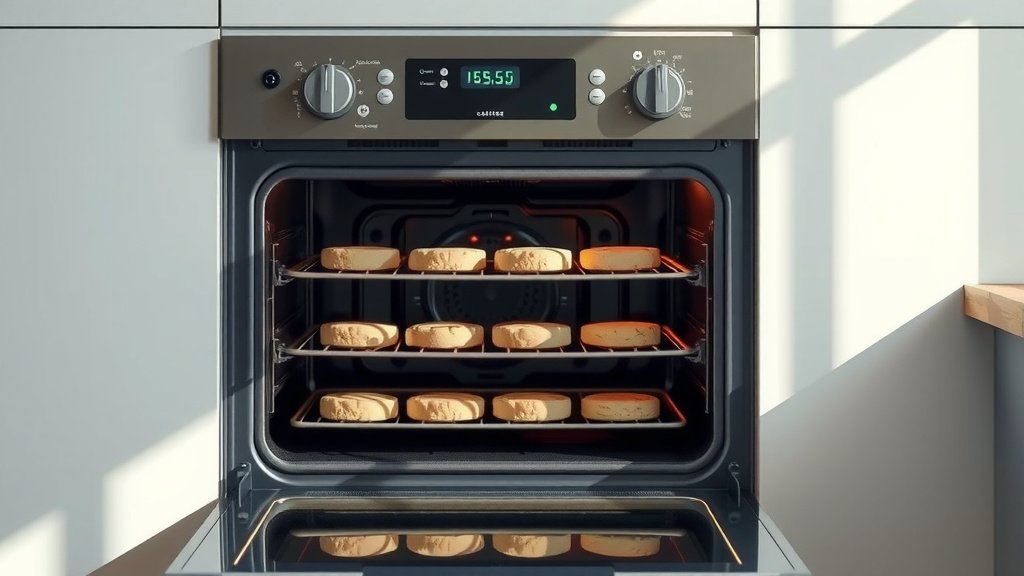
Your electric oven might take longer than recipes suggest primarily due to inaccurate thermostat calibration or poor door sealing, causing it to struggle maintaining consistent heat.
Factors such as frequent door openings, old heating elements, and even your bakeware choice also contribute to extended cooking times in electric ovens.
- Electric ovens often run cooler than displayed due to faulty thermostats or poor calibration.
- Heat escapes easily from worn door seals or frequent oven door openings.
- Using the wrong bakeware or crowding the oven can also slow down cooking.
- Older ovens may have weakened heating elements, extending required baking times.
Why Does Electric Oven Take Longer Than Recipe Says?
Electric ovens often take longer than recipe instructions because their internal temperature might not match the display, commonly due to calibration issues or general wear.
You might also be losing heat through a faulty door seal or simply by peeking too often, all of which delay your cooking.
Is Your Oven’s Thermostat Telling the Truth?
Have you ever wondered if your oven’s temperature dial truly reflects the heat inside? Many experts say that oven thermostats can be off by as much as 25-50 degrees Fahrenheit (NIST).
This difference means your food is cooking at a lower temperature than you expect, naturally extending the time needed to bake or roast.
Checking for Calibration Issues
To check your oven’s accuracy, you can use a simple oven thermometer. Place it inside, preheat your oven, and observe the actual temperature.
If the thermometer shows a lower reading, your oven needs a temperature adjustment, which you can often do yourself or with professional help.
Are You Losing Heat Through the Door?
Imagine trying to warm a room with an open window; that’s what happens when your oven door doesn’t seal correctly. Heat escapes, and your oven struggles to maintain its set temperature.
A poor seal means the oven constantly works harder, using more energy and taking longer to cook your food thoroughly.
The Role of a Good Oven Seal
Oven door gaskets are rubber or silicone strips around the door frame. Over time, these seals can harden, crack, or become brittle, creating gaps.
A simple check involves placing a dollar bill in the door and closing it; if you can pull it out easily, your seal might need replacing.
Preheating: Are You Waiting Long Enough?
Recipes always say to preheat, but what does that truly mean for an electric oven? It’s not just about the light turning off; it’s about the oven reaching and holding a steady temperature.
We found that many electric ovens continue to heat for several minutes after the preheat indicator light goes out to stabilize the internal temperature.
Understanding Electric Oven Temperature Fluctuations
Electric ovens cycle their heating elements on and off to maintain temperature. This creates small ups and downs in heat, unlike the more consistent heat of gas ovens.
These natural fluctuations mean that while the average temperature might be correct, your food experiences brief periods of slightly cooler air.
The Hidden Impact of Your Bakeware Choice
Did you know your baking pans play a big part in cooking time? Dark metal pans absorb more heat, leading to faster cooking and often browner crusts.
Lighter-colored metal or glass bakeware reflects heat, which can extend cooking times, especially for delicate items like cakes.
| Bakeware Material | Heat Absorption | Typical Cooking Time |
|---|---|---|
| Dark Metal (e.g., non-stick) | High | Slightly Faster |
| Light Metal (e.g., aluminum) | Medium | As Expected |
| Glass (e.g., Pyrex) | Slow, Even | Often Longer |
| Ceramic | Slow, Very Even | Can Be Longer |
Crowding Your Oven: A Common Mistake?
It’s tempting to get everything baked at once, isn’t it? However, placing too many items in your oven can block air circulation and trap steam.
This prevents heat from distributing evenly around your food, making each item take longer to cook through.
Altitude Sickness for Your Recipes?
If you’ve recently moved to a higher elevation, your recipes might start behaving differently. Water boils at a lower temperature at high altitudes.
This affects how moisture behaves in your food, often requiring adjustments to baking temperatures and times for good results (USDA).
When Your Oven Just Isn’t That Old Anymore
Like any appliance, oven components wear out. Heating elements can lose efficiency over years of use, even if they still glow red.
An aging oven might not generate or hold heat as effectively as it once did, contributing to longer cooking times.
Is Your Power Supply Consistent?
Sometimes, the issue isn’t the oven itself, but the electricity flowing to it. Voltage dips in your home’s power supply can affect an electric oven’s heating ability.
If other large appliances are running, your oven might not receive a steady power flow, impacting its performance.
Beyond the Oven: Recipe Variability
Finally, consider the recipe itself. Not all recipes are perfectly crafted or tested. Some might simply underestimate the required cooking time.
Always treat recipe times as a guide, and remember that your ingredients’ exact temperature or even humidity in your kitchen can change things.
Practical Solutions to Speed Up Your Baking
Don’t just live with slow baking; take action! Here are some straightforward steps you can try to get your electric oven cooking more efficiently.
- Use an Oven Thermometer: Always keep a separate, accurate oven thermometer inside to verify the actual temperature.
- Check and Replace Door Seals: Inspect your oven door gasket regularly. If it’s stiff or damaged, replace it to stop heat loss.
- Allow Full Preheat Time: Wait at least 15-20 minutes after your oven signals it’s preheated for the temperature to stabilize.
- Avoid Frequent Door Openings: Every time you open the door, oven temperature can drop by 25-50 degrees. Use the oven light instead.
- Choose the Right Bakeware: Match your pans to your recipe needs. Darker pans for browning, lighter for gentler baking.
- Don’t Crowd the Oven: Give items enough space for air to circulate freely. Cook in batches if needed.
Conclusion
An electric oven that cooks slowly isn’t just frustrating; it can impact your dishes and your energy bill. The good news is that many reasons are simple to identify and fix.
By understanding common issues like calibration, door seals, and even your bakeware, you can take practical steps to ensure your oven works as it should.
Regular maintenance and a little awareness can transform your baking experience, getting your meals and treats ready on time.
How often should I calibrate my electric oven?
Most experts suggest checking your oven’s calibration once a year with an oven thermometer. If you notice dishes consistently undercooked or overcooked, it’s a good idea to check it sooner.
Can cleaning my oven improve its cooking time?
Yes, a very dirty oven, especially with built-up grease on heating elements or sensors, can affect its efficiency. Regular cleaning helps ensure elements heat properly and sensors read temperatures accurately.
What’s the best bakeware material for faster cooking?
For most uses where you want faster cooking and browning, dark metal bakeware is often preferred. It absorbs heat efficiently. However, be mindful it can also cause over-browning if not adjusted.
Does opening the oven door really affect cooking that much?
Absolutely. Every time you open the oven door, a significant amount of heat escapes, causing the internal temperature to drop. This loss means the oven must work to regain the temperature, extending cooking times, especially for delicate items.
My oven is new, but it still cooks slowly. What gives?
Even new ovens can have calibration issues from the factory. Test it with an oven thermometer first. Also, consider if you’re waiting for a full preheat or if other factors like voltage fluctuations or chosen bakeware are at play.
