
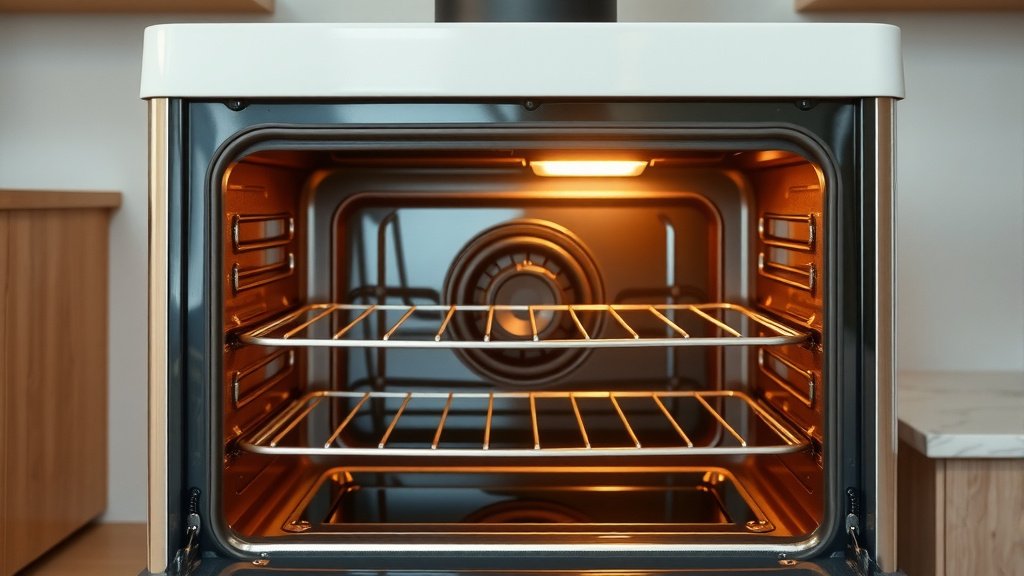
To reduce hot spots in an electric oven, ensure you preheat it fully, use an oven thermometer to verify accuracy, and adjust your oven’s calibration if necessary.
Proper rack placement, using a baking stone or steel, and avoiding oven overcrowding are also key steps to achieve more even baking results.
Here’s a quick overview of how to achieve more even baking:
- Always preheat your oven for at least 20 minutes, even after the light indicates readiness.
- Invest in a reliable oven thermometer to know your oven’s true temperature.
- Calibrate your oven if its actual temperature differs significantly from the setting.
- Place your food on the middle rack for the most consistent heat distribution.
- Consider a baking stone or steel to help stabilize temperature fluctuations.
- Avoid lining oven racks with aluminum foil, which blocks heat circulation.
How To Reduce Hot Spots In Electric Oven?
Reducing hot spots in your electric oven involves a few practical steps that can significantly improve your cooking and baking outcomes. You can achieve a much more even cooking environment through careful preparation and simple adjustments.
Understanding Oven Hot Spots
Ever wonder why one side of your cookies browns faster than the other, or why your casserole has burnt edges but a raw center? That’s the work of a hot spot. These are areas within your oven that reach a higher temperature than the rest, leading to uneven cooking.
What Causes Hot Spots?
Several factors create these frustrating hot zones. We found that the main culprits often relate to how your oven heats up and circulates air. Understanding these can help you tackle the problem effectively.
Many experts say that heating elements cycle on and off to maintain temperature (GE Appliances). This cycling can cause temporary temperature swings. Airflow issues and even minor design differences in ovens also play a role. Think of it like a river with stronger currents in certain spots.
Preheating: A Non-Negotiable Step
Skipping proper preheating is a common mistake. Your oven needs ample time to reach and stabilize its temperature. The “preheated” light often comes on too early, signaling it’s at temperature, but the walls and racks still need to catch up.
Give your oven at least 15-20 minutes *after* the preheat light signals it’s ready. This allows the internal components to fully absorb heat, creating a more consistent cooking environment. It’s like letting your car warm up on a cold morning; it runs smoother.
Master Your Oven’s True Temperature
Your oven’s display might say 350°F, but is it really? Many experts agree that built-in thermostats can be off by as much as 25-50 degrees (University of Nebraska-Lincoln). This difference can drastically affect your cooking results.
Use an Oven Thermometer
A simple, inexpensive oven thermometer is your secret weapon. Hang it inside your oven and monitor the actual temperature. You might be surprised by what you discover! Knowing the real temperature is the first step toward correcting inconsistencies.
Calibrate Your Oven for Accuracy
If your oven thermometer consistently shows a temperature different from your oven’s setting, it might need calibration. This adjustment can often be done manually. Many oven manufacturers provide instructions in their user manuals.
Usually, this involves accessing a hidden setting on your oven’s control panel. We found that adjusting it by 5-degree increments until it matches your thermometer is a good approach. Always refer to your specific model’s manual for detailed steps.
Strategic Rack Placement
Where you place your food inside the oven has a big impact. The top rack is generally hotter due to rising heat, while the bottom rack is closer to the main heating element, often leading to quicker browning underneath.
For most dishes, the middle rack is your best bet. It provides the most balanced heat distribution. If you’re baking multiple items, try to use only one rack. If you must use two, consider swapping their positions halfway through cooking.
Harness the Power of Thermal Mass
Want to stabilize your oven’s temperature fluctuations? Consider adding some thermal mass. This means materials that absorb and retain heat well, then radiate it back slowly.
- Baking Stones or Steels: Placing one on a lower rack can absorb heat and then release it steadily, evening out temperature swings. This is especially helpful for bread and pizza, but it benefits almost any baked good.
- Empty Cast Iron Skillet: A heavy cast iron skillet can serve a similar purpose. Just make sure it’s completely empty and clean before placing it in the oven.
Don’t Block Airflow
Your oven needs to breathe! Blocking vents or covering entire racks with foil can disrupt heat circulation, creating new hot and cold spots. The heat needs to move freely to distribute evenly around your food.
Avoid lining the bottom of your oven with aluminum foil unless your manufacturer specifically recommends it. Also, avoid covering oven racks completely with foil. This practice can trap heat and even damage heating elements in some models.
Keep Your Oven Clean
Believe it or not, a dirty oven can contribute to uneven heating. Spills and baked-on grease can absorb heat and create localized temperature variations. It’s like having tiny heat sinks in random places.
Regular cleaning ensures that your oven walls and racks reflect and circulate heat as intended. A clean oven is a happy oven, and it helps your food cook more predictably.
Check Your Door Seal
A leaky oven door is like leaving a window open on a cold day; precious heat escapes! Inspect the rubber gasket or seal around your oven door. Is it worn, cracked, or missing pieces? A compromised seal allows heat to escape, leading to cooler spots near the front of the oven.
Replacing a faulty door seal is a fairly straightforward repair for most ovens. Many manufacturers sell replacement seals, or you can find universal ones. This simple fix can make a big difference.
Avoid Overcrowding Your Oven
Stuffing too many dishes into your oven might seem efficient, but it’s a recipe for uneven cooking. Just like blocking vents, too much food restricts airflow. Heat cannot circulate properly around each item, leading to raw spots and uneven browning.
Give your food space to breathe. If you’re baking multiple trays of cookies, for example, consider baking them in batches. This allows for better heat distribution and more consistent results across all your delicious treats.
When to Call for Service
Sometimes, despite your best efforts, hot spots persist. If your oven is very old, or if you suspect a heating element isn’t working correctly, it might be time to call a professional. A faulty element or thermostat could be beyond simple adjustments.
We found that unusual noises, visible damage to elements, or significantly longer cooking times can indicate a need for professional repair (NIH). Don’t hesitate to seek expert help if you’ve tried everything else.
Your Hot Spot Checklist
Here’s a quick list to help you tackle those frustrating hot spots:
- Preheat fully for 20+ minutes.
- Use an oven thermometer.
- Calibrate your oven if needed.
- Place food on the middle rack.
- Add a baking stone or steel.
- Keep oven clean.
- Inspect door seal for leaks.
- Don’t block vents or overcrowd.
- Avoid lining racks with foil.
- Rotate dishes halfway through cooking.
Conclusion
Tackling hot spots in your electric oven doesn’t require a kitchen renovation; it’s about understanding how your oven works and applying a few clever tricks. By focusing on proper preheating, accurate temperature monitoring, smart rack placement, and maintaining a clean environment, you’re well on your way to perfectly cooked meals every time. Remember, patience and a little bit of knowledge are your best ingredients for baking success!
What is the best oven temperature for even baking?
The “best” temperature varies by recipe, but for general even baking, ensure your oven maintains a consistent temperature throughout the cooking process. Using an accurate oven thermometer to verify the actual temperature inside your oven is more important than the specific setting on the dial.
Can a dirty oven cause hot spots?
Yes, a dirty oven can absolutely contribute to hot spots. Baked-on food debris, grease, and spills can absorb or reflect heat differently than the clean oven surfaces, leading to uneven heat distribution and localized temperature variations.
How often should I calibrate my oven?
You should calibrate your oven whenever you notice significant discrepancies between your oven’s set temperature and the reading from an independent oven thermometer. Many experts recommend checking its accuracy at least once a year, or if you move your appliance.
Does opening the oven door frequently affect hot spots?
Yes, opening the oven door frequently allows a significant amount of heat to escape, especially from the front of the oven. This causes the internal temperature to drop and then spike as the heating element works to recover, potentially worsening temperature consistency and creating new hot or cold spots.
Is it better to use a baking stone or a baking steel for even heating?
Both baking stones and steels are excellent for promoting even heating by providing thermal mass. Baking steels tend to conduct heat more efficiently and retain it for longer periods than ceramic stones, often resulting in crisper crusts and more consistent oven temperatures, especially for items requiring high heat like pizza.
