
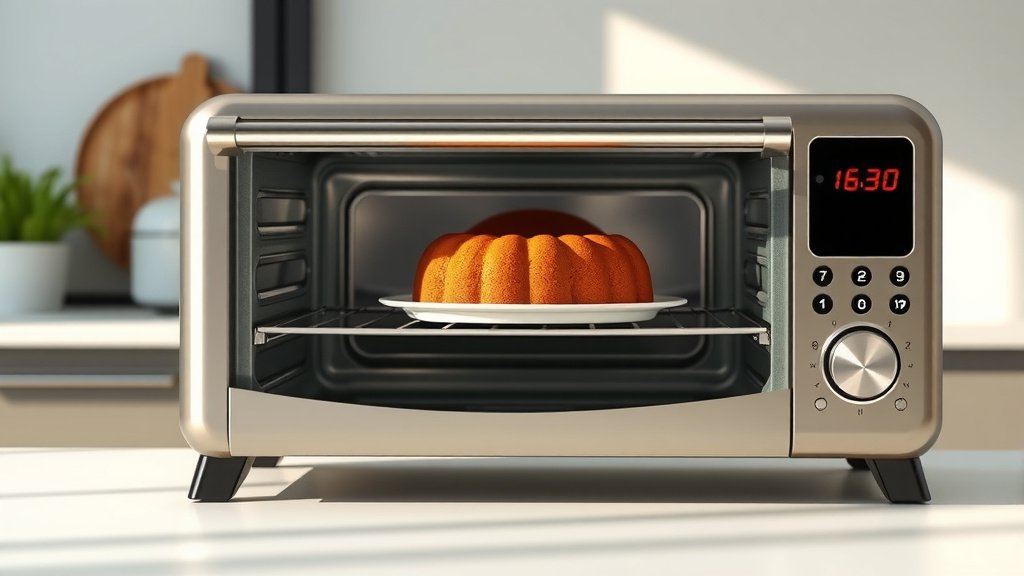
Yes, you can absolutely bake a cake in a toaster oven, especially smaller cakes and cupcakes, with some careful adjustments. Many home bakers successfully use them for quick treats when a full-sized oven isn’t necessary or available.
While a toaster oven can bake a cake, remember it often requires closer monitoring and temperature calibration compared to a conventional oven due to its smaller size and heating elements.
- You can bake delicious cakes in a toaster oven, but size matters a lot.
- Expect to adjust baking times and temperatures; it’s a learning curve.
- Small cakes, cupcakes, and mug cakes are often the best choices.
- Keep a close eye on your cake; toaster ovens can have hot spots.
- Preheating is essential for a uniformly baked cake.
Can You Bake A Cake In A Toaster Oven?
Yes, you can certainly bake a cake in a toaster oven. It’s a fantastic option for smaller baking projects or when you want to avoid heating up your main kitchen oven. Think of it as a compact baking powerhouse.
We found that many home cooks turn to their toaster ovens for quick dessert fixes. You’ll need to adjust your approach a little, but the results can be just as delightful. It’s all about understanding your appliance.
The Mighty Mini Oven: What Makes it Different?
A toaster oven is essentially a scaled-down version of a conventional oven. It has heating elements, a thermostat, and often a convection fan. Its small size means it heats up faster and uses less energy.
However, that small size also means less internal space and often more intense, direct heat. This is why baking a cake in one requires a slightly different strategy. You’re working with a more concentrated environment.
Understanding Heat Distribution
One key difference is how heat moves around inside. Conventional ovens offer a more spacious, even heat. Toaster ovens, being smaller, can have more noticeable hot spots. This affects how your cake bakes.
Research suggests that preheating accurately is even more important for toaster ovens (Energy Star). This helps stabilize the internal temperature before your batter goes in. Consistent heat prevents uneven baking.
Choosing the Right Cake for Your Toaster Oven
Not all cakes are created equal when it comes to toaster oven baking. Think about the size and density of your recipe. Smaller, less dense cakes typically perform best in this compact appliance.
Cupcakes, mug cakes, or small single-layer cakes are ideal. Trying to bake a large, multi-tiered cake will likely lead to frustration and uneven results. Keep it simple and scaled down for success.
Pan Size Matters Immensely
Your cake pan must fit comfortably inside your toaster oven, allowing for air circulation. This usually means a pan no larger than 8×8 inches, or even smaller, depending on your model. Always measure your interior space first.
A pan that’s too large will touch the heating elements or walls, leading to burnt edges and an undercooked center. We’ve found that silicone bakeware can work well for certain toaster oven recipes because it adapts easily.
Essential Steps for Toaster Oven Cake Success
Baking a cake in a toaster oven isn’t just about putting it in and waiting. There are some important steps to follow. These tips will help you achieve that perfectly moist, golden-brown cake you’re dreaming of.
Consider these points a mini-masterclass in toaster oven baking. You’ll find that small adjustments make a big difference in the final outcome. Patience and attention are your best friends here.
- Preheat Thoroughly: Let your toaster oven reach the set temperature for at least 5-10 minutes. This stabilizes the heat.
- Use the Right Pan: Opt for light-colored metal or silicone pans that fit with room to spare on all sides.
- Adjust Temperature: Often, you’ll need to lower the recipe’s recommended temperature by about 25°F (about 15°C). Toaster ovens generally run hotter (Consumer Reports).
- Monitor Closely: Cakes bake faster in smaller ovens. Start checking for doneness 5-10 minutes earlier than the recipe suggests.
- Rotate for Evenness: Halfway through baking, carefully rotate the cake pan 180 degrees. This helps to counteract hot spots.
- Cover If Browning Too Fast: If the top browns too quickly, loosely tent it with aluminum foil. This protects the crust while the inside finishes baking.
Toaster Oven vs. Conventional Oven: A Quick Comparison
While both can bake cakes, their methods differ. Understanding these differences helps you decide which appliance to use for your specific baking needs. It’s about picking the right tool for the job.
Many experts say a conventional oven offers more forgiving baking conditions. However, the toaster oven shines for speed and efficiency for smaller tasks. Here’s a quick look at the trade-offs.
| Feature | Toaster Oven Cake Baking | Conventional Oven Cake Baking |
|---|---|---|
| Capacity | Small cakes, cupcakes, single servings | Larger cakes, multiple batches |
| Preheat Time | Faster (5-10 minutes) | Slower (10-20 minutes) |
| Heat Evenness | Can have hot spots; requires rotation | Generally more even heat distribution |
| Energy Use | More energy-efficient for small batches | Less efficient for small batches |
| Monitoring | Requires constant vigilance | More forgiving, less watching needed |
| Best For | Quick treats, small households | Family-sized desserts, baking multiple items |
Why Adjusting Temperature is Key
Think of your toaster oven as having a more intense personality. Because it’s small, heat reflects and concentrates more readily. If you use the same temperature as a large oven, your cake might burn on the outside while staying raw inside.
It’s like cooking a small steak on a blazing grill versus a larger cut. You need to turn down the heat to prevent charring. We often find that a 25°F reduction is a good starting point, then adjust as you learn your specific model.
Common Pitfalls and How to Avoid Them
Baking in a toaster oven isn’t without its challenges. But knowing what to look out for can save you from baking disappointments. Let’s talk about some common issues and their simple solutions.
Nobody wants a burnt-on-the-outside, raw-in-the-middle cake. By being aware of these potential problems, you can prevent them from happening. A little foresight goes a long way in the kitchen.
Avoiding Burnt Tops and Bottoms
Due to the close proximity of heating elements, the top and bottom of your cake can brown very quickly. If you notice this happening, try moving the rack to a lower position. If your toaster oven has multiple rack levels, this offers valuable flexibility.
You can also place a cookie sheet or another metal pan on the rack below your cake to shield the bottom from direct heat. And remember the foil tent for the top, as discussed earlier, if it’s browning too fast. These tricks protect your precious cake.
Dealing with Uneven Baking
Uneven baking usually comes from hot spots or not rotating your cake. Make sure there’s enough space around your pan for air to circulate. Rotating the pan halfway through baking helps ensure all sides get equal exposure to the heat.
If you have a convection toaster oven, using the convection setting can sometimes help with more even heat distribution. This circulates hot air around the food, reducing hot spots. Always consult your toaster oven’s manual for specific convection advice.
Your Cake Baking Checklist
Before you even mix your batter, a quick check can ensure a smooth baking experience. This little list acts like your personal baking assistant, making sure you don’t miss any crucial steps.
Think of it as setting yourself up for success. A few seconds of preparation can save you headaches later. You want to focus on the joy of baking, not on preventable problems.
- Is your toaster oven clean and free of crumbs? (Prevents smoking.)
- Have you measured your pan to ensure it fits with adequate space?
- Is your oven preheated to the correct, possibly adjusted, temperature?
- Do you have aluminum foil ready for tenting, just in case?
- Is your timer set for an initial check, maybe 5-10 minutes early?
- Do you have oven mitts handy for easy, safe rotation?
Conclusion
Baking a cake in a toaster oven is not just possible, it can be a wonderfully rewarding experience. It’s perfect for making smaller, delightful treats without the fuss of a large oven. With a little care and understanding of your appliance, you can achieve delicious results every time.
Remember, the key is proper pan selection, temperature adjustment, and vigilant monitoring. Don’t be afraid to experiment and get to know your toaster oven’s unique quirks. You’ll soon be whipping up amazing cakes with confidence!
Can I use a regular cake recipe in a toaster oven?
Yes, you can use a regular cake recipe, but you will need to scale it down for a smaller pan size. Also, adjust the baking temperature, typically reducing it by 25°F, and keep a very close eye on the baking time as toaster ovens cook faster.
What kind of pans are best for baking cakes in a toaster oven?
Light-colored metal baking pans or silicone bakeware are often recommended. Avoid dark-colored pans as they absorb more heat and can lead to over-browning. Ensure the pan fits comfortably with at least an inch of clearance on all sides.
How do I prevent my cake from burning on top in a toaster oven?
If the top of your cake is browning too quickly, you can loosely tent it with aluminum foil partway through baking. Moving your cake to a lower rack position, if available, can also help shield the top from direct heat.
Do I need to preheat my toaster oven for baking a cake?
Absolutely, preheating is crucial. It allows the toaster oven to reach and stabilize the target temperature, which helps your cake bake evenly from the start. Without preheating, your cake might not rise properly or could bake inconsistently.
Can I bake multiple cupcakes at once in a toaster oven?
You can bake several cupcakes at once, provided they fit without crowding the oven. Use a small muffin tin that leaves enough space for air circulation. Avoid filling the oven to capacity, as this can lead to uneven baking and extend the baking time.
