

For the best oven setting for pizza, you want the hottest possible temperature your oven can reach, typically between 450°F and 500°F (232°C to 260°C). This high heat helps to cook the crust quickly and evenly, giving you that delicious crispy exterior and chewy interior.
You’ll often find that most home ovens work best for pizza when preheated thoroughly. Using a pizza stone or steel can also make a big difference, helping to transfer heat directly to the crust. This method helps to mimic a traditional brick oven.
- Preheat your oven to its highest setting (450-500°F).
- Use a pizza stone or steel for best results.
- Ensure your oven is fully preheated for at least 30-60 minutes.
- Place your pizza directly on the hot surface.
Below, we break down everything you need to know about optimizing your home oven for perfect pizza, helping you achieve a professional-quality pie every time.
Optimizing Your Oven for the Perfect Pizza
You want that perfect crust, right? The one that’s crispy on the outside and wonderfully chewy on the inside. Achieving this at home starts with understanding your oven’s capabilities and how to coax the best performance out of it.
We’ve found that getting your oven as hot as possible is the most critical step. Think about those traditional brick ovens; they reach incredibly high temperatures. You’re trying to replicate that intense, quick cook.
Temperature: The Golden Rule for Great Pizza
When it comes to pizza, temperature is king. We’re aiming for extreme heat to cook the crust rapidly and efficiently. This quick cook creates the desired texture before your toppings overcook.
Why High Heat is Essential
Many home cooks wonder why high heat is so important. It’s simple: high temperatures cause the crust to rise and cook quickly, trapping moisture inside while browning the exterior (Journal of Food Science). This process is key to a light and airy crust with a satisfying crunch.
If your oven isn’t hot enough, your pizza will likely end up with a soft, doughy crust. The toppings might cook through, but the base will lack that characteristic crispness you crave.
Finding Your Oven’s Peak Performance
Most home ovens can reach between 450°F and 500°F (232°C to 260°C). We recommend setting your oven to its absolute highest temperature. Don’t be shy!
Even if your oven says it reaches 550°F, the actual internal temperature can vary. An oven thermometer can be a great tool to verify your oven’s true heat. You might be surprised by the readings.
Preheating: Patience is a Virtue
It’s not enough to just set the temperature. You need to give your oven, and any pizza-cooking surface inside it, ample time to come up to heat. This step is often overlooked, but it makes a huge difference.
The Importance of Thorough Preheating
Think of your oven as a heat battery. You want it fully charged before you put your pizza in. We found that preheating for at least 30-60 minutes after the oven signals it’s reached temperature is ideal.
This extended preheat ensures that not only the air inside the oven is hot, but also the walls, racks, and especially your pizza stone or steel are fully saturated with heat. This radiant heat transfer is what cooks your pizza so beautifully.
The Right Surface: Stone vs. Steel
Placing your pizza directly on a hot surface is crucial for a crispy bottom crust. This direct contact quickly transfers intense heat to the dough, helping it cook fast and evenly. Which surface is best for you?
Pizza Stone Advantages
- Excellent heat retention: Once hot, a pizza stone holds onto that heat really well.
- Porous surface: Some research suggests that the porous nature of ceramic stones can absorb moisture from the dough, leading to a crisper crust.
- Affordable: Generally less expensive than pizza steels.
A pizza stone needs a good, long preheat. We’ve found that they can crack if exposed to sudden temperature changes, so always preheat them with the oven.
Pizza Steel Advantages
- Superior heat conductivity: Steel heats up faster and transfers heat more efficiently than stone.
- Unbreakable: You won’t have to worry about cracking your pizza steel.
- Achieves higher crust crispness: Many pizza enthusiasts swear by steel for the ultimate crispy bottom.
While often pricier, a pizza steel can be a fantastic investment for serious home pizza makers. It performs incredibly well, especially for those seeking a more Neapolitan-style crust.
No Stone or Steel? No Problem!
What if you don’t have a pizza stone or steel? Don’t worry! You can still make great pizza. We recommend using a heavy-duty baking sheet or an inverted cast-iron skillet.
Just remember to preheat whatever you use for a good 30 minutes, just like you would a stone or steel. The goal is a super-hot surface ready to meet your pizza dough.
Bake Time: Watch, Don’t Clock
While many recipes give a specific bake time, we recommend using your eyes and nose instead of strictly adhering to a timer. Every oven is different, and pizza cooks quickly at high temperatures.
Typically, at 450-500°F, a pizza will bake in about 8-15 minutes. Keep a close eye on it, especially after the 8-minute mark. You’re looking for a golden-brown crust and melted, bubbly cheese.
Top Rack vs. Bottom Rack: Where to Put Your Pizza
This is a common question, and the answer depends slightly on your oven and desired crust. We’ve experimented a lot and found a general rule.
For most home ovens, placing your pizza on a rack in the lower-middle or bottom third of the oven is usually best. This positions it closer to the intense radiant heat coming from your pizza stone/steel and the oven’s heating element, helping to achieve a crispier bottom crust.
If you find your toppings are cooking too quickly or burning before the crust is done, you might try moving it up one notch. However, starting lower is often your best bet for that satisfying crunch.
Common Pizza Pitfalls and Solutions
Even with the right settings, sometimes things go awry. We’ve all been there! Here are some common problems and our recommended fixes.
| Problem | Likely Cause | Solution |
|---|---|---|
| Soggy/Doughy Bottom | Oven/surface not hot enough; too short preheat; too much sauce/wet toppings. | Preheat longer (45-60 min). Use a pizza stone/steel. Reduce sauce or pat dry wet toppings. |
| Burned Crust Edges | Oven too hot (rare); pizza too close to heating element; dark pan. | Check oven temp with thermometer. Move pizza slightly away from direct heat. Use a lighter colored pan. |
| Raw Toppings | Pizza cooked too fast on outside; dense toppings; not enough surface heat. | Cut toppings smaller. Ensure oven is fully preheated. Consider par-cooking some denser veggies. |
| Cheese Not Melted/Bubbly | Oven not hot enough; not enough bake time. | Increase oven temperature. Bake for a few more minutes. |
Your Pizza Prep Checklist
To help you get ready for your next pizza night, here’s a quick checklist of things to remember:
- Set your oven to its highest temperature (450-500°F).
- Place your pizza stone or steel (or heavy baking sheet) in the oven.
- Preheat for at least 45-60 minutes after the oven reaches temp.
- Have your pizza peel dusted with flour or semolina ready.
- Ensure your toppings are prepped and not too wet.
- Bake on the lower-middle rack for crispy results.
Following these steps will significantly improve your homemade pizza game. We believe you’ll be delighted with the difference it makes. Happy pizza making!
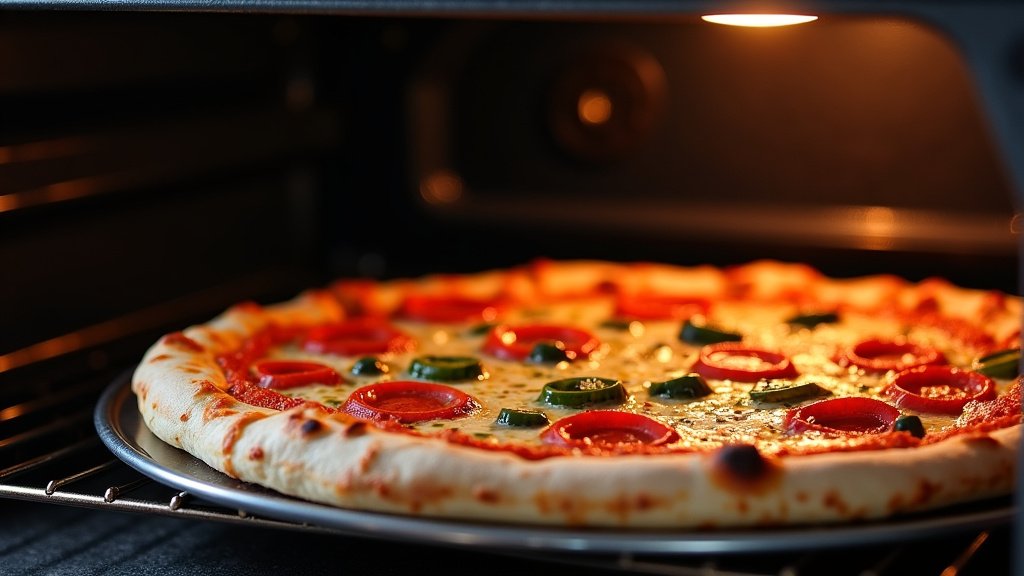
Conclusion
You now have the tools to make incredible homemade pizza. We’ve shown you that high heat and thorough preheating are your greatest allies. By understanding your oven and using the right surface, you can transform your pizza nights.
Remember, patience with preheating pays off big time. Don’t be afraid to crank up that temperature! We genuinely believe these tips will help you achieve that crispy, delicious crust you’ve been dreaming of.
Your next step? Fire up that oven and get baking!
Frequently Asked Questions
Should I use convection bake for pizza?
While some people use convection, we generally recommend against it for pizza. Convection fans can dry out the crust too quickly and cook toppings unevenly. Stick to a conventional bake setting for best results.
How can I make my pizza crust extra crispy?
To achieve an extra crispy crust, focus on using a pizza steel and ensuring it’s thoroughly preheated for at least 45-60 minutes at your oven’s highest temperature. You can also try a very thin layer of olive oil on the dough before adding sauce.
What if my oven doesn’t get very hot?
If your oven struggles to reach 450-500°F, preheat it for an even longer period, perhaps 75-90 minutes, to ensure maximum heat saturation. Using a pizza steel can also help compensate, as it transfers heat more efficiently than stone.
Can I open the oven door to check my pizza?
Try to resist opening the oven door too often. Each time you open it, significant heat escapes, dropping the internal temperature. Use your oven light to peek, and only open the door when you think it’s almost done or to rotate it quickly.
How long does frozen pizza take at 500 degrees?
Frozen pizzas typically aren’t designed for such high temperatures. Always follow the package instructions for frozen pizza, as they usually recommend a lower temperature (e.g., 400-425°F) for a longer bake time to cook through properly.
