
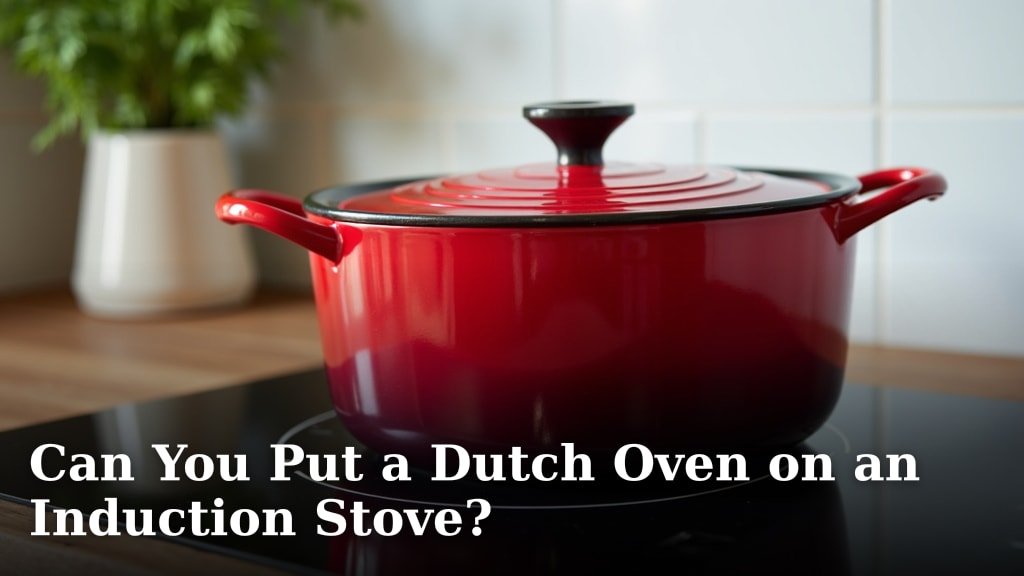
Yes, you can put a Dutch oven on an induction stove, but there’s a catch! Your Dutch oven must be made of a magnetic material, like cast iron. Many popular brands like Le Creuset and Staub will work because they use enameled cast iron.
Not all cookware works on induction cooktops, so it’s a common question. Induction stoves use electromagnetic fields to heat the pan directly, making them very efficient. This means your cookware needs to have a ferromagnetic base to function properly.
- Dutch ovens can be used on induction stoves.
- They must be made of magnetic material (e.g., cast iron).
- Enameled cast iron is usually induction-compatible.
- The “magnet test” helps you check compatibility.
Let’s find out how to tell if your Dutch oven is ready for induction cooking and what to look for when buying new cookware.
Dutch Oven Compatibility with Induction Cooktops
Yes, your Dutch oven will likely work on an induction stove if it’s made from a magnetic material. The key is how induction technology heats your cookware.
Induction cooktops use powerful electromagnets. These magnets create an oscillating magnetic field. When you place compatible cookware on the burner, this field generates eddy currents within the pot’s base. These currents then create resistance, which in turn heats the pot itself. It’s a very efficient process because the heat is generated directly in the pan, not by a separate heating element (U.S. Department of Energy).
The Science Behind Induction Cooking
Understanding the science helps explain why some Dutch ovens work and others don’t. Think of it like this: your induction stove is sending out a special signal, and only cookware that can “hear” that signal will get hot.
The “signal” is the magnetic field. For a Dutch oven to “hear” it, its base must contain a ferromagnetic material. Simply put, it needs to be attracted to a magnet. This is why a simple magnet test is so effective.
Materials That Work (and Don’t Work)
Let’s break down the common materials used in Dutch ovens and whether they’re induction-friendly.
- Cast Iron (Enameled or Bare): This is the gold standard for induction compatibility. Cast iron is inherently ferromagnetic, meaning it contains iron which is strongly attracted to magnets. Most Dutch ovens, especially those from well-known brands like Le Creuset and Staub, are made from enameled cast iron. The enamel coating doesn’t affect its magnetic properties.
- Magnetic Stainless Steel: Some stainless steel alloys are magnetic and will work on induction. However, not all stainless steel is created equal. Check for an “induction compatible” label if you’re unsure.
- Carbon Steel: Similar to cast iron, carbon steel is highly magnetic and works wonderfully on induction cooktops.
- Aluminum: Generally, aluminum cookware does NOT work on induction stoves because it’s not magnetic.
- Copper: Like aluminum, copper is not magnetic and won’t heat up on an induction burner.
- Glass or Ceramic: These materials are not magnetic and cannot be used directly on an induction cooktop.
How to Test Your Dutch Oven for Induction Compatibility
Worried if your favorite Dutch oven will work? There’s a simple, foolproof test you can do right in your kitchen. It takes less than 10 seconds.
You don’t need any fancy equipment. Just grab a common household item.
The Simple Magnet Test
This is the quickest and most reliable way to check if your Dutch oven is induction-ready. It’s truly a game-changer for uncertainty.
- Grab a refrigerator magnet: Any magnet will do – a strong one works best, but even a weaker one should give you an answer.
- Place it on the bottom of your Dutch oven: Turn your Dutch oven upside down. Stick the magnet to the outside bottom surface.
- Observe the attraction:
- If the magnet sticks firmly, your Dutch oven is compatible with induction. Hooray!
- If the magnet barely sticks or falls off immediately, it’s not induction compatible. Time for a new pot or an adapter disc.
This test works because induction technology relies on magnetism. If your pot isn’t magnetic, the stove simply won’t “see” it.
Considering an Induction Adapter Disc
What if your beloved Dutch oven isn’t magnetic? Don’t despair! There’s a clever solution that might save you from buying new cookware.
An induction adapter disc acts as a go-between, letting non-induction cookware work on an induction cooktop.
How Adapter Discs Work
Think of an adapter disc as a special kind of plate. You place the disc directly on your induction burner. The disc itself is made of magnetic material, so the induction stove heats it up. Then, you place your non-induction Dutch oven (or any non-magnetic pot) on top of the hot adapter disc. The heat transfers from the disc to your pot, just like using a traditional electric or gas burner.
It’s a clever workaround, but it does come with a few considerations.
Pros and Cons of Using an Adapter Disc
While an adapter disc offers flexibility, it’s not always the perfect solution. Here’s what to keep in mind:
| Pros | Cons |
|---|---|
| Allows use of non-induction cookware. | Reduces energy efficiency of induction. |
| Cheaper than buying new pots. | Slower heating times. |
| Good for sentimental or specialty items. | Disc itself gets very hot – handle with care. |
| Extends life of current cookware. | Can sometimes warp or discolor over time. |
If you choose to use an adapter disc, always follow the manufacturer’s instructions for safe use. They can get extremely hot!
Buying a New Dutch Oven for Induction Cooking
If you’re in the market for a new Dutch oven and want to ensure it works with your induction stove, there are a few things to look for. Making the right choice now will save you headaches later.
Many brands clearly label their products, but it’s good to know what makes a Dutch oven induction-ready.
What to Look For When Shopping
Keep these points in mind as you browse. You’re looking for compatibility and quality.
- “Induction Compatible” Label: Many manufacturers will explicitly state this on the packaging or product description. This is the easiest indicator.
- Magnetic Material: As we discussed, look for Dutch ovens made of cast iron (enameled or bare) or magnetic stainless steel. This is the fundamental requirement.
- Flat, Smooth Bottom: Induction cooktops require good contact with the pan. A flat, smooth bottom ensures even heating and efficient transfer of energy. Warped bottoms can lead to hot spots or prevent heating entirely.
- Size Considerations: Ensure the base of your Dutch oven is large enough to cover the induction hob’s minimum diameter but not so large it overhangs excessively. Check your stove’s manual for specific recommendations.
- Weight: Dutch ovens, especially cast iron ones, can be quite heavy. Make sure your cooktop and you can handle the weight safely, especially when full.
Caring for Your Induction-Compatible Dutch Oven
Once you have your perfect Dutch oven, caring for it correctly will extend its lifespan and maintain its performance on your induction stove. It’s not much different from caring for any other quality cookware.
Here are some quick tips:
- Always allow the Dutch oven to cool down before washing.
- Use non-abrasive cleaners and soft sponges to protect the enamel.
- Avoid sudden temperature changes (e.g., hot pot into cold water) to prevent thermal shock.
- Lift, don’t drag, your Dutch oven on the induction surface to prevent scratches.
- For bare cast iron, season it regularly to maintain its non-stick properties.
With proper care, your induction-ready Dutch oven will be a workhorse in your kitchen for many years.
Conclusion
So, can you put a Dutch oven on an induction stove? Absolutely, as long as it’s magnetic! You’ve learned that cast iron, whether enameled or bare, is your best bet. The simple magnet test is your secret weapon for checking compatibility. If your current Dutch oven doesn’t pass, an adapter disc offers a decent workaround. When buying new, prioritize those “induction compatible” labels and flat bottoms.
Understanding these few key principles ensures you can enjoy the efficiency of induction cooking with your beloved Dutch oven. Now, go forth and cook something delicious!
Frequently Asked Questions
Why won’t my non-magnetic Dutch oven work on an induction stove?
Induction stoves create a magnetic field that directly heats magnetic cookware. If your Dutch oven isn’t magnetic, like one made from aluminum or copper, it can’t interact with this field and won’t get hot. It’s like trying to pick up a wooden block with a magnet.
Does the enamel on a cast iron Dutch oven affect induction compatibility?
No, the enamel coating on a cast iron Dutch oven does not affect its ability to work on an induction stove. The magnetic properties come from the cast iron beneath the enamel. As long as the core is cast iron, it should be induction compatible.
Are all stainless steel Dutch ovens induction compatible?
Not all stainless steel Dutch ovens are induction compatible. Some stainless steel alloys are not magnetic. Always perform the magnet test or look for an “induction compatible” label when considering a stainless steel Dutch oven.
Can using an induction adapter disc damage my stove or Dutch oven?
Generally, an induction adapter disc won’t damage your stove or Dutch oven if used correctly. However, the disc itself gets very hot and can discolor over time. Always follow the manufacturer’s instructions for the adapter disc and use caution when handling hot items.
What is the best way to clean an induction-compatible Dutch oven after cooking?
For enameled cast iron, let it cool completely, then wash with warm soapy water and a soft sponge. Avoid abrasive cleaners. For bare cast iron, clean, dry thoroughly, and re-season as needed to prevent rust and maintain its surface.
