
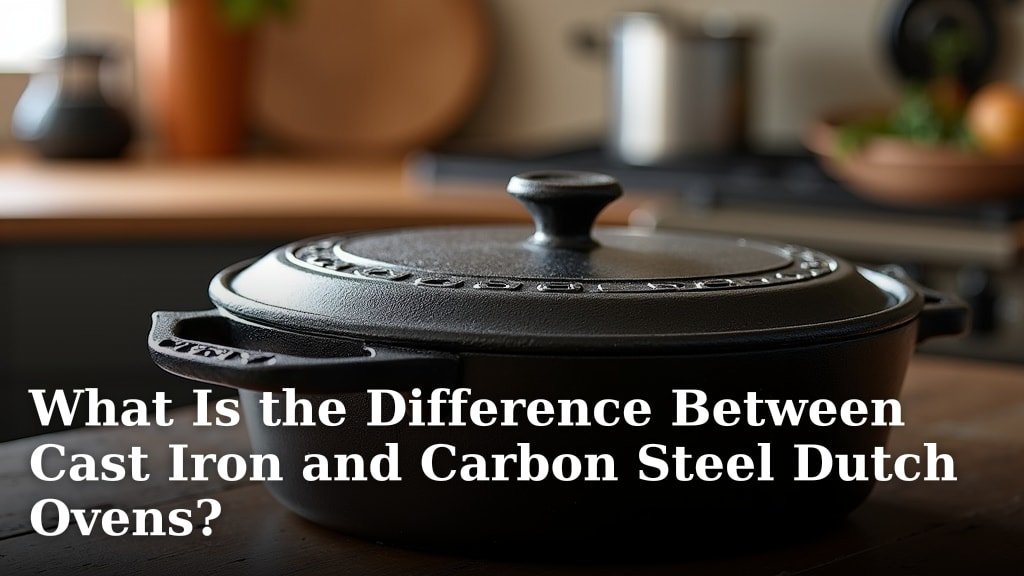
The main difference between cast iron and carbon steel Dutch ovens is their composition and how they react to heat. Cast iron is an alloy of iron and carbon, making it incredibly durable but also heavier and slower to heat up. Carbon steel, on the other hand, is purer iron with a bit less carbon, resulting in a lighter pot that heats up much faster and offers more responsive temperature control. Both are excellent for stovetop to oven cooking, but their weight and heat characteristics set them apart for different cooking needs.
When choosing between these two workhorses for your kitchen, consider your cooking style. A cast iron Dutch oven is often praised for its even heat distribution and ability to retain warmth for long periods, perfect for slow-cooked stews. A carbon steel Dutch oven offers a more nimble cooking experience, reacting quickly to flame changes, which can be a plus for searing meats or sautéing vegetables where precise temperature adjustments are key. We found that both require proper seasoning for non-stick properties.
- Cast iron is heavier and heats slower.
- Carbon steel is lighter and heats faster.
- Cast iron retains heat longer for slow cooking.
- Carbon steel offers better temperature responsiveness.
- Both need seasoning for best performance.
Let’s break down these differences further so you can pick the perfect Dutch oven for your culinary adventures.
Understanding the Core Differences: Cast Iron vs. Carbon Steel Dutch Ovens
So, you’re looking to add a Dutch oven to your kitchen arsenal, and you’ve narrowed it down to cast iron or carbon steel. That’s a smart move! Both are fantastic choices for a variety of cooking tasks, from slow braises to hearty soups. But they do have some key distinctions that might make one a better fit for your personal cooking style than the other. Let’s dive into what really sets them apart.
Material Matters: What’s Inside the Pot?
The fundamental difference lies right in the name: their metal composition. Cast iron is an iron alloy that contains a higher percentage of carbon than carbon steel. Think of it like this: cast iron has a bit more “carbon personality” mixed in with its iron. This makes cast iron inherently strong and durable, but also heavier and a bit more prone to thermal shock if you’re not careful.
Carbon steel, on the other hand, is a purer form of iron with a lower carbon content. This gives it a different feel in your hand and in your kitchen. It’s generally lighter than cast iron. Because it has less carbon, it tends to heat up and cool down more quickly. Many chefs favor carbon steel for its responsiveness. We found that this difference in composition directly impacts how each pot performs during cooking.
Heat Performance: The Big Picture
How a pot handles heat is arguably its most important trait. Cast iron is known for its superb heat retention. Once it’s hot, it stays hot. This is like having a cozy blanket for your food, perfect for dishes that need to simmer gently for hours. It distributes heat very evenly, reducing hot spots that can scorch your food.
Carbon steel, by contrast, is a speed demon when it comes to heating. It gets up to temperature much faster than cast iron. This means you can go from searing a steak to deglazing the pan in mere moments. If you’re someone who loves precise temperature control and needs your cookware to keep up with rapid changes, carbon steel shines.
Heat Retention: Keeping It Warm
When we talk about heat retention, cast iron is the clear champion. Its dense structure absorbs and holds onto heat like a sponge. This is why it’s so popular for slow-cooked meals. Your chili will stay bubbly for ages, and your pot roast will remain perfectly tender without needing constant attention on the stovetop. Many cooking resources highlight this ability for low and slow cooking (The Spruce Eats).
Heat Responsiveness: Quick Changes
Carbon steel offers a more dynamic cooking experience. Its lower density and carbon content mean it adjusts its temperature more readily. If you’re making a delicate sauce or need to quickly sauté vegetables before they get soggy, this responsiveness is a huge advantage. You can easily control the heat, making it ideal for tasks where timing is everything. We found this made it easier to achieve a perfect sear on meats.
Weight and Handling: Lifting and Shifting
Let’s talk about the physical reality of using these pots. Cast iron Dutch ovens are notoriously heavy. A 5-quart cast iron pot can weigh upwards of 10 pounds, sometimes more! This weight contributes to its excellent heat retention, but it also means you need to be mindful when lifting, especially when it’s full of hot food. It’s a workout just to move it from the stove to the oven.
Carbon steel Dutch ovens are significantly lighter. That same 5-quart size might only weigh around 5-7 pounds. This makes them much easier to maneuver. You can toss ingredients around more freely, and transferring the pot to and from the oven is less of a strain. If you have any concerns about lifting heavy items, carbon steel is definitely the more accessible option.
Seasoning and Maintenance: Keeping Them Happy
Both cast iron and carbon steel require seasoning to develop a natural non-stick surface and protect them from rust. This process involves coating the metal with oil and heating it. Over time, with proper care, both will build up a beautiful patina that gets better with every use. Both cast iron and carbon steel require proper seasoning to develop a natural non-stick surface and protect them from rust.
The Seasoning Process
The initial seasoning is crucial for both types of cookware. You’ll typically apply a thin layer of cooking oil and bake the pot at a high temperature. Repeat this a few times for a good base layer. We found that following the manufacturer’s instructions for initial seasoning is key for success.
Ongoing Care: What to Do Day-to-Day
For daily cleaning, avoid harsh soaps and abrasive scrubbers. Simply use hot water and a stiff brush or sponge. If you encounter stubborn bits, a bit of coarse salt can act as a gentle abrasive. Always dry your pot thoroughly immediately after washing. Letting water sit can lead to rust, especially on carbon steel. After drying, apply a very light coat of oil before storing. Many experts recommend this simple routine (America’s Test Kitchen).
Rust Happens (and How to Fix It)
Rust is the arch-nemesis of cast iron and carbon steel. If you spot any rust spots, don’t panic! You can usually scrub them away with steel wool. After removing the rust, you’ll need to re-season that section, or the entire pot, to restore its protective layer. This is where the durability of cast iron really shows; it can often withstand more aggressive rust removal.
Durability and Longevity: Built to Last
When we talk about durability, cast iron has a reputation for being nearly indestructible. It’s a material that can last for generations if cared for properly. Its thickness and density make it incredibly resistant to warping or bending. You can pretty much pass down a cast iron Dutch oven to your grandkids.
Carbon steel is also very durable, but it’s a bit more delicate. While it won’t warp easily, it can be more susceptible to chipping or denting if dropped. However, its lifespan is still measured in decades, not years. Many professional kitchens rely on carbon steel for its robustness and longevity, despite its slightly less formidable nature compared to cast iron.
Price Point: What to Expect
Generally, you can find both cast iron and carbon steel Dutch ovens at a wide range of price points. However, often, high-quality carbon steel can be more expensive than similarly sized cast iron models. This is partly due to the manufacturing process and the purity of the material used.
You can find basic cast iron Dutch ovens for a very reasonable price, making them an accessible entry point into this type of cookware. As you move up in size, features, and brands, the price for both materials can increase significantly. We found that investing in a good quality pot, regardless of material, usually pays off in the long run.
Quick Comparison Table
| Feature | Cast Iron Dutch Oven | Carbon Steel Dutch Oven |
|---|---|---|
| Weight | Heavy | Lighter |
| Heating Speed | Slower | Faster |
| Heat Retention | Excellent | Good |
| Temperature Control | Less Responsive | More Responsive |
| Durability | Extremely Durable, less prone to damage | Very Durable, can be dented |
| Seasoning/Maintenance | Requires seasoning, prone to rust if not dried | Requires seasoning, more prone to rust if not dried |
Making Your Choice: What’s Your Cooking Style?
Deciding between the two really comes down to what you’ll be using your Dutch oven for most often. Do you love the idea of slow-cooked, tender meats that have been simmering for hours? Then the superior heat retention of cast iron might be calling your name.
Are you a more spontaneous cook who enjoys quick searing, rapid sautéing, and precise temperature adjustments? The responsive nature and lighter weight of carbon steel could be your perfect match. Many home cooks find that having both offers the best of both worlds for different culinary tasks.
Your Dutch Oven Checklist:
- Consider your primary cooking style (slow and low vs. quick and responsive).
- Think about how much weight you’re comfortable handling in the kitchen.
- Decide if fast heating or heat retention is more important for your favorite recipes.
- Factor in maintenance; both require seasoning and care.
- Look at your budget; prices can vary widely for both materials.
- Check the size needed for your family and common recipes.
Conclusion
You’ve now got a clear picture of what sets cast iron and carbon steel Dutch ovens apart. Cast iron offers incredible heat retention, making it a champion for slow, steady cooking. Carbon steel provides faster heating and quicker temperature adjustments, ideal for more hands-on cooking styles. Both require diligent seasoning and care to perform their best and last for years. Consider your most frequent cooking tasks and how much weight you’re comfortable handling. Armed with this knowledge, you’re ready to choose the Dutch oven that will become your kitchen’s workhorse.
Frequently Asked Questions
Can I use a cast iron Dutch oven for quick searing?
Yes, you can. While carbon steel heats up faster, a well-seasoned cast iron Dutch oven can achieve a fantastic sear. You’ll just need to allow it a bit more time to reach the optimal high temperature before adding your food.
Is carbon steel easier to clean than cast iron?
Generally, both require similar cleaning methods. You should avoid harsh soaps and abrasive scrubbers for both. If food sticks, a little coarse salt can help with either material. The key for both is immediate drying and a light oiling before storage.
Will a carbon steel Dutch oven rust easily?
Carbon steel can be more prone to rust than cast iron if not dried thoroughly after washing. This is because it’s a purer iron and more susceptible to moisture. Regular seasoning and immediate drying after every use are essential to prevent rust.
Which type of Dutch oven is better for camping or outdoor cooking?
Both can work well, but carbon steel’s lighter weight can be a significant advantage when packing for a camping trip. Its responsiveness is also beneficial when cooking over an open flame with fluctuating heat.
Can I put a lid on my Dutch oven while it’s heating up on the stove?
Yes, you generally can. Placing the lid on your Dutch oven while heating helps it reach temperature faster by trapping heat inside. This is true for both cast iron and carbon steel models.
