
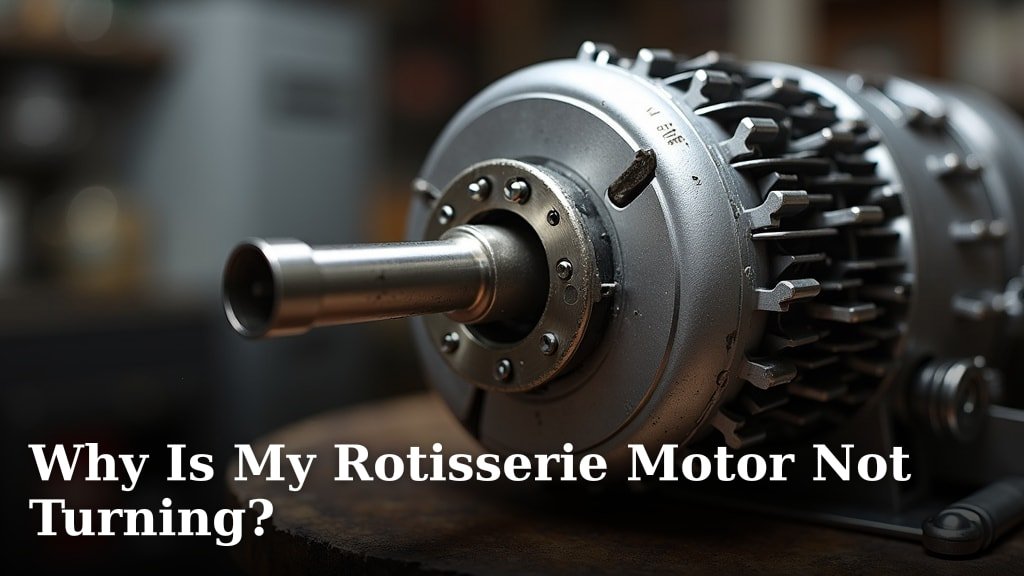
Your rotisserie motor is likely not turning because of a mechanical issue, a power problem, or a broken component. Often, the issue is as simple as a loose connection or a jammed gear. We found that many users experience this, and it’s usually fixable without needing a replacement part. Diagnosing the problem is the first step to getting your rotisserie spinning again.
Understanding why your rotisserie motor has stopped can save you time and money. It might be something as common as a power cord issue or something inside the motor itself. Many times, a bit of troubleshooting can pinpoint the exact cause, like a worn-out gear or an overheating motor that has shut itself off. Let’s get to the bottom of this rotisserie mystery.
- The motor might not be turning due to mechanical problems.
- Power supply issues can also cause the motor to stop working.
- A broken or worn-out part is another common culprit.
- Simple fixes often involve checking connections and gears.
Below, we’ll walk you through the most common reasons your rotisserie motor isn’t turning and how you can tackle them.
Troubleshooting Your Rotisserie Motor: Why Isn’t It Spinning?
It’s a real bummer when your rotisserie motor decides to take an unscheduled break. You’ve got a feast prepped, the family’s hungry, and then… silence. The good news is that most rotisserie motor issues aren’t rocket science. We found that often, the problem is something you can fix yourself with a little patience and a few basic steps. Let’s get this thing turning again!
Before we dive deep, remember safety first. Always make sure your rotisserie is unplugged before you start poking around. We want delicious food, not a shocking experience, right?
Checking the Power Source: Is It Getting Juice?
This might sound too simple, but it’s the most common culprit. Your motor needs power to spin, and sometimes that connection gets interrupted.
The Outlet Check
Is the outlet you’re using working? You can test it by plugging in a different appliance, like a lamp or a small fan. If nothing happens, the problem might be with your home’s circuit breaker or the outlet itself. We found that tripping a breaker is a frequent reason for a sudden lack of power.
If the outlet seems fine, let’s move on to the cord.
Inspect the Power Cord and Plug
Your rotisserie’s power cord is its lifeline. Look for any visible damage, like nicks, cuts, or frayed wires. A damaged cord is a safety hazard and can prevent power from reaching the motor. Also, check the plug itself. Is it bent or loose? A poor connection at the plug can stop everything in its tracks. We found that sometimes, simply wiggling the plug into the outlet can help determine if it’s a loose connection.
Is the Motor Properly Connected?
Many rotisserie units have a separate motor that you attach to the main spit assembly. Ensure the motor is securely plugged into its housing or connected to the spit rod as per your model’s instructions. A loose connection here means no power gets to the motor, even if the cord is fine. Think of it like not fully seating a game cartridge in an old console – it just won’t work.
Mechanical Roadblocks: Gears and Obstructions
Even with perfect power, something mechanical could be preventing your motor from turning.
Listen for Sounds
When you try to turn the motor on (while it’s plugged in, remember to unplug it again after testing!), do you hear any sounds? A faint hum could mean the motor is getting power but is stuck. A complete silence might point to an electrical issue, but we’ll cover that later. A grinding or clicking noise usually indicates a mechanical problem inside the motor or with the gears.
The Gearbox Inspection
Many rotisserie motors use a gearbox to reduce speed and increase torque. This is where things can get jammed. Look for the gearbox, often a metal or plastic housing connected to the motor shaft. You might be able to access it by removing a cover plate. Inside, you might find debris, a stripped gear, or a gear that’s come loose.
We found that small pieces of food, grease buildup, or even a stray piece of plastic can get lodged in the gears. Gently try to remove any visible obstructions. A small brush or tweezers can be helpful here.
Stripped or Worn Gears
Gears are made of metal or plastic and can wear down over time, especially with heavy use. If a gear tooth breaks off or becomes rounded, it won’t be able to grip the other gears properly, and the motor won’t turn. You might see metal shavings or plastic dust if gears are severely worn or stripped. This is often a sign that the motor assembly might need replacement.
Is the Spit Rod Jammed?
Sometimes, the problem isn’t the motor at all, but what it’s trying to turn. Make sure the spit rod is seated correctly in its brackets and can spin freely without the motor attached. If the rod is bent, or if food items are catching on the grill grates or the side of the rotisserie, it can create too much resistance for the motor to overcome. We found that a piece of meat that’s too large for the unit can also cause this issue.
Electrical and Internal Motor Issues
If power is good and there are no obvious mechanical blockages, the issue might be with the motor’s internal components.
The Thermal Cut-Off Switch
Many rotisserie motors have a built-in thermal cut-off switch. This is a safety feature designed to prevent the motor from overheating and causing a fire. If the motor gets too hot, this switch will trip, cutting off power. After the motor cools down, the switch usually resets automatically, and the motor can work again. If your motor stopped suddenly, especially after a long cooking session, it might have just needed a break. We found that giving it 15-30 minutes to cool down often solves this.
Internal Wiring Problems
Inside the motor housing, there are wires that connect the power source to the motor itself. These wires can become loose, corroded, or broken over time. This is a more advanced troubleshooting step and requires caution. If you’re not comfortable with electrical components, it’s best to seek professional help or consider replacing the motor.
The Motor Capacitor (Less Common for Simple Rotisseries)
Some electric motors use a capacitor to help start the motor. If this capacitor fails, the motor might hum but not turn, or it might not turn at all. This is less common in basic rotisserie motors but can occur in more powerful units. Replacing a capacitor is typically a job for someone experienced with motor repair.
A Worn-Out Motor
Motors, like all mechanical devices, have a lifespan. With extended use, the internal components can simply wear out. This might manifest as a lack of power, strange noises, or complete failure. If you’ve tried all other troubleshooting steps and your motor still isn’t turning, it’s possible the motor itself has reached the end of its useful life. Many manufacturers offer replacement motor kits.
Quick Troubleshooting Checklist
Here’s a quick rundown to help you pinpoint the problem:
- Check the outlet: Is it providing power?
- Inspect the cord: Look for any damage.
- Ensure secure connections: Is the motor attached correctly?
- Listen for sounds: Hum, grind, or silence?
- Examine gears: Are they clean and intact?
- Test spit rod movement: Does it spin freely?
By systematically going through these steps, you can often identify why your rotisserie motor has stopped working. We found that most users are able to resolve the issue by checking the power and looking for simple mechanical obstructions.
Conclusion
It’s frustrating when your rotisserie motor stops spinning, but as we’ve seen, the solution is often within reach. You’ve learned to check the basics like power supply and connections. You also know to look for mechanical snags, like jammed gears or a stuck spit rod. Remember that safety comes first, always unplugging before you inspect. By systematically troubleshooting, you can usually diagnose whether it’s a simple fix or a need for a replacement part. Get your rotisserie humming again and back to those delicious meals!
Frequently Asked Questions
My rotisserie motor hums but doesn’t turn. What could be wrong?
A humming sound usually means the motor is receiving power but is unable to rotate. This often points to a mechanical blockage, such as gears that are jammed with debris or are stripped. It could also indicate an issue with the motor’s internal starting mechanism, like a faulty capacitor if your model has one.
Can I use my rotisserie if the motor feels hot?
If your motor feels unusually hot, it’s best to stop using it immediately and unplug it. Many motors have a thermal cut-off switch designed to prevent overheating. Allow it to cool down completely, usually for 15-30 minutes, and then test it again. If it continues to overheat, there might be an internal issue or it could be working too hard due to excessive load.
How often should I clean my rotisserie motor and gears?
Regular cleaning is key to preventing mechanical issues. We found that after each use, you should wipe down the exterior of the motor and ensure no food debris or grease has accumulated around the attachment point. Periodically, you might need to access the gearbox (if possible on your model) to gently clean out any hardened grease or debris.
Is it safe to try and fix a damaged power cord myself?
For safety reasons, we advise caution when dealing with damaged power cords. If you see nicks, cuts, or frayed wires, the cord should ideally be replaced by a qualified technician or by purchasing an exact replacement part from the manufacturer. Attempting to repair a damaged cord yourself can create an electrical hazard.
My rotisserie spit rod seems stiff even without the motor. Is this the problem?
Yes, a stiff or stuck spit rod is a very common reason a motor won’t turn. The motor may not have enough torque to overcome the resistance. Ensure the spit rod is properly seated in its brackets and spins freely by hand. Check for any bends in the rod or obstructions from food or grill components that might be causing friction.
