
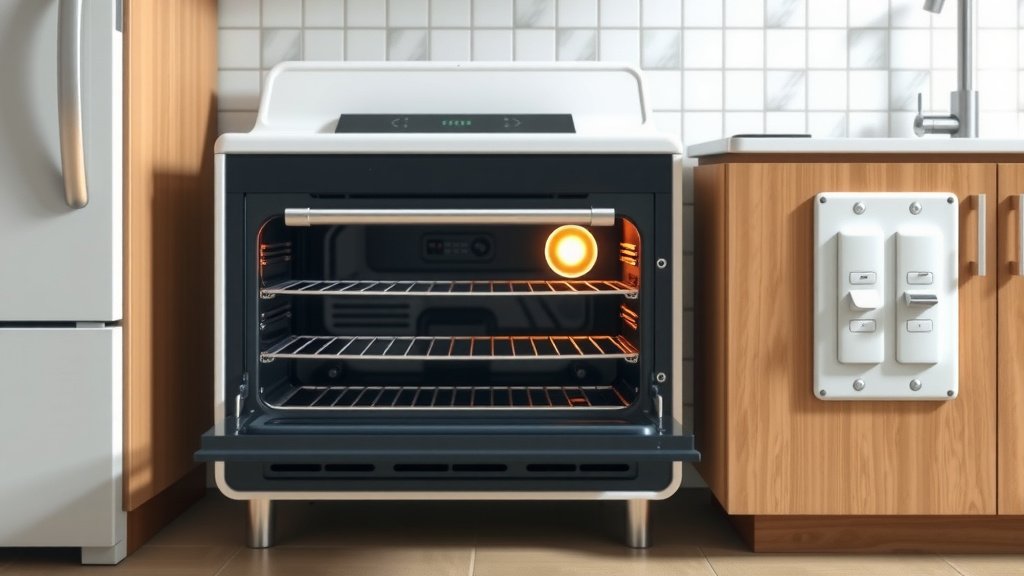
Your electric oven often trips the breaker because it’s drawing too much electrical current, which can happen due to an overload or a short circuit within the appliance or wiring.
This safety mechanism is designed to prevent damage to your electrical system and reduce fire hazards when something is wrong with your oven.
TL;DR: Oven Tripping Breaker Quick Guide
- Your oven pulling too much power is the primary culprit.
- This often points to an electrical overload from using many appliances simultaneously.
- A short circuit, often caused by damaged wiring or a faulty component, can also trigger it.
- Specific parts like the heating element or thermostat might be failing.
- The circuit breaker itself could be old or weak.
- Always prioritize safety first and consider calling a qualified electrician.
Why Does Electric Oven Trip The Breaker?
It’s a common, yet frustrating, experience: you’re cooking, and suddenly, poof! The power goes out to your oven. The circuit breaker has tripped. Why does your electric oven trip the breaker? Usually, it’s a clear signal that something in your electrical system is drawing too much power or has a fault.
Think of your circuit breaker as a guardian. Its job is to protect your home’s wiring from damage. When it senses a problem, like an overloaded circuit or a short circuit, it quickly shuts off the power to keep you safe.
Understanding the Basics of Your Electrical Circuit
Every home has a main electrical panel. Inside, you’ll find various circuit breakers, each guarding a specific area or appliance in your house. Your oven typically has its own dedicated circuit due to its high power demands. This means it has a breaker all to itself.
When you turn on your oven, it pulls a specific amount of electricity, measured in amps. If it pulls more amps than the breaker is rated for, or if something goes wrong, the breaker trips.
The “Too Much Power” Problem: Overload
One of the simplest reasons your oven trips the breaker is an electrical overload. What does that mean? It means the circuit is trying to handle more power than it was designed to. This is like trying to pour a gallon of water into a pint glass; it just overflows.
We often found that homeowners unknowingly create overloads by using too many high-power appliances on the same circuit. While your oven usually has its own circuit, older homes might have shared circuits or other issues that contribute.
When the Wiring Just Isn’t Right
Problems with your home’s wiring can absolutely cause your oven to trip the breaker. Exposed wires or loose connections can lead to dangerous situations. This isn’t something to ignore. Many experts say that faulty wiring is a leading cause of electrical fires (National Fire Protection Association).
Loose Connections and Frayed Wires
Over time, wires can become loose at the breaker panel or within the oven itself. This creates resistance, which generates heat and can lead to a trip. Similarly, mice or general wear and tear can cause wires to fray, exposing the copper conductors. When these exposed wires touch, it creates a short circuit.
A Short Circuit: The Sudden Problem
A short circuit is a more dramatic event than an overload. It happens when electricity takes an unintended path, usually due to damaged insulation or wires touching each other. This causes a sudden, massive surge in current. The breaker reacts instantly to prevent damage and potential fire.
Imagine water suddenly bursting out of a hose instead of going to the nozzle. That’s a short circuit. It’s an immediate problem that needs attention.
Faulty Oven Components: Internal Issues
Sometimes the problem isn’t your home’s wiring, but something inside the oven itself. Ovens have several components that handle high electrical loads. If any of these fail, they can cause a short or draw too much power, leading to a tripped breaker.
The Heating Element: A Common Culprit
The heating elements are arguably the most common cause we found for tripped oven breakers. Both the bake and broil elements work incredibly hard. Over time, they can wear out, crack, or even blister. When an element fails, it can create a direct short circuit, instantly tripping your breaker.
You might even see physical damage or scorch marks on a failing element. Sometimes, it looks fine but is still faulty internally.
Thermostat Problems
The oven thermostat controls the temperature by cycling the heating elements on and off. If the thermostat becomes faulty, it might send a constant signal to the elements, causing them to draw too much power continuously. It might also develop a short internally.
Damaged Fan Motor or Light
Even smaller components, like the oven’s cooling fan motor or the internal light, can cause issues. If their wiring is damaged or the component itself fails and shorts out, it can trip the breaker. It’s less common than a heating element failure, but still possible.
Is Your Circuit Breaker the Problem?
Sometimes, the oven isn’t the problem at all. The circuit breaker itself might be faulty. Breakers don’t last forever. They can wear out over time, especially if they’ve tripped many times. A weak or old breaker might trip more easily than it should, even when there isn’t a true electrical fault.
Many experts say that if your oven trips its dedicated breaker frequently, and no other issues are found, the breaker might be the next thing to inspect (Electrical Safety Foundation International).
| Oven Type / Size | Typical Wattage Range | Required Amperage (Approx.) |
|---|---|---|
| Standard Electric Oven (1-2 elements) | 2,000 – 4,000 W | 10 – 20 A |
| Larger Electric Oven / Range (4+ elements) | 5,000 – 10,000 W | 25 – 50 A |
| Convection Oven | 2,500 – 5,000 W | 12 – 25 A |
Note: Amperage is calculated as Wattage / Voltage (typically 240V for ovens). Always check your oven’s specific ratings and your home’s wiring. This table is a general guide.
Steps to Take When Your Oven Trips the Breaker
Okay, so your oven just tripped the breaker. What do you do? First, don’t panic. Safety is your top concern. Here’s a simple checklist:
- Turn off the oven: Turn all oven controls to the “off” position.
- Reset the breaker: Go to your electrical panel. Flip the tripped breaker fully “off” and then firmly back to “on.”
- Test the oven: Turn on your oven. If it trips again immediately, turn it off and do not attempt to use it.
- Unplug other items: If the breaker holds briefly, unplug any other appliances on that same circuit (though ovens usually have dedicated ones).
- Inspect visible elements: Carefully look at your oven’s heating elements for any damage or discoloration.
- Call a professional: If the breaker trips again, or if you see any signs of burning or smell smoke, call a qualified electrician or appliance repair technician right away.
When to Call a Professional Electrician
You might be handy, but electrical work, especially with a high-power appliance like an oven, is not a DIY project for most homeowners. Many guidelines point to calling a professional as a good first step (Mayo Clinic).
Always call an expert if you: smell burning or smoke, see sparks, hear buzzing sounds from the panel or oven, or if the breaker trips repeatedly even after you’ve tried basic troubleshooting. These are signs of serious electrical problems that need immediate attention.
Conclusion
When your electric oven trips the breaker, it’s more than just an inconvenience; it’s your home’s electrical system telling you something is wrong. Whether it’s a simple overload, a short circuit, a faulty heating element, or even a tired breaker, the underlying issue needs to be addressed. Remember, electrical safety is paramount. While you can do some basic checks, for anything beyond a simple overload, the safest and smartest course of action is to consult with a qualified electrician or appliance repair technician. They have the tools and expertise to diagnose and fix the problem correctly, keeping your home and family safe.
FAQs About Electric Ovens and Breakers
Can a dirty oven cause the breaker to trip?
It’s not common for a dirty oven to directly trip a breaker. However, a buildup of grease and food debris can sometimes cause smoke or even small fires, which might indirectly stress components or lead to unusual odors. In rare cases, extreme dirt could affect wiring or create a short, but it’s not a primary cause.
How do I know if my oven element is bad?
A bad oven element often shows visible signs like blistering, bubbling, or cracking on its surface. It might not heat evenly, or it may not glow red at all. If it’s shorting out, it will instantly trip the breaker as soon as you turn it on.
Is it normal for an oven to trip the breaker sometimes?
No, it’s definitely not normal for an oven to trip the breaker, even occasionally. A tripping breaker is a safety response to an electrical fault or overload. If it happens once, it indicates a problem; if it happens more than once, it suggests a persistent issue that needs professional inspection.
Can an old oven cause a breaker to trip more often?
Yes, older ovens are more prone to tripping breakers. Over time, components wear out, wiring insulation can degrade, and connections can loosen. These issues increase the likelihood of short circuits or excessive power draw, making an older oven a more common culprit.
What size breaker should an electric oven be on?
Most electric ovens require a dedicated 240-volt circuit with a 30, 40, or 50-amp double-pole circuit breaker, depending on the oven’s wattage. Always consult your oven’s owner’s manual or nameplate for the exact amperage requirements, and never try to replace a breaker with a higher amperage rating yourself.
