How to Choose an Induction Double Oven Range
Choose an induction range double oven by checking its cooking zones, split oven capacity, electrical circuit, cabinet fit and cookware needs. The best model should match how you cook every day, not just offer two oven cavities.
On this page (12 sections)
- What makes an induction range double oven different?
- How many induction cooking zones do you need?
- Which cookware works on induction?
- How should you compare split oven capacity?
- What electrical requirements should you check?
- How does an induction double oven compare with other range types?
- What should you know about oven controls and cooking modes?
- How can these products help with an induction range kitchen?
- How do you check the kitchen fit?
- How should you clean and care for an induction range?
- Is an induction range double oven right for you?
- Frequently asked questions
Choose an induction range double oven by comparing its cooking zones, split oven capacity, electrical needs, controls and kitchen fit. The right range should handle your usual pans and baking dishes while giving you enough flexibility to cook at two temperatures.
An induction cooktop heats compatible cookware through magnetic energy, while the oven cavities use electric heating elements. The double-oven layout can save time when you need to roast one dish and bake another at the same time.
Before comparing models, it helps to understand what is a double oven and how two cavities differ from one large oven. A split design changes which pans fit, how heat moves around the food and how much room you have for a large roast.
What makes an induction range double oven different?
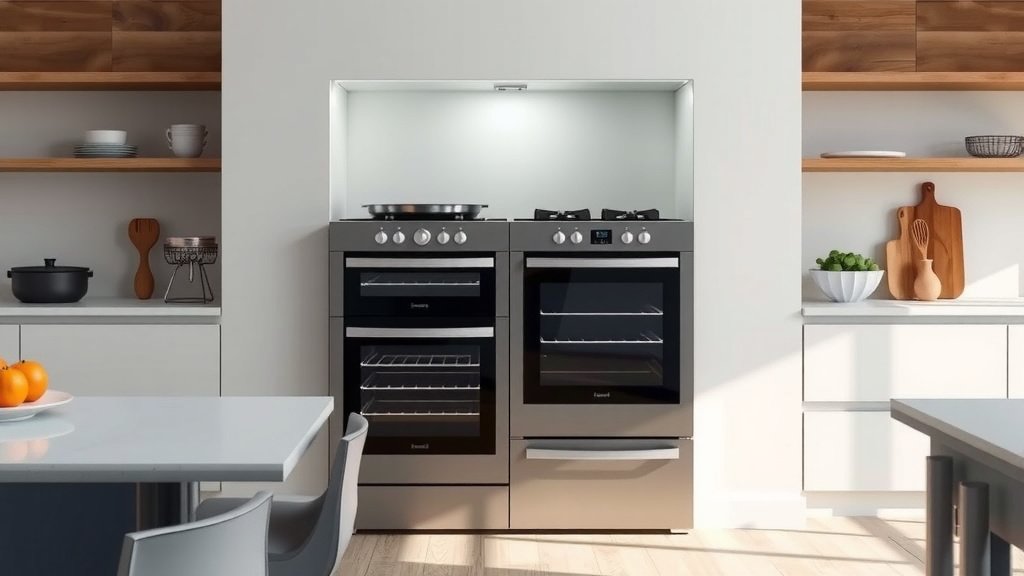
An induction range double oven combines magnetic stovetop heating with two electric oven cavities in one freestanding or slide-in appliance. The cooktop and ovens share the range body, but each part affects the buying decision in a different way.
The induction surface responds quickly when you change the control setting. It also transfers heat through the pan instead of heating the whole surface in the same way as a traditional radiant electric cooktop.
The two ovens give you separate cooking spaces. The upper cavity can suit smaller dishes or shorter cooking jobs, while the lower cavity usually offers more vertical space for larger bakeware.
Read what is a double oven range for a closer look at how this appliance differs from a wall oven and a single-cavity range.
How many induction cooking zones do you need?
Choose the number of induction zones based on how many pans you use at once and their base sizes. Four zones can suit basic weekday cooking, while more flexible layouts help when several pots and pans need separate heat.
Look beyond the count. A cooktop with four zones may still feel limited if two zones are too small for your largest skillet or if their positions prevent several wide pans from fitting together.
Check these details:
- The number of cooking zones.
- The smallest and largest pan sizes each zone supports.
- The distance between front and rear zones.
- Whether two zones can combine for a griddle or long pan.
- Whether the controls are easy to read and clean around.
- How much counter space remains beside the range.
A family that cooks pasta, vegetables and a main dish together may value a flexible layout more than a higher maximum zone count. Someone who usually uses one skillet and one saucepan may prefer simpler controls and a larger primary zone.
Which cookware works on induction?
Induction cookware needs a magnetic base that makes good contact with the cooking surface. Cast iron and many magnetic stainless-steel pans work, while some aluminum, copper and glass pans may not work unless they include a compatible base.
Test an existing pan with a magnet before replacing your cookware. If the magnet sticks firmly to the base, the pan may work, but the range manual remains the best source for cookware limits and operating guidance.
The pan should sit flat and match the size of the selected zone. A warped base, very small pan or poorly centered pan can reduce heating performance or prevent the zone from activating.
Remember that cookware can scratch a glass surface if it is dragged. Lift pans when moving them, wipe spills after the surface cools and follow the care directions for the specific range.
How should you compare split oven capacity?
Compare the usable size of each cavity with the dishes you actually bake and roast. Total cubic feet can look attractive, but a small upper oven may not fit a tall casserole, large tray or covered Dutch oven.
Measure your most-used cookware before shopping. Include:
- Your largest roasting pan.
- Sheet pans and baking stones.
- Tall pots or covered dishes.
- Multiple cake pans.
- The height needed for a turkey or other large roast.
- The rack positions needed above and below the food.
A smaller upper cavity can reduce preheating time for everyday meals. It may also use less space when you only need to warm food or bake one small tray.
The lower cavity usually handles larger dishes, but its rack height and door clearance matter. Check whether the door opens fully in your kitchen and whether a large pan can be lifted out safely.
What electrical requirements should you check?
Check the required voltage, amperage, outlet position and dedicated circuit before choosing an induction range. An induction cooktop can draw substantial electrical power, and the two ovens add another load.
Do not assume that an existing electric range connection meets the new model's requirements. Read the installation instructions for the exact appliance and ask a qualified electrician to verify the circuit, wiring and breaker.
Also check:
- The outlet location behind the range.
- The range's total electrical load.
- Whether the installation requires a cord or hardwiring.
- Local electrical code.
- Clearance from the wall and nearby cabinets.
- Whether the kitchen has enough ventilation.
The electrical work should be completed before delivery if changes are needed. This helps avoid having a new appliance sitting unused while the circuit is repaired.
How does an induction double oven compare with other range types?
An induction double oven range offers fast, precise stovetop control and two electric oven spaces. A gas model gives you a flame-based cooking surface, while a standard electric model uses radiant heating under the glass.
If you are comparing fuel types, read our guide to a double oven range gas and our guide to a double oven electric range. The better choice depends on your cookware, utility setup, cooking habits and comfort with each control type.
A dual-fuel appliance combines a gas cooktop with electric ovens. Our guide on how dual fuel oven compares to induction range explains the main differences in stovetop response, fuel needs and oven operation.
What should you know about oven controls and cooking modes?
Choose controls that let you set each cavity independently and understand which heating mode is active. Two ovens are only useful when the controls make it easy to manage separate temperatures, timers and cooking functions.
Look for clear labels and a layout that keeps the cooktop controls separate from the oven controls. Touch controls can create a smooth surface, while knobs may feel more direct for frequent adjustments.
Check whether the range includes the modes you use most, such as:
- Bake.
- Broil.
- Convection bake.
- Convection roast.
- Keep warm.
- Proofing.
- Separate timers for each oven.
Do not assume that both cavities offer identical modes. The upper oven may have fewer rack positions or different heating options because of its smaller size.
How can these products help with an induction range kitchen?
The following products do not replace an induction double oven range. They can help with repair, small-batch cooking or microwave placement while you plan a larger kitchen setup.
The GE WB44X200 Genuine OEM Lower Bake Element 240V for GE Electric Ovens is a replacement part for the lower bake area of compatible GE, Hotpoint and RCA ovens. It has screw-style connections and approximate dimensions of 13 in L x 19.5 in W x 2.75 in H.
This product suits someone repairing an existing electric oven rather than choosing a new induction range. Disconnect the appliance from utilities before installation and follow the owner's manual.
The BLACK+DECKER TO1313SBD Toaster Oven, 15.47 Inch, Silver measures 14.5 in W x 10.8 in D x 8.8 in H. Its stainless-steel body has one shelf, a removable crumb tray and a 30-minute timer with a stay-on option.
It can suit a kitchen that needs a small secondary cooking space while the main oven is occupied. Keep food and bakeware at least 1.5 in from the top heating elements, allow ventilation space and use oven mitts because outer surfaces become hot.
The Sharp SMD2470ASY 24 in. 1.2 cu. ft.
Built-In Microwave Drawer Oven has a concealed control panel that opens to a 45-degree angle. Its automatic drawer system opens smoothly, and the stainless-steel interior has room for a 4 qt casserole dish or a 20 oz beverage.
Its product dimensions are 23.75 in W x 23 in D x 15.75 in H, so measure the cabinet opening before planning installation. The standard mount cutout is 22.125 in W x 15.5625 in D x 23.5 in H, while the flush mount cutout is 24.1875 in W x 16.875 in D x 23.5 in H.
How do you check the kitchen fit?
Measure the range opening, walkway, counter height and door swing before ordering. A range can fit the width but still create problems if the oven door hits an island or the cooktop sits above the surrounding counters.
Record the opening width at the front and back. Check the floor for level, measure the distance to the wall and confirm that nearby cabinets meet the required clearance.
Plan the delivery route too. Measure doorways, hallways, turns and stairways, including the narrowest point.
The range must reach the kitchen without damaging the cabinet faces or flooring.
The cooktop surface should sit at a practical height for your counters. A small height difference can affect how you move pans between the range and nearby work areas.
How should you clean and care for an induction range?
Clean the glass cooktop with products recommended for the surface, and remove spills before they harden. Do not drag cast iron or rough cookware across the glass.
For daily care, let the surface cool, wipe away loose food and use a suitable cooktop cleaner when needed. Use a scraper only as directed by the range manufacturer.
Keep oven racks and cavity surfaces clean according to the manual. Avoid lining the oven floor with foil unless the manufacturer specifically allows it, because blocked heat paths can damage the appliance or affect cooking.
If the range has a self-clean setting, read the instructions before using it. Remove items that the manual says should not remain inside and provide ventilation during the cycle.
Is an induction range double oven right for you?
An induction range double oven is a strong fit if you regularly use several pans, cook dishes at different temperatures and have compatible cookware plus the correct electrical service. It is less suitable if most of your pans are nonmagnetic, your circuit needs major work or you rarely use two ovens at once.
Pick a model with cooking zones that fit your largest pans, cavities that fit your usual bakeware and controls you can use without guesswork. Check the installation measurements and electrical requirements before comparing cosmetic details.
For a final comparison, use the decision rule from this guide: choose induction for magnetic cookware and precise electric stovetop control, choose a double oven when separate cooking temperatures matter, and choose both only when your kitchen supports both requirements.
Frequently asked questions
What should I look for in an induction range double oven?
Check the number and size of induction cooking zones, the lower and upper oven capacities, rack positions, controls, electrical requirements and available kitchen space. Confirm that your cookware works with induction and that the range fits the opening before you buy.
Is an induction double oven range worth it?
An induction double oven range can suit cooks who want fast, controllable stovetop heating and two oven temperatures at once. It is most useful when you regularly cook different dishes together and have the correct electrical circuit, cookware and ventilation plan.
Can an induction range have two ovens?
Yes, an induction range can combine an induction cooktop with two oven cavities. The split design usually gives you a smaller upper oven and a larger lower oven, so compare the cavity sizes with the pans and dishes you use most.
Does an induction range need special wiring?
An induction range normally needs a dedicated high-power electrical circuit, but the exact requirements depend on the model and local code. Read the installation instructions and have a qualified electrician confirm the circuit before installation.