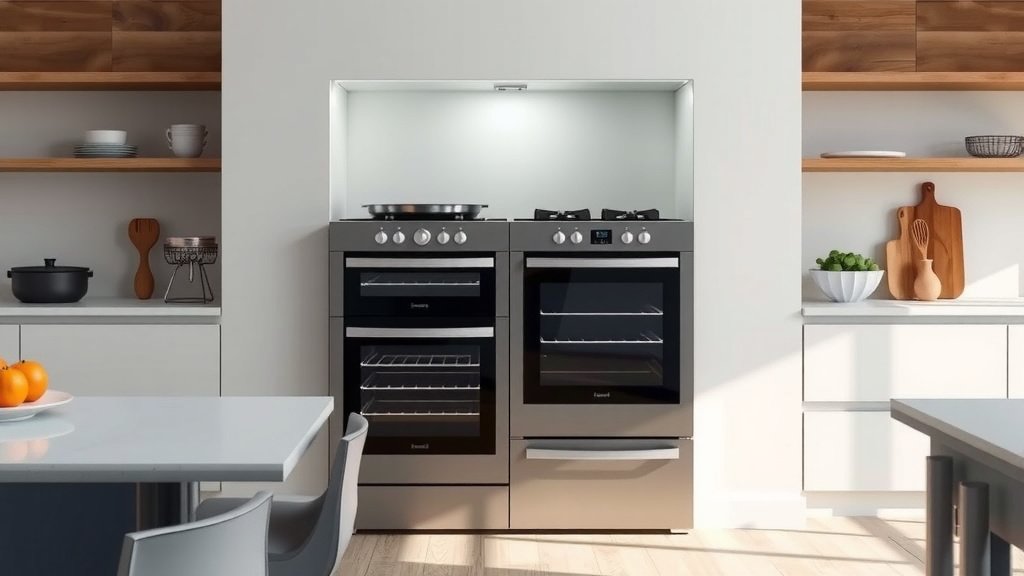
How to Choose an Electric Double Oven Range
Choose an electric double oven range by matching its cooking surface and two cavity sizes to your cooking habits, then confirm the range fits your kitchen and electrical setup. Measure the opening, check the installation instructions, and compare what each cavity can hold.
On this page (7 sections)
- What should you compare in an electric double oven range?
- How do you confirm the range fits your kitchen?
- What controls and features should you check?
- Does an electric double oven range suit your cooking routine?
- What related appliances and parts may help?
- How does an electric oven heat food?
- How do you choose the right double oven electric range?
Choose a double oven electric range by comparing its cooking surface, the capacity of both cavities, and the fit in your kitchen. If you are weighing a separate cooktop against a range, see gas range vs gas cooktop.
Measure your current opening and the delivery route before weighing features.
A range with two ovens can help you cook separate dishes at different temperatures, but the lower cavity may not fit the pans you use most. Start with your usual meals and cookware, then compare the actual cavity sizes and controls.
If you’re still deciding whether two cavities fit your routine, first read what a double oven is. A range combines the ovens with a cooktop, so its surface and installation needs matter too.
What should you compare in an electric double oven range?
Compare cooktop type, cavity capacity, controls, and installation dimensions before choosing a model. These details affect what you can cook and whether the range works in your kitchen.
| Check | Why it matters |
|---|---|
| Cooktop type | Determines which cookware and cooking habits suit the surface |
| Upper and lower cavity size | Shows whether your pans and dishes fit each oven |
| Oven controls and modes | Indicates what each cavity can do and how you set it |
| Outside dimensions | Helps confirm the range fits the opening and delivery route |
| Electrical requirements | Helps you confirm that the kitchen connection matches the range |
The phrase “electric range” covers more than one kind of cooktop. Compare radiant and induction options separately, and check the instructions for cookware and electrical requirements rather than assuming all electric surfaces work the same way.
A double oven range typically divides the oven space into two cavities. For a plain-language overview of that appliance layout, see what a double oven range is.
Which electric cooking surface suits your cookware?
Choose a radiant or induction surface based on the cookware you own and how you cook. Check the range’s manual for specific cookware and care requirements.
Radiant electric cooktops heat a cooking surface beneath the pan. They can suit households that want electric cooking without changing to induction-ready cookware, though surface materials and cleaning steps vary by model.
Induction heats compatible cookware through a magnetic field. If you’re considering that setup, our guide to an induction range with a double oven explains what to check before you choose one.
Don’t judge the surface only by appearance. Look at burner layout and sizes, control placement, and the cleaning instructions for the model you’re considering.
How much room do the two oven cavities need?
Choose cavity sizes based on the dishes and pans each oven must hold. Two separate capacities matter more than a single combined volume when you’re deciding what fits.
Check the interior width, depth, and height for both cavities. Compare those measurements with your baking sheets, roasting pans, casserole dishes, and the clearance each needs to sit flat.
Think about your most common use for each cavity. You might use the smaller one for weeknight dishes and the larger one for a roast or several pans, but the exact fit depends on the appliance’s dimensions and rack positions.
A two-cavity design can also mean that a tall dish won’t fit in one oven. Check the height and rack arrangement before counting on a particular dish working in both.
How do you confirm the range fits your kitchen?
Measure the opening, clearances, and delivery path, then confirm the electrical requirements in the installation guide. A range can match your cooking needs and still be unsuitable for the available space or connection.
Measure the current range opening at several points, including width, height, and depth. Compare the smallest measurements with the exact dimensions and clearance requirements for the model you’re considering.
Also check the route from the outside door to the kitchen. Measure narrow doorways, corners, and turns, and account for handles or packaging if they affect passage.
Before buying, use this checklist:
- Measure the opening and compare it with the appliance dimensions.
- Check the installation guide for required side, rear, and overhead clearance.
- Confirm the delivery route and doorway widths.
- Verify the electrical connection and installation requirements.
- Check whether nearby cabinet or countertop edges could block the door or controls.
If you’re replacing a gas model, include the connection and installation changes in your planning. Our guide to a gas double oven range covers that alternative.
What controls and features should you check?
Compare the controls and cooking modes for each cavity in the model’s manual. Don’t assume the top and bottom ovens share the same modes or can run together in every setting.
Look for separate controls that make it clear which cavity you’re setting. If you use timed cooking, temperature presets, convection, or self-cleaning, confirm which ovens support those functions and whether any modes have limits.
A display and control layout should also suit the people who will use the range. Check whether buttons, knobs, and labels are easy to reach and read from your usual standing position.
Ask these questions while comparing models:
- Can the two cavities be set to different temperatures?
- Which cooking modes are available in each cavity?
- Can both ovens operate at once, and are there restrictions?
- How are racks positioned and adjusted?
- What does the manual say about cleaning and care?
Does an electric double oven range suit your cooking routine?
A double oven range can suit you if you often prepare multiple dishes that need different temperatures or timing. A single larger cavity may be more useful if your regular meals need tall cookware or several large pans at once.
Write down a few meals you cook often and the dishes they require. Then check whether each dish fits the cavity you expect to use, with room for airflow and any rack positions required by the manual.
Consider how often you’ll use both ovens at once. If it would happen only on holidays, compare the range against a single oven that better fits your everyday cookware and kitchen space.
For a smaller occasional bake or reheat, a countertop oven can serve a different role from a full-size range. The BLACK+DECKER TO1313SBD Toaster Oven has baking, broiling, toasting, and warming functions and fits a 9 in pizza or 4 slices of bread.
What related appliances and parts may help?
A double oven range is the main cooking appliance, while countertop ovens, microwaves, and replacement parts fill different kitchen needs. Check each item’s purpose before treating it as an alternative to a range.
If you need a replacement bake element, confirm that the part matches your oven’s make and model. The GE WB44X200 Genuine OEM Lower Bake Element is a lower bake element designed for GE electric ovens; check the appliance manual and part number before choosing a repair part.
A microwave drawer heats food using a different method from a conventional oven. The [Sharp SMD2470ASY 24 in.
1.2 cu. ft.](/) is a built-in microwave drawer with a 1.2 cu ft interior and concealed control panel.
These appliances don’t replace the need to compare the range’s cooktop, oven cavity sizes, and installation requirements. Treat them as separate tools for specific cooking or repair needs.
How does an electric oven heat food?
An electric oven uses heating elements to raise the temperature inside its cavity. The location and use of those elements depend on the oven design and cooking mode.
For a simple explanation of the heating process, read how an electric oven works. For how the two cavities fit into the range layout, see how a double oven works.
When comparing ranges, focus on the features that affect your meals: temperature control, available modes, rack positions, and the dimensions of each cavity. A model’s manual is the place to confirm how those functions work.
How do you choose the right double oven electric range?
Choose the range whose cooktop fits your cookware, whose two cavities fit your dishes, and whose dimensions and electrical needs match your kitchen. Use the installation guide and measured cookware to check those points before you buy.
Pick induction if its cookware requirements suit your kitchen and habits. Choose radiant electric if that surface better matches how you cook, and prioritize a larger cavity if your regular dishes need more room.
A double oven electric range is a practical fit when you’ll use two separate cooking spaces often enough to justify them. If you still need to compare the appliance layout, start with what a double oven range is.
Frequently asked questions
What should I check before buying a double oven electric range?
Check the range’s width and installation requirements, the size of each oven cavity, the cooking surface type, and the controls. Measure your existing opening and delivery route, then compare the cavity dimensions with the pans and dishes you use most.
Verify electrical requirements with the installation guide.
Is a double oven electric range better than a single oven?
A double oven can help when you often cook dishes at different temperatures or want a smaller cavity for everyday meals. A single oven may suit you better if you regularly need one large space for oversized pans.
Compare the actual cavity dimensions before deciding.
What is the difference between a radiant and induction electric range?
Radiant electric ranges heat cookware through a heated surface, while induction ranges use magnetic fields to heat compatible cookware. Check the model’s instructions and cookware requirements before buying.
For a closer comparison, see our guide to an induction range with a double oven.
Can both ovens in a double oven range run at once?
Some double oven ranges allow both cavities to operate at the same time, but available modes and limits depend on the model. Check its manual for which settings can run together, temperature ranges, and any restrictions.
Do not assume both cavities have identical features.
How do I know if a range fits my kitchen?
Measure the opening’s width, height, and depth, plus the path from the entry to the installation spot. Compare those measurements with the exact range dimensions and required clearances in its installation guide.
Also confirm the electrical connection and any countertop or cabinet requirements before ordering.