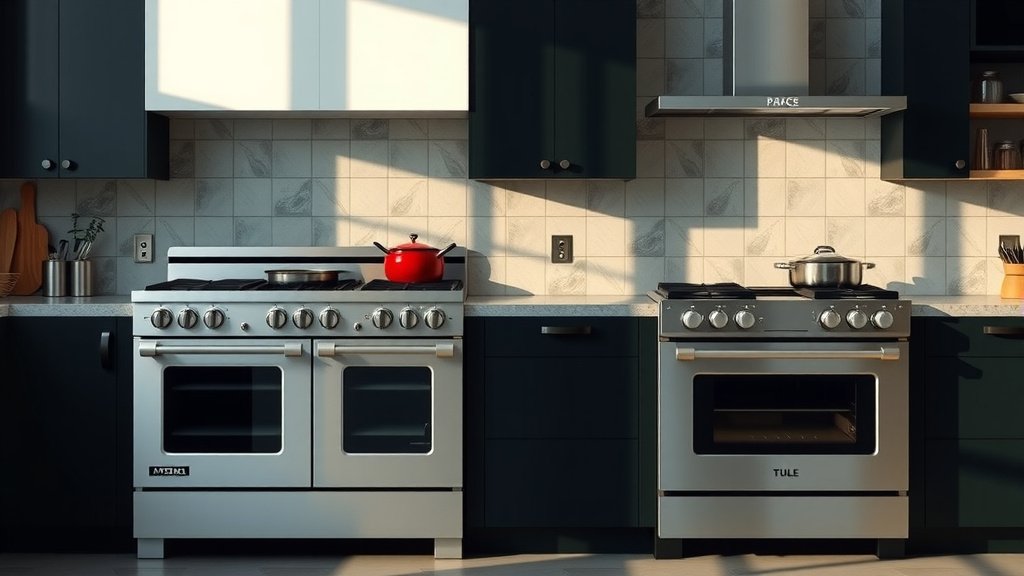
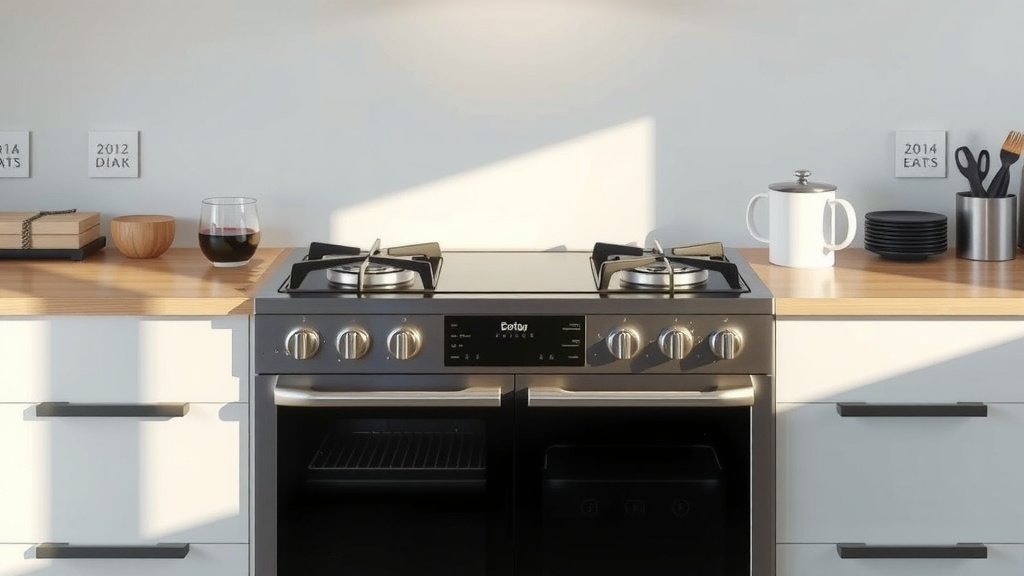
How to Choose a Dual Fuel Range
A dual fuel range pairs a gas cooktop with an electric oven for fast burner control and steady baking heat. Choose the width, oven capacity and fuel connections that fit your kitchen first, then compare oven features before you buy.
On this page (11 sections)
- What Is A Dual Fuel Oven And How Does It Differ From Other Ranges?
- What Size Dual Fuel Range Fits Your Kitchen Opening?
- How Do Fuel Connections Limit Your Dual Fuel Range Choices?
- Which Oven Features Matter Most In A Dual Fuel Range?
- How Does A Dual Fuel Oven Work During Baking And Roasting?
- How Do Dual Fuel Range Cookers Compare For Burner Control?
- What Installation Checks Should You Do Before Delivery Day?
- Which Dual Fuel Range Cookers Suit Small Kitchens And Compact Spaces?
- How Does A Dual Fuel Oven Compare To An Induction Range?
- How Should You Maintain A Dual Fuel Range And Its Oven Parts?
- Pick The Dual Fuel Range That Fits Your Kitchen And Cooking
A dual fuel range pairs a gas cooktop with an electric oven for fast burner control and steady baking heat. You get flame response for boiling, searing and simmering, plus electric oven heat for cakes, roasts and casseroles.
That split design is the main reason buyers shop for dual fuel range cookers. If you cook a lot, the cooktop and oven may both need to perform well on the same day.
Start with size and connections, not with a long feature list.
We compared specs and features across ovens and parts that affect daily use. Use this guide to rule out models that will not fit, then narrow to the ones that match how you cook.
What Is A Dual Fuel Oven And How Does It Differ From Other Ranges?
A dual fuel range uses gas burners on top and an electric oven below. That setup gives you two kinds of heat in one appliance.
Our breakdown of What Is A Dual Fuel Oven? explains the basic layout in plain terms. It helps to learn the terms before you compare models.
Gas cooktop burners respond fast when you turn a knob. Electric ovens tend to hold a steadier temperature during long bakes.
You still need both a gas line and an electric circuit for the range to run.
Many buyers ask how this setup differs from a standard gas range. Our guide to What Is The Difference Dual Fuel Vs Gas Range? covers that comparison in detail.
An all gas range can be simpler to install if you have gas only. A dual fuel range can be a better fit if you bake often and want even oven heat.
Neither choice is right for every kitchen.
Rule: choose dual fuel if you want gas burners plus electric oven heat and you have both connections available.
What Size Dual Fuel Range Fits Your Kitchen Opening?
Size comes first because the range must fit the opening, the doorway and the work space around it. A model that is too wide or too deep will not work, no matter how good the oven is.
Measure width, depth, height and the space needed for the oven door to open fully. Check the space at the cooktop for large pots and for a kettle in back.
Leave room to stand, turn and pull out a hot rack safely.
Common widths include 30 in, 36 in and 48 in models. Wider ranges often offer more burner space and a larger oven.
They also need more clear space on both sides.
Depth matters for traffic flow in a small kitchen. A deep range can push the oven door into a walkway or an island.
Measure from the front of the cabinets to the opposite counter or island.
Height matters for overhead cabinets and range hoods. Check the back guard height and the space above the burners.
A tall back guard can block a window if the range sits under it.
Rule: buy only a dual fuel range that fits the measured opening with maker clearance on all sides.
How Do Fuel Connections Limit Your Dual Fuel Range Choices?
Fuel connections can decide whether a dual fuel range is practical in your kitchen at all. The range needs gas for the cooktop and electricity for the oven, controls and igniters.
Confirm where the gas line ends and where the outlet sits. Check the distance to the range and whether either connection must be moved.
Moving a gas line or adding a circuit can add cost and time.
Ask a licensed professional about the gas supply pressure and the electrical requirements for the model you want. The manual states the power and gas needs for that exact range.
Do not guess based on another model.
Plan the shutoff locations before delivery day. You should be able to reach the gas shutoff and the plug without moving the range.
That access matters for service and for safety.
Ventilation also matters with a gas cooktop. The hood must move cooking gases out of the kitchen.
Check the hood size, duct route and clearances above the burners.
Rule: confirm both gas and electrical connections and ventilation before you order a dual fuel range.
Which Oven Features Matter Most In A Dual Fuel Range?
Oven features matter most when they match the foods you bake and roast most often. A long list of modes is less useful than steady heat, good rack space and clear controls.
Convection can help with even browning and shorter cook times for some foods. Learn How To Use Convection In Dual Fuel Oven? before you rely on that mode for everyday meals.
Some recipes need lower temperatures when convection is on.
Check oven capacity against your largest sheet pan, roasting pan and casserole dish. Measure the pan in both directions and compare it with the interior width and depth.
Leave space for air to move around the pan.
Rack positions matter for turkey, prime rib and stacked sheet pans. Count the racks and check whether they can move to high or low slots.
Deep racks can scrape the door seal if they are too long.
Self clean and steam clean options affect care, not cooking quality. Read the manual limits for each cycle.
Some interiors need special care before a high heat clean cycle.
Broiler position and type affect searing and browning. An electric broiler in the top of the oven is common in dual fuel models.
Check how close food can sit to the broiler element.
Rule: pick the oven features you will use weekly, and skip extra modes that do not match your cooking.
How Does A Dual Fuel Oven Work During Baking And Roasting?
A dual fuel oven works with an electric heating element that cycles to hold the set temperature. The gas cooktop above runs on a separate system.
Our guide How Does A Dual Fuel Oven Work? walks through the heat path step by step. It explains how the element, thermostat and controls work together.
Electric heat can spread more evenly than a gas oven burner in many designs. That helps with cakes, cookies and casseroles that need steady heat.
Preheating still matters because the cavity and racks need time to warm.
Oven temperature can vary by rack position. Food near the element browns faster than food on a lower rack.
Rotate pans only if the recipe allows it and the rack is safe to move.
Use an oven thermometer to check actual temperature during the first weeks of use. Place it in the center and compare it with the dial setting.
Adjust your baking habits based on real readings, not on the dial alone.
Learn How To Use A Dual Fuel Oven? for setup, preheating and rack choices. That guide covers the daily habits that prevent burnt edges and pale centers.
Rule: preheat fully, place racks before heating, and check temperature with a thermometer.
How Do Dual Fuel Range Cookers Compare For Burner Control?
Burner control is a key reason to buy dual fuel range cookers with a gas cooktop. You can drop a burner from a hard boil to a low simmer in seconds.
Check burner layout before you buy. Count the burners and note their positions for large pots.
A wide pot in back should not block a front burner or the controls.
Look for burner power that matches your cooking. High power helps with boiling and searing.
Low power helps with sauces and melts. The maker lists burner output for each burner.
Simmer control matters for beans, soups and sauces that cook for hours. A burner that cycles on and off can scorch food at the lowest setting.
Test the lowest flame on the model if you can.
Knob placement affects safety and ease of use. Front knobs can be easier to reach but harder to supervise with children nearby.
Side knobs keep controls away from hot pots but may crowd the back guard.
Grate design affects pan stability and cleaning. Flat grates let you slide a pot across burners.
Raised grates add height and can trap spills underneath. Check whether grates are dishwasher safe or hand wash only.
Rule: choose burner size, layout and simmer control around your largest pots and most common meals.
What Installation Checks Should You Do Before Delivery Day?
Installation checks prevent damage, blocked vents and a range that cannot level or slide into place. Do the checks before the delivery truck arrives.
Measure the doorway width, height and turns on the delivery route. A wide range may need to pass through halls and sharp corners.
Remove doors or straps only if the delivery team advises it.
Check floor level and the range opening with a tape and a level. An uneven floor can stop the range from sitting flat.
Note any slope from front to back.
Confirm the cutout size against the manual for the exact model. The manual gives the opening width, depth and height.
It also gives side and back clearances.
Plan hookup access for gas and electricity. The connections should reach without stretching the line or cord.
Keep the shutoff and plug reachable after the range is in place.
Check ventilation clearances above and around the cooktop. The hood, duct and cabinet faces must meet the maker limits.
Gas cooktops need strong ventilation for safe daily use.
Rule: tape the range outline on the floor and confirm every clearance before delivery.
Which Dual Fuel Range Cookers Suit Small Kitchens And Compact Spaces?
Compact kitchens need a dual fuel range that fits the opening without crowding counters or walkways. A smaller width can still offer strong burners and a useful oven.
A 30 in range is a common fit for a standard opening. It may offer four burners and a single oven.
Check oven depth for a large sheet pan before you choose.
That BLACK+DECKER toaster oven is not a dual fuel range. It is a useful example of compact electric heat for small tasks.
It bakes, broils, toasts and keeps food warm in a 14.5 x 10.8 x 8.8 in body.
Small kitchens also need room for the oven door and for hot racks. A countertop oven can handle side dishes while the range oven handles the main dish.
That split can save time on busy nights.
Check storage for baking sheets and roasting pans. A compact oven may not fit a full size sheet pan.
Measure your pans and compare them with the interior before you buy.
Rule: in a compact kitchen, fit and door swing matter more than extra burners or extra modes.
How Does A Dual Fuel Oven Compare To An Induction Range?
A dual fuel oven compares to induction by heat source, cookware needs and installation needs. Both can offer strong performance, but they use different systems.
Our guide How Dual Fuel Oven Compares To Induction Range? explains the trade offs in detail. Read it before you switch fuel types.
Induction uses magnets to heat cookware directly. It needs compatible pans and an electric connection.
Gas cooktops heat a flame that heats any pan.
Induction can boil water fast and respond quickly when you change the setting. Gas burners give a visible flame and work with any pan shape.
Some cooks prefer the flame for wok cooking and charring.
Oven heat differs by model, not by fuel alone. An electric oven in a dual fuel range and an electric oven in an induction range can both bake well.
Compare capacity, racks, convection and controls.
Installation differs too. Dual fuel needs gas plus electricity.
Induction needs electricity only, but the circuit must meet the maker spec. Your kitchen layout may favor one option over the other.
Rule: choose gas cooktop heat for flame control and pan choice, or induction for fast electric cooktop heat and compatible pans.
How Should You Maintain A Dual Fuel Range And Its Oven Parts?
Maintenance keeps burners, igniters and oven elements working safely and evenly. Simple habits prevent most common problems.
Clean burner caps and grates after spills cool. Food can block gas ports and cause weak or uneven flames.
Use a soft brush and warm soapy water, then dry parts fully.
Check igniters for clicks and sparks. A weak igniter can delay lighting and waste gas.
Follow the manual steps before you replace any part.
That Sharp microwave drawer is a separate built in oven appliance. It shows how a built in cavity, cutout size and control access affect installation.
Its interior is 17-5/16 x 7-1/8 x 16-9/16 in, with a 950 watt system.
For a range oven, clean racks and the cavity per the manual. Remove racks before a self clean cycle if the maker requires it.
Avoid harsh sprays on the door seal and interior walls.
Part fit matters for repairs. The GE WB44X200 lower bake element is 3,100 watts, 240 volts, with screw style connections and dimensions of about 13 x 19.5 x 2.75 in.
GE describes it as a genuine OEM part for GE electric ovens.
That element is a bake part, not a full range. It shows why you must match part number, voltage and connections before you order.
Disconnect the appliance from all utilities before any install, per the maker instructions.
Rule: clean burners often, match replacement parts exactly, and disconnect power before any repair.
Pick The Dual Fuel Range That Fits Your Kitchen And Cooking
Pick a dual fuel range by fit, connections and oven capacity, in that order. Burner layout and extra modes come after those basics.
Choose a 30 in model for a standard opening and a compact kitchen. Choose a wider model only if the opening, counters and ventilation all allow it.
Measure the door swing and rack pull space before you decide.
Pick electric oven heat if you bake cakes, cookies and roasts often. Pick gas cooktop heat if you want fast flame response and pan flexibility.
Confirm both fuel connections before you order.
Use the links above to check each step. Start with What Is A Dual Fuel Oven?, then check How Does A Dual Fuel Oven Work? and How To Use A Dual Fuel Oven?.
A dual fuel range can serve a kitchen well when size, fuel and oven features align. Measure twice, confirm connections once, and buy the model that fits your daily cooking.
Frequently asked questions
What is a dual fuel range?
A dual fuel range combines a gas cooktop with an electric oven. You get gas burners for fast flame control and an electric oven for steady baking heat.
It needs both a gas supply and an electrical outlet.
What should I check before buying a dual fuel range?
Measure the opening width, depth, height and door swing first. Check gas and electrical connections, ventilation clearance and oven capacity.
Confirm the model fits your kitchen layout before ordering.
Is a dual fuel range better than an all gas range?
A dual fuel range suits bakers who want electric oven heat with gas cooktop control. An all gas range may suit buyers who want one fuel connection only.
Your cooking habits and available connections decide which fits better.
How do I care for a dual fuel range oven?
Clean spills while the oven is cool and use the maker instructions for racks and interior surfaces. Check burner caps and igniters regularly.
Follow the manual for cycle cleaning and part replacement.