
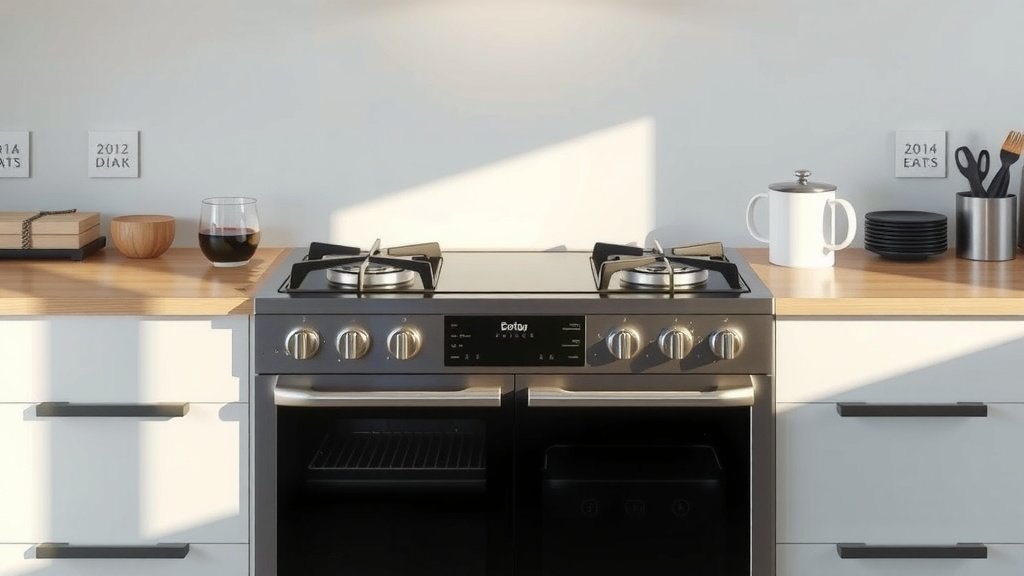
A dual fuel oven combines the best of both cooking worlds, pairing a gas cooktop with an electric oven in one appliance.
This setup allows you to enjoy the instant heat and precise control of gas for stovetop cooking, alongside the consistent and even baking power of an electric oven.
- A dual fuel oven combines a gas stovetop with an electric oven.
- You get the quick response of gas for frying and simmering.
- The electric oven provides steady, dry heat ideal for baking and roasting.
- Many home chefs prefer this setup for its versatility in the kitchen.
- It offers distinct advantages for different cooking tasks, making meals easier.
How Does A Dual Fuel Oven Work?
A dual fuel oven works by harnessing two distinct energy sources within one unit. It uses natural gas or propane for the burners on top, giving you immediate flame control. For the oven cavity below, it relies on electricity to generate dry, consistent heat. This combination means you get the best performance for both cooking methods.
Understanding the Gas Cooktop
The top part of a dual fuel range is a familiar gas cooktop. You turn a knob, and a flame ignites almost instantly. This instant on-and-off control is a huge perk for many cooks. It means you can quickly adjust heat for simmering, searing, or boiling water.
Many experts say gas stovetops give you a feeling of direct control. You can see the flame, so you know exactly how much heat you are applying. This visual feedback makes it easier to prevent burning or overcooking certain dishes (America’s Test Kitchen).
The Electric Oven: Consistent, Even Heat
Below the gas burners sits an electric oven. Unlike gas ovens, which can have “hot spots” due to how the flame heats the air, electric ovens use heating elements. These elements, often at the top and bottom, spread heat very evenly throughout the cavity. This results in incredibly consistent temperatures.
We found that electric ovens excel at baking and roasting. The dry, steady heat helps cakes rise uniformly and roasts cook perfectly through. No more rotating pans halfway through for even browning.
Why Gas for the Cooktop?
Gas cooktops are loved for their responsiveness. Imagine needing to quickly reduce a sauce from a vigorous boil to a gentle simmer. With gas, you just turn the knob, and the heat changes right away. There is no lingering heat from a burner, which can happen with electric coil stovetops.
Research often shows that professional chefs prefer gas for its immediate feedback. It allows for dynamic cooking where quick temperature shifts are common. This adaptability saves time and gives you more command over your food.
Why Electric for the Oven?
When it comes to baking, consistency is key. Electric ovens provide that steady, even heat you want. Many experts agree that the dry heat from electric elements creates ideal conditions for perfect crusts on pies and bread.
We found that electric ovens often maintain their set temperature better over time. This helps prevent burnt bottoms or uncooked centers in your favorite casseroles. Think of it as a reliable baking partner.
How They Work Together
A dual fuel oven brings these strengths together under one hood. You get the best of both worlds in a single appliance. The controls for the gas cooktop are usually on the front panel, just like a standard range. The electric oven’s controls are also integrated, often digital.
This means you can be frying chicken on a gas burner while a cake bakes steadily in the electric oven below. It is a kitchen powerhouse designed for maximum cooking flexibility. You can prepare complex meals without compromise.
Benefits of Choosing Dual Fuel
Choosing a dual fuel oven comes with several clear advantages. It is like having two specialized appliances rolled into one. You no longer have to pick between gas or electric; you get both. This makes it a popular choice for serious home cooks.
Many homeowners appreciate the versatility these ranges offer. It lets you cook a wider range of dishes with confidence. Think about the control you gain for every single recipe.
| Feature | Gas Cooktop Benefit | Electric Oven Benefit |
|---|---|---|
| Heat Control | Instant on/off flames, precise adjustments. | Consistent, even temperatures for baking. |
| Cooking Tasks | Searing, stir-frying, simmering, boiling. | Baking, roasting, broiling, dehydrating. |
| Temperature Accuracy | Visual flame feedback. | Minimal hot spots, steady heat. |
Better Temperature Control
The electric oven’s ability to hold a precise temperature is a major plus. Baking delicate pastries or a perfect soufflé often requires exact heat. Electric ovens deliver this reliability. Many experts say this leads to more predictable and successful baking outcomes.
Imagine your grandmother’s famous cookie recipe. An electric oven helps ensure every batch turns out golden and delicious. It takes some guesswork out of the baking process.
Instant Heat on the Stovetop
The gas cooktop is unbeatable for quick heat. Need water to boil fast for pasta? Gas delivers. Want to sear a steak to a perfect crust? Gas burners get hot quickly. This speed can truly transform your daily cooking.
We found that many cooks simply prefer the feeling of cooking with an open flame. It is a tradition for many, offering a kind of cooking experience that electric coils cannot replicate.
Things to Consider Before Buying
Before you jump into buying a dual fuel oven, there are a few practical points to consider. They are fantastic appliances, but they do have specific requirements. Thinking about these details beforehand can save you headaches later.
It is smart to check your home’s current setup. Will it support the needs of a dual fuel range? Knowing this helps you make an informed decision for your kitchen.
Installation Requirements
A dual fuel oven needs both a gas line and an electrical outlet. The gas line fuels the cooktop burners. The electric outlet powers the oven and possibly some digital components. You might need a professional to install a new gas line or upgrade your electrical outlet.
Here is a quick checklist for installation:
- Check for an existing gas line connection.
- Verify a suitable 240-volt electrical outlet is available.
- Measure your kitchen space carefully for fit.
- Consider ventilation requirements for gas appliances.
- Budget for potential professional installation costs.
Energy Consumption
The operating costs can vary between gas and electric components. Gas generally tends to be cheaper for heating in many regions. However, electricity might be more efficient for some cooking methods. It is worth checking local utility rates.
Some research shows that the specific cost savings depend on your personal cooking habits. If you bake often, your electric bill might see a slight bump. If you mostly use the cooktop, gas costs will be more noticeable.
Is a Dual Fuel Oven Right for You?
So, is a dual fuel oven your kitchen’s next best friend? If you love to cook and appreciate precision for both stovetop and oven tasks, then it is a strong contender. You get the best of both worlds without compromise.
Consider your cooking style and what features you value most. Do you dream of perfectly seared meats and impeccably baked desserts? If so, a dual fuel range could be an excellent fit for your culinary aspirations.
Conclusion
A dual fuel oven offers a powerful combination of gas cooktop responsiveness and electric oven consistency. It is a fantastic choice for home chefs who demand precision and versatility in their cooking. By understanding how the gas and electric elements work together, you can truly appreciate the benefits this appliance brings. Remember to check your home’s utility connections, and you might just find your new favorite kitchen tool.
What is the main difference between a dual fuel and an all-gas range?
The main difference is the oven’s power source. A dual fuel range has a gas cooktop but an electric oven. An all-gas range uses gas for both the cooktop burners and the oven itself. Electric ovens often provide more even heat than gas ovens for baking.
Are dual fuel ovens more expensive than other types of ranges?
Generally, yes, dual fuel ovens tend to be more expensive upfront than all-gas or all-electric ranges. This is due to the dual technology required and the premium features often included. However, many experts say the cooking performance justifies the cost for serious home cooks.
Can I use a dual fuel oven if I only have an electric outlet, not a gas line?
No, a dual fuel oven requires access to both a gas line for the cooktop and a 240-volt electrical outlet for the oven. If you only have electricity, you would need to install a gas line, which can be a significant undertaking, or consider an all-electric range instead.
Do dual fuel ovens require special maintenance?
Dual fuel ovens generally require similar maintenance to other ranges. You will need to clean the cooktop regularly and the oven periodically, following the manufacturer’s instructions. As with any appliance using gas, it is wise to have a professional inspect the gas lines periodically to ensure safety and proper function.
Is a dual fuel oven a good choice for baking?
Yes, a dual fuel oven is often considered an excellent choice for baking. The electric oven component provides very consistent, dry heat, which is ideal for everything from cakes and cookies to breads and soufflés. Many experts agree that electric ovens perform better for precise baking than gas ovens.
