How to Choose a Range with a Convection Oven
A convection oven range is right for you if you want faster, more even cooking from a fan-driven oven cavity. Choose gas or electric by your fuel hookup, pan size and baking habits, then check the cutout, door swing and rack fit before you order.
On this page (13 sections)
- What makes a convection oven range different from a standard range?
- Should you choose a convection oven gas range or an electric range with convection oven?
- How do you size a convection oven range for your kitchen?
- What capacity do you really need inside the oven?
- Which convection controls are worth paying for?
- How do countertop convection ovens compare to a full range?
- Which smaller convection models suit apartments and light cooking?
- What should you check for large family meals and entertaining?
- How do you use the convection setting without overcooking food?
- When is a dual fuel range a smart pick?
- What safety and setup checks should you do before first use?
- How do you clean and care for a convection oven range?
- Final pick: which convection oven range should you buy?
The best convection oven range for you matches the fuel you already have, the pans you use most, and the space you have to open the door. A fan that moves hot air can brown food more evenly, but it is not magic for every dish.
If you are new to this type of oven, start with What Is a Convection Oven? to learn how the fan changes heat flow. That short read will make the rest of this guide easier to follow.
You also need to decide between gas and electric before you look at models. The cooktop fuel matters as much as the oven fuel, since a range includes both parts in one cabinet.
What makes a convection oven range different from a standard range?
A convection oven range adds a fan and a vented cavity to a full-size stove. The fan pulls heat from the element or burner and pushes it around the food, so hot spots shrink and cooking times often drop.
That change helps with roasts, sheet pan vegetables, cookies and reheating leftovers. It can also dry out airy cakes or custards if you run the fan for a recipe that needs still air.
Many ranges let you turn convection on or off. That choice is worth paying for, since you get fast browning when you want it and gentle heat when you do not.
Rule: Pick a range with a true convection mode you can turn off, not a fan that runs all the time.
Should you choose a convection oven gas range or an electric range with convection oven?
Your fuel hookup is the first filter. A gas line and an electric outlet are not interchangeable, and converting one to the other can add cost and permit work.
Gas cooks often like the fast response of a gas cooktop and the moist heat in a gas oven. Electric cooks often like the dry, steady heat of an electric oven for baking and roasting.
Our convection oven vs electric oven comparison breaks down how those heat types differ in daily use. Read it before you shop, since oven heat and cooktop heat are separate choices.
If you lean gas, learn Can You Use Convection In A Gas Oven? so you know what to expect from the fan and burner setup. Gas convection ovens can work very well, but the fan placement and burner design vary by model.
Electric range with convection oven: best for steady baking
Electric elements give you even temperature control and no open flame in the cavity. That helps with cakes, bread and foods that need precise heat.
You will need a 240 volt outlet in most kitchens. Check the panel and the outlet location before you fall in love with a model.
Convection oven gas range: best for fast cooktop response
Gas gives you instant flame control on top and strong heat for searing. Some cooks also prefer how gas ovens handle certain roasts.
You need a gas line, proper venting and a space that meets local code. If the line is not there, get a firm quote before you plan around gas.
Rule: Choose the fuel you can hook up safely and affordably, then shop for convection features inside that group.
How do you size a convection oven range for your kitchen?
Start with the cutout, not the sales pitch. Measure width, height and depth, then add the space the door needs when it swings down and out.
A 30 inch range is common, but a 36 inch model can work better if you cook with wide pans or a large Dutch oven. Check the door swing against islands, opposite cabinets and open drawers.
Depth matters more than most buyers expect. A range that is a few inches too deep can steal walkway space every time you open the oven.
You also need to check the delivery route. Measure doorways, halls and tight turns with the range in its box before you order.
Rule: Measure the cutout, the open-door depth and the delivery route, and reject any range that fails one of those three checks.
What capacity do you really need inside the oven?
Capacity is about your largest pan, not about a number on a spec sheet. Fit matters more than cubic feet when the pan is the problem.
Think about a 9 by 13 inch casserole, a sheet pan, a roasting pan or a Dutch oven. If your biggest pan touches the walls or blocks air flow, convection will not save the meal.
Rack positions matter too. You need at least two usable rack levels for cookies or vegetables, with room for the food to brown without hitting the top element.
Many kitchens cook for two to five people, so a standard full-size cavity is often enough. Larger families or frequent entertainers may want more width, but only if the kitchen can hold it.
Rule: Buy capacity around your largest pan and your most common rack level, not around a claim about family size.
Which convection controls are worth paying for?
Look for controls you will actually use on a busy night. A clear display, a true convection setting and a bake setting that turns the fan off cover most needs.
A probe thermometer can help with roasts, but it is not a substitute for learning your oven. Some models have hot or cool spots even with a fan, so a simple test with toast or cookies will show you the pattern.
Self-clean and steam-clean are handy if you roast often. Weigh that feature against the cost of the model and the care the finish needs over time.
Convection broil is useful for crisp tops on casseroles and baked pasta. If you broil a lot, check how the broiler is placed and whether the door stays closed during broiling.
Rule: Pay for a separate convection mode, clear controls and a reliable broiler before you pay for extra presets.
How do countertop convection ovens compare to a full range?
A countertop convection oven can teach you a lot about fan cooking before you buy a range. It gives you convection, air fry and dehydrate modes in a smaller box.
The Breville BOV900BSS Smart Oven Air Fryer Pro is an extra large countertop model with 13 cooking functions. Breville says super convection can cut cooking time by up to 30 percent, and the interior fits 9 slices of bread, a 14 pound turkey or a 5 quart Dutch oven.
Its interior is listed at 16 by 13.5 by 7 inches, and it fits most 9 by 13 inch pans and 12 cup muffin trays. It runs at 1800 watts on 120 volts, and it includes a 13 inch pizza pan, two oven racks, a 9 by 13 inch broil rack with enamel roasting pan, and a mesh basket for dehydrating and air frying.
The Breville uses 5 independent quartz elements with the Element iQ System. Breville says sensing and digital PID temperature control help remove cold spots, and the 2 speed convection fan gives you super or regular air flow.
It also has an LCD display, an interior light that turns on at the end of the cycle, and a 2 year limited warranty. At 30.2 pounds and 17.5 by 21.5 by 12.7 inches, it needs real counter space.
Use a countertop model like this to learn your fan preferences. If you love super convection for fries and vegetables, you will know to look for strong air flow in a range.
Rule: Use a countertop convection oven to test your cooking style, but do not use it to judge the fit or power of a full range.
Which smaller convection models suit apartments and light cooking?
If you cook for one or two people, a smaller convection oven may fit your habits better than a full range. You will use less energy for small meals and you can keep the main range for holidays.
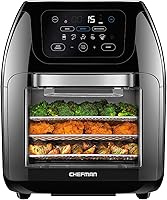
The CHEFMAN Multifunctional Digital Air Fryer+ Rotisserie is a 10 liter model with 17 touch screen presets. Chefman lists air fry, bake, dehydrate, rotisserie and roast modes, plus auto shutoff and a large easy view window.
It measures 11.8 by 12.2 by 14.6 inches and weighs 14.2 pounds. Chefman includes three air flow racks, a stainless steel rotisserie spit with retrieval tool and a drip tray.
The model runs at 120 volts and 1700 watts, with a max temperature setting of 400 degrees Fahrenheit. Chefman says rapid air heating elements cook fast without preheating like a traditional oven, and the removable drip tray and dishwasher safe parts ease cleanup.
It has interior lights so you can check food through the window. Chefman backs it with a 1 year assurance and cETL approval, according to the brand.
This size suits meal prep in small batches and reheating without heating a full oven. It will not replace a range for large roasts or wide pans, so treat it as a second oven or a starter tool.
Rule: Pick a smaller convection oven for daily small meals, and keep a full range plan for large pans and holiday cooking.
What should you check for large family meals and entertaining?
Large meals need width, rack space and door access more than extra presets. A wide cavity with two strong racks will do more for a holiday than a long list of functions.
The Emeril Lagasse 26QT French Door Multi-Function Air Fryer Toaster Oven has a 24.6 liter capacity and a stainless steel exterior. Emeril lists 24 cooking functions, a dual speed fan with 360 degree superheated air circulation, and French doors that open with a single pull.
Its dimensions are 16.8 by 15.8 by 14.8 inches. Emeril describes it as fitting a whole chicken, 12 inch pizzas or a full tray of cookies, with an interior light for monitoring food.
Included items are a rack, bake pan, drip tray, crisper basket, rotisserie spit and fetch tool. The temperature range runs from 75 to 500 degrees Fahrenheit, and controls are by touchscreen.
The toast function stops automatically when the timer ends, with a red indicator while toasting and blue when it stops. That is a useful detail if toast is part of your daily routine.
For a true range, use this size as a reference for what a large load needs. If these countertop dimensions feel tight for your pans, a wider full-size range may be the better buy.
Rule: Size for your largest planned load and your door access, and test whether that load fits before you commit to a model.
How do you use the convection setting without overcooking food?
Start by dropping the temperature a little and checking early. Fan heat moves faster than still heat, so a recipe written for radiant heat often needs less time or less heat.
Read How To Use Convection Setting On Gas Oven? if your range uses gas, since fan heat and burner heat interact in that setup. The same care applies to electric models, even if the element is different.
Use the center rack for most foods. Move the tray only if one side browns faster, and turn the pan halfway through for cookies or vegetables.
Keep the door closed as much as you can. Each peek drops the heat, and the fan has to work to bring it back.
For delicate foods, turn the fan off. Cakes, custards and some breads can rise or set better with still air.
Rule: Lower the heat a little, use the center rack, check early, and turn the fan off for delicate bakes.
When is a dual fuel range a smart pick?
A dual fuel range pairs a gas cooktop with an electric oven. That mix suits cooks who want fast flame control on top and steady electric heat below.
It also adds cost and hookup needs, since you need both gas and electric service at the range. Check your kitchen plans before you assume dual fuel is simple.
Read Why Choose A Dual Fuel Oven Over Gas Or Electric? to see where this mix earns its price. It is not the right move for every kitchen.
For baking first buyers, Which Oven Is Better Gas Or Electric For Baking? helps you compare heat types without the cooktop mixed in. Use that read to separate oven performance from burner preference.
Rule: Choose dual fuel only if you cook on the burner and in the oven enough to use both heats every week.
What safety and setup checks should you do before first use?
Check the fuel and electrical hookup with a qualified installer if you are not sure. A convection oven range is a major appliance, and the connection must match the model.
Leave the clearances the maker requires on all sides. Heat needs room to move, and cabinets, walls and floors need protection from that heat.
Vent the range as local code requires. A fan in the oven does not remove the need for proper range ventilation.
Remove packaging, racks and trays before the first heat. Wipe the cavity as the manual directs, then run a short empty heat cycle to burn off factory residue.
Use oven mitts, keep the door handle and controls in mind when the cavity is hot, and keep kids and pets back during the first cycle. Test the broiler, the fan and each burner or element before you cook a full meal.
Rule: Confirm hookup, clearances and venting with the manual and local code before the first cooking cycle.
How do you clean and care for a convection oven range?
Wipe spills while the oven is warm, not hot, so they do not bake on. The fan and vent openings can collect grease faster than a standard cavity.
Clean the fan cover and vent slots with a soft cloth as the manual directs. Do not block those openings with foil or a large pan that stops air flow.
Check the door seal for crumbs and damage. A worn seal lets heat escape and makes temperature control harder.
For self-clean models, follow the lock and heat warnings exactly. For steam-clean models, add water only as the manual directs and wipe the cavity after the cycle.
Rule: Wipe spills early, keep vents clear, and check the door seal as part of your monthly care.
Final pick: which convection oven range should you buy?
Pick the fuel you can hook up, the size that fits your cutout and door swing, and the cavity that fits your largest pan. That order will save you more trouble than chasing presets.
If you bake often, lean toward an electric range with convection oven for steady heat. If you sear and stir fry a lot on top, a convection oven gas range may fit your week better.
If you want to test fan cooking first, a countertop model can help you learn your style. The Breville, Chefman and Emeril models above give you three different sizes and control styles to compare against your actual meals.
Read the linked guides on gas convection and electric heat before you order. Then measure twice, check the hookup, and buy the range that passes those checks.
That is how you choose a convection oven range with confidence, and how you get even browning without giving up the foods you cook best.
Frequently asked questions
What is a convection oven range?
A convection oven range is a full-size stove with a fan that moves hot air around food in the oven cavity. The fan helps food cook more evenly and often faster than a standard radiant oven.
You can run many models with the fan on or off.
Is a convection oven electric range better than gas?
An electric range with convection oven often gives steadier baking heat and easier temperature control. A gas convection oven range can heat fast and suits cooks who prefer a gas cooktop.
Your fuel line, venting and pan habits decide the better fit.
What size convection oven range should I buy?
Most buyers start with a 30 inch range, but you must check the cutout width, depth with the door open, and your largest pan. Measure doorways and counters first.
A range that fits the hole but blocks drawers is the wrong size.
Can I use convection for every recipe?
No. Convection suits roasts, vegetables, cookies and reheating very well, but delicate cakes and some souffles do better with still heat.
Start with a lower temperature and check early.
Your manual will list which modes use the fan.