
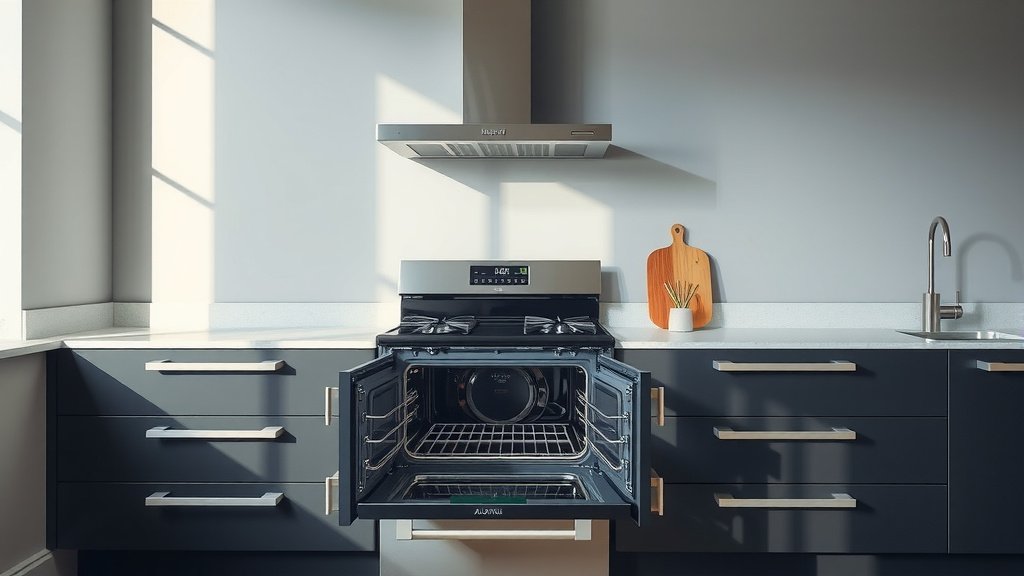
The first step to using a dual fuel oven is understanding its two power sources: electric for the oven and gas for the stovetop.
You operate the gas burners like a traditional gas range, while the electric oven uses familiar controls for baking and roasting.
Here’s a quick look at what you will find inside this guide:
- You will learn how to operate both the gas cooktop and electric oven.
- Discover the unique benefits each fuel type brings to your cooking.
- Get practical tips for installation, maintenance, and common issues.
- Understand why many home chefs love dual fuel ovens for versatility.
- Find out how to maximize your cooking efficiency and results.
How To Use A Dual Fuel Oven?
You use a dual fuel oven by operating its gas stovetop burners and electric oven independently, each offering distinct cooking advantages for different tasks.
What Exactly is a Dual Fuel Oven?
Imagine having the best of both worlds in your kitchen. A dual fuel oven combines a gas-powered cooktop with an electric oven. This setup brings precision to your stovetop cooking and consistent heat to your baking.
It means you get the immediate flame control of gas for searing or boiling. At the same time, your oven provides the even, dry heat that is perfect for cakes and roasts. It’s truly a chef’s dream appliance for many reasons.
Getting Started: Your First Steps
Before you cook anything, always check your appliance manual. It’s like a secret guide tailored just for your model. Understanding the layout of your controls is the next big step.
You will find separate knobs for the gas burners and a digital panel or dial for the electric oven. Taking a moment to familiarize yourself with these can prevent cooking mishaps.
Understanding Your Gas Cooktop
Operating the gas burners is often very intuitive. You usually push in and turn the knob for the desired burner. Many models have an automatic ignition that clicks until the flame lights.
Once lit, you can adjust the flame height to control the heat. A high flame is great for boiling water quickly, while a low flame works well for simmering delicate sauces. This instant visual feedback is a key benefit.
Mastering Your Electric Oven
Using the electric oven is straightforward too. You will typically select a temperature and a cooking mode, like bake or roast. Most electric ovens require preheating, which means waiting for the oven to reach the set temperature before placing food inside.
An electric oven usually offers very consistent heat throughout the cavity. This makes it ideal for delicate baking where even heat distribution truly matters. Many models also include convection settings to circulate hot air, cooking food faster and more evenly (Energy Star).
Why Choose Dual Fuel? The Advantages
Dual fuel ovens offer a fantastic blend of cooking capabilities. You gain the rapid response of gas heat and the steady, dry heat of an electric oven. This combination gives you greater versatility in the kitchen.
Many experts say this setup provides optimal results for a wider range of dishes. You can sear a steak perfectly on the stovetop and then bake a soufflé without worrying about temperature fluctuations. It’s about cooking with confidence.
Gas Cooktop Benefits for You
Think about how quickly a gas flame adjusts. You can go from a rolling boil to a gentle simmer almost instantly. This kind of precise control is invaluable for many cooking techniques, from stir-frying to making candy.
Research often highlights how gas cooktops are preferred by chefs for their immediate heat adjustment (Cook’s Illustrated). Also, many cooks enjoy the visual aspect of seeing the flame.
Electric Oven Benefits You’ll Love
Electric ovens are renowned for their consistent and even heat. This uniformity is especially good for baking delicate items like cakes, cookies, and bread. You get less likelihood of hot spots, meaning your food browns more evenly.
Many models also feature advanced controls and often come with self-cleaning cycles. We found that the dry heat of electric ovens helps create crispy crusts and perfectly roasted foods without excessive moisture.
Common Questions About Dual Fuel Ovens
You might wonder about ventilation or cleaning. Proper ventilation is always important for any cooking appliance. Ensure you have a good range hood that vents outdoors to manage cooking fumes and heat.
Cleaning dual fuel ovens involves separate approaches for each component. The gas grates and burners need routine wiping, while the electric oven may have a self-clean cycle. Always follow your manufacturer’s guidelines for the best cleaning practices.
Dual Fuel Oven: What You Need to Know for Installation
Installing a dual fuel oven is a bit more involved than a single fuel type. You need access to both a gas line and a dedicated electrical outlet. This is because both fuel sources are running concurrently.
It’s always a smart idea to have a qualified professional install your appliance. They will ensure all connections are safe and up to code, giving you peace of mind from day one (Appliance Standards Awareness Project).
Tips for Optimal Performance
To get the best out of your dual fuel oven, a few simple tips can make a big difference. First, consider oven calibration if you suspect temperature inaccuracies. Many service technicians can help with this.
Regular maintenance, like keeping burners clean and checking oven door seals, helps everything run smoothly. Also, using the right cookware for each element will maximize efficiency. For instance, flat-bottomed pans on electric burners and cast iron on gas.
Troubleshooting Common Issues
What if a gas burner won’t light? First, check if it’s clean and dry. Food debris can block the igniter. If your electric oven isn’t heating evenly, ensure you’re preheating it properly and not overcrowding the racks.
For persistent issues, it’s often best to consult your appliance manual or a certified technician. Don’t try to repair gas lines or electrical components yourself; safety is always paramount.
Making the Most of Both Worlds
This is where the magic happens! Use your gas cooktop for anything needing immediate, responsive heat. Searing meats, stir-frying vegetables, or rapidly boiling pasta water are perfect tasks for gas.
The electric oven, with its consistent, dry heat, excels at baking cakes, roasting vegetables, and cooking casseroles evenly. You can sear a steak on the gas range, then transfer it to the electric oven to finish cooking slowly. This strategic use of both fuels lets you achieve superior culinary results.
| Feature | Gas Cooktop | Electric Oven |
|---|---|---|
| Heat Type | Instant, direct flame | Consistent, dry radiant heat |
| Best For | Searing, boiling, stir-frying, quick adjustments | Baking, roasting, even browning |
| Control | Immediate flame adjustment | Precise temperature stability |
| Energy Use | Often more affordable to run for stovetop | Generally more efficient for baking uniformity |
Here’s a quick checklist to help you master your dual fuel oven:
- Review your owner’s manual for specific features.
- Clean gas burners regularly for proper ignition.
- Always preheat your electric oven fully.
- Use the convection setting for faster, even roasting.
- Match cookware to the heating element (e.g., heavy-bottomed for gas).
- Keep your oven well-ventilated during use.
Conclusion
Learning how to use a dual fuel oven might seem like a lot at first, but it quickly becomes second nature. You’re getting the best of both cooking worlds: the fiery control of a gas stovetop and the gentle, even embrace of an electric oven. By understanding each component and using them to their strengths, you will unlock a new level of culinary excellence in your kitchen. So go ahead, experiment, and enjoy the incredible versatility your dual fuel oven offers!
How do I switch between gas and electric in a dual fuel oven?
You don’t “switch” between them in the traditional sense; they operate independently. You use the gas burners on the stovetop with their dedicated knobs and the electric oven with its separate temperature and mode controls.
Can I use both the gas cooktop and electric oven at the same time?
Yes, absolutely! That’s one of the main advantages of a dual fuel oven. You can be searing a steak on the stovetop while a cake bakes perfectly in the electric oven simultaneously. This allows for highly efficient meal preparation.
Are dual fuel ovens more expensive to run?
The running cost can vary. Gas is generally cheaper for stovetop cooking, while electric ovens are very efficient for baking due to their consistent heat. Overall, many find the combined efficiency and cooking benefits make the running cost worthwhile compared to single-fuel alternatives.
Do dual fuel ovens require special cookware?
Not specifically. You can use standard cookware suitable for gas cooktops (like cast iron or stainless steel) and oven-safe bakeware for the electric oven. Just ensure your pots and pans have flat bottoms for electric burners for better contact.
Is a dual fuel oven a good choice for a small kitchen?
A dual fuel oven combines two appliances into one, which can save space compared to having a separate gas cooktop and an electric wall oven. If you have the necessary gas and electrical hookups, it can be an excellent, space-efficient choice for any kitchen size.
