Oven vs Stove: What Is the Difference? (November 2026)
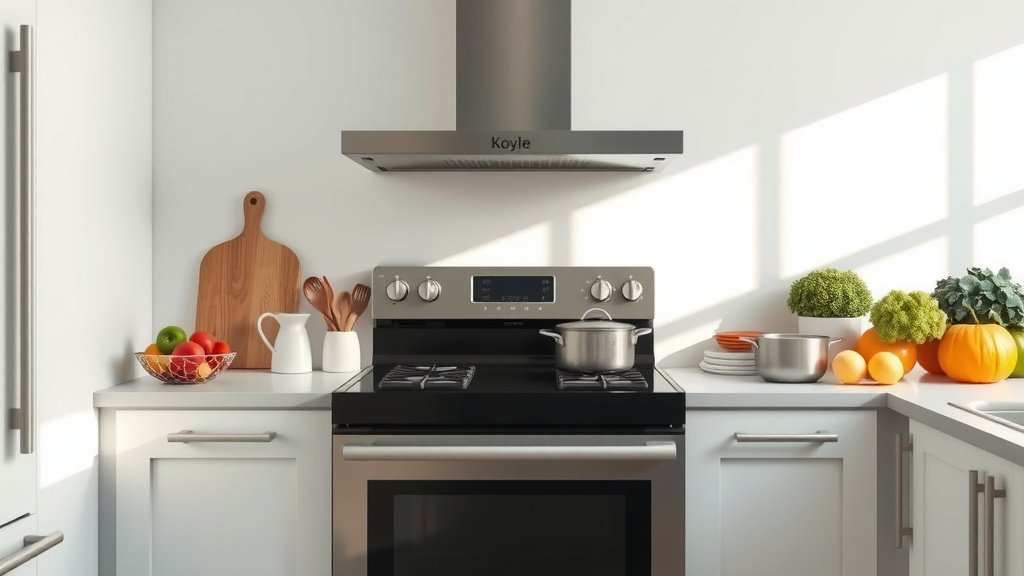
An oven cooks inside an enclosed chamber, while a stove cooks on top with burners or an electric cooktop. In an oven vs stove comparison, the oven bakes, roasts and reheats with surrounding heat, and the stove heats pots and pans directly from above.
On this page (14 sections)
- Oven vs stove: the two side by side
- What is the difference between all types of ovens?
- How an oven cooks food inside a chamber
- How a stove cooks food on top
- Size and space: oven vs stove in your kitchen
- Indoor, outdoor and emergency use
- Which heats food faster?
- Baking, roasting and air frying compared
- Stovetop cooking and parts you may need
- Heat control and ease of use
- Cleaning and daily care
- Safety, fuel and power choices
- Who should buy which?
- Final verdict on oven vs stove
An oven cooks inside an enclosed chamber, while a stove cooks on top with burners or an electric cooktop. In an oven vs stove comparison, the oven bakes, roasts and reheats with surrounding heat, and the stove heats pots and pans directly from above.
That one difference shapes everything else. An oven traps heat around food.
A stove sends heat into the bottom of a pot or pan.
Think about your normal meals first. Cakes, bread, casseroles and whole birds need an oven.
Soup, pasta, rice and stir fry need a stove.
Many kitchens need both. A range pairs a cooktop with an oven below it.
A countertop oven can fill the baking role without a full range.
 Best for large countertop baking
Breville BOV900BSS Smart Oven Air Fryer Pro
 Best for compact rotisserie cooking
CHEFMAN Multifunctional Digital Air Fryer+ Rotisserie
Oven vs stove: the two side by side
The oven wins for enclosed baking and roasting, and the stove wins for direct pots and pans on top. The table below shows the practical split.
| Choice | Oven | Stove |
|---|---|---|
| Heat location | Inside a closed chamber | On top, under a pot or pan |
| Best for | Baking, roasting, broiling, dehydrating | Boiling, simmering, searing, frying |
| Tools | Racks, pans, trays | Pots, pans, kettles |
| Heat control | Thermostat and element placement | Dial or knob for each burner |
| Fuel | Often electric or gas, by model | Gas, electric or dual fuel, by model |
A countertop oven sits on your counter and acts like a small oven. A portable stove sits on a table and acts like a single cooktop burner.
The Breville and Chefman models in this guide are countertop ovens. The Gas One model is a portable stove.
The COZZIVITA pans are parts for an electric stove.
That mix is useful. It shows both sides of the oven vs stove question in real products.
What is the difference between all types of ovens?
Ovens differ by size, fuel, heat source and jobs inside the chamber. Our guide to What Is The Difference Between All Types Of Ovens? covers that family in more detail.
A stove is simpler. It is a surface that heats cookware from below, so you choose a pan and set a heat level.
An oven heats air and food together. It can brown the top while cooking the center, while a stove mostly heats from the bottom.
The Breville Smart Oven Air Fryer Pro uses 5 independent quartz elements. Its Element iQ System steers power where needed.
The Chefman uses rapid air heating elements and needs no preheat like traditional ovens for its listed functions.
Even chamber heat helps cookies, cakes and roasts cook more evenly.
How an oven cooks food inside a chamber
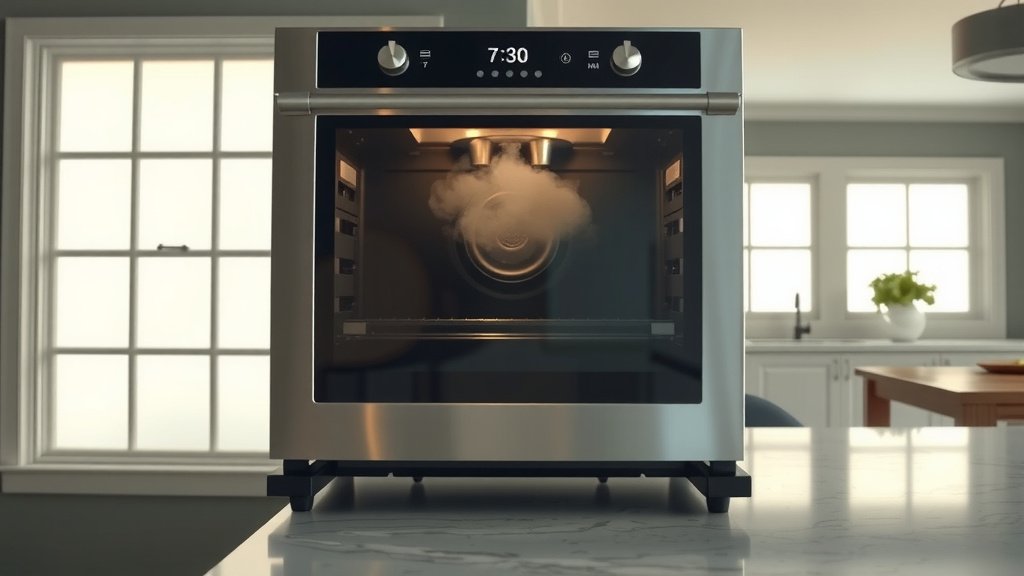
An oven surrounds food with hot air, so heat reaches the top, sides and bottom at once. That is why baking works so well in an oven.
You place food on a rack or pan and the chamber holds heat around it. The top browns and the center cooks through.
Convection adds a fan that moves hot air around. That cuts time and evens out hot spots.
Breville says super convection reduces cooking time by up to 30 percent. Its 2 speed fan offers super and regular convection.
The Chefman is also a convection oven. Its rapid air heating is meant to cook fast, even and crispy food.
Air frying uses that moving air with a mesh basket to crisp food without deep frying. An oven also suits slow jobs like dehydrating, proofing and warming.
The Breville lists 13 functions, including bake, roast, pizza, proof, slow cook and dehydrate.
How a stove cooks food on top
A stove sends heat straight into the bottom of a pot or pan, so you control food from above. That direct contact makes stovetop cooking fast and responsive.
Turn the dial up and the burner heats faster. Turn it down and simmering slows in seconds.
That speed helps with boiling water, searing meat and sauteing vegetables. You can stir, taste and adjust as you go.
The Gas One GS-3400P is a portable stove with an adjustable heat dial for outdoor cooking and camping. It runs on a single 8 oz butane cartridge or a 16.4 oz propane cylinder, and fuel is not included.
Its automatic piezo electric ignition removes the need for lighters or matches. A stove cannot bake bread or roast a whole turkey, but heating the pan you place on it is its strength.
Size and space: oven vs stove in your kitchen
A countertop oven needs counter space, while a portable stove needs a flat, safe surface. Measure before you buy either one.
The Breville measures 17.5 x 21.5 x 12.7 inches and weighs 30.2 pounds. It is a large countertop appliance.
Its interior is 16 x 13.5 x 7 inches. It fits 9 slices of bread, a 14 pound turkey and most 9 x 13 inch pans.
The Chefman measures 11.8 x 12.2 x 14.6 inches and weighs 14.2 pounds. Its capacity is 10 liters, or 10 quarts.
That smaller footprint suits a tighter counter, but its taller shape still needs cabinet clearance.
The Gas One measures 13.5 x 11 x 4.45 inches and weighs 3.1 pounds. It comes with a carrying case and packs easily for trips.
A full size range is different. It is fixed in place and pairs a cooktop with an oven below it.
Indoor, outdoor and emergency use
A countertop oven is for indoor counter use, while a portable stove is made to move. Choose by where you cook most.
The Breville and Chefman are corded electric. The Breville uses 1800 watts at 120 volts and the Chefman uses 1700 watts at 120 volts.
Both need an outlet near the counter. Neither is designed as a portable outdoor burner.
The Gas One is gas powered for camping, emergency preparedness and outdoor cooking.
Gas One says it has a built in pressure sensor cartridge ejection system. It ejects the cartridge when irregular pressure is detected.
That safety feature matters with fuel. Always follow the manual for storage, setup and use.
A movable stove gives flexibility for patios, campsites or power outages, if conditions allow. An oven gives range for baking, roasting and dehydrating, but needs power and counter space.
Which heats food faster?
A stove usually heats a pot faster, while a convection oven can cook many foods faster than a standard oven. Speed depends on the job and tool.
A burner puts heat directly into a pot. Water boils sooner and a sear starts as soon as the pan is hot.
An oven must heat the chamber first and often needs preheat before food goes in.
Convection helps after preheat by moving air to food more evenly. Breville says super convection can reduce cooking time by up to 30 percent.
Chefman says its model does not need preheat like traditional ovens. That can save time for air frying and baking.
Our guide Which Oven Type Cooks The Fastest? looks at speed across oven types.
A stove wins for a single pot of pasta. An oven wins for a tray, roast or several items at once, and wattage alone does not decide speed.
Baking, roasting and air frying compared
An oven bakes and roasts with surrounding heat, and air frying adds fast air for crisp surfaces. A stove fries and sears in pans but does not bake in a chamber.
The Breville lists toast, bagel, broil, bake, roast, warm, pizza, proof, air fry, reheat, cookies, slow cook and dehydrate.
It includes a 13 inch pizza pan, two oven racks, a 9 x 13 inch broil rack and enamel roasting pan, plus a mesh basket.
The Chefman lists air fry, bake, dehydrate, rotisserie and roast. It includes three air flow racks, a rotisserie spit with retrieval tool and a drip tray.
Rotisserie shows chamber cooking well. The spit turns food in hot air for browning on all sides.
A stove can sear meat in a pan but cannot turn a whole bird in hot air. For pizza, our guide What Is The Difference Between Oven Types For Pizza? covers chamber heat.
Stovetop cooking and parts you may need
A stove needs pots, pans and simple parts that catch spills where you cook. Drip pans are one small part on an electric stove.
The COZZIVITA set includes 2 pans at 6 inches and 2 at 8 inches. The 6 inch pans measure 7.6 inches across and the 8 inch pans measure 9.7 inches across.
The pans have a chrome finish and fit GE stoves. Measure your burners before you order.
Drip pans catch spills and crumbs under electric burners. That keeps the area cleaner and can extend part life.
Wipe them after cooking and keep them dry. Replace them when they turn black or badly stained.
The Gas One does not use electric drip pans. It uses fuel cartridges and a burner head to keep clean and dry.
Heat control and ease of use
An oven controls temperature inside a chamber, while a stove controls heat at each burner. Both need clear controls for daily use.
The Breville has an LCD display showing functions and progress. It signals when preheat is complete and starts a countdown.
Its interior light turns on at the end of cooking and can be turned on anytime to check progress.
The Chefman has a capacitive touch screen with 17 presets. Interior lights and a large window help you monitor food.
The Gas One has an adjustable heat dial for boiling, simmering or searing. Its piezo ignition starts the flame without matches.
For baking, accuracy matters. Breville describes digital PID temperature control for precise cooking.
For stovetop work, a flame or element should respond quickly when you turn the dial.
Cleaning and daily care
An oven needs tray, rack and chamber cleaning, while a stove needs burner and surface cleaning. The work differs because the heat differs.
The Chefman has a removable drip tray and dishwasher safe parts for easier cleanup after air frying or roasting. The Breville includes racks, a pizza pan and a roasting pan, so wash them as the manual directs and wipe the chamber after spills cool.
Its interior light helps you see messes before they build up. A quick wipe after each use keeps cleaning easier.
For the Gas One, keep the burner area clean and dry, store fuel as directed and use the carrying case in transit. For an electric stove, wipe drip pans right after cooking, let them dry fully and replace a pan when its shell turns black.
Our guide What Is A Steam Injection Oven? covers steam injection, while these countertop ovens offer convection, air frying and dehydrating instead.
Safety, fuel and power choices
Electric ovens need a suitable outlet, gas stoves need correct fuel handling, and portable stoves need outdoor safety habits. Read the manual for your model.
The Breville is corded electric at 1800 watts and the Chefman at 1700 watts. Both use 120 volts.
Plug them into a proper outlet and do not overload the circuit with other large appliances.
The Chefman is cETL approved with advanced safety technology and a 1 year assurance. The Breville has a 2 year limited product warranty.
The Gas One runs on liquefied petroleum gas using butane or propane, and fuel is not included. It has a 1 year warranty description.
Its features include a pressure sensor cartridge ejection system and a gas flow cut off mechanism for butane. Use gas only as the manual directs and keep fuel away from heat.
Who should buy which?
Buy a countertop oven if you bake and roast often, and buy a portable stove if you need a burner you can move. Your meals will point to the right choice.
Choose the Breville if counter space allows a 21.5 inch wide appliance. Its large chamber fits family meals and 9 x 13 inch pans.
Choose the Chefman if you want a smaller footprint with rotisserie cooking. Its 10 liter chamber suits family size meals and meal prep.
Choose the Gas One if you cook outdoors or need a backup burner. At 3.1 pounds, it is easy to pack and store.
Choose the COZZIVITA pans if you have a GE electric stove and worn drip pans. Measure first, since the set is sized for that fit.
If you are new to baking, start with What Oven Should A Beginner Cook Use?. It helps you match oven type to skill level.
If you have room for two levels, compare What Is The Difference Double Oven Vs Single Oven?. That choice is about capacity, not cooktop versus chamber.
Final verdict on oven vs stove
Pick an oven for baking, roasting and air frying in a chamber, and pick a stove for boiling, simmering and searing on top. That rule answers most oven vs stove choices.
If you want one appliance that does the most kitchen jobs, a countertop oven covers baking, roasting, pizza, reheating and dehydrating. The Breville and Chefman both fit that role in different sizes.
If you want one burner you can take anywhere, the Gas One fits that role. It heats pots and pans, not a chamber full of food.
If you already have an electric stove, fresh drip pans are a small upgrade. The COZZIVITA set helps you maintain the cooktop you already use.
Measure your counter, check your outlet and list your most common meals. Then choose the tool that matches those meals first.
For your next step, read What Is The Difference Between All Types Of Ovens? to narrow the oven side of this oven vs stove decision.
Frequently asked questions
What is the main difference between an oven and a stove?
An oven cooks food inside an enclosed chamber with heat around it, while a stove cooks on top through burners or an electric cooktop. That placement changes how food heats, how long it takes and what tools you need for each job.
Can a stove replace an oven?
A stove can boil, simmer, sear and fry in pots and pans, but it cannot bake a cake or roast a turkey in the way an enclosed oven can. A portable stove is best as a cooking surface, while a countertop oven adds a full chamber for baking and roasting.
Which is better for a small kitchen, an oven or a stove?
A countertop oven adds baking and roasting without a full range, while a portable stove adds a burner surface for pots and pans. Your choice depends on whether you need enclosed heat for baking or direct heat on top for everyday stovetop meals.