
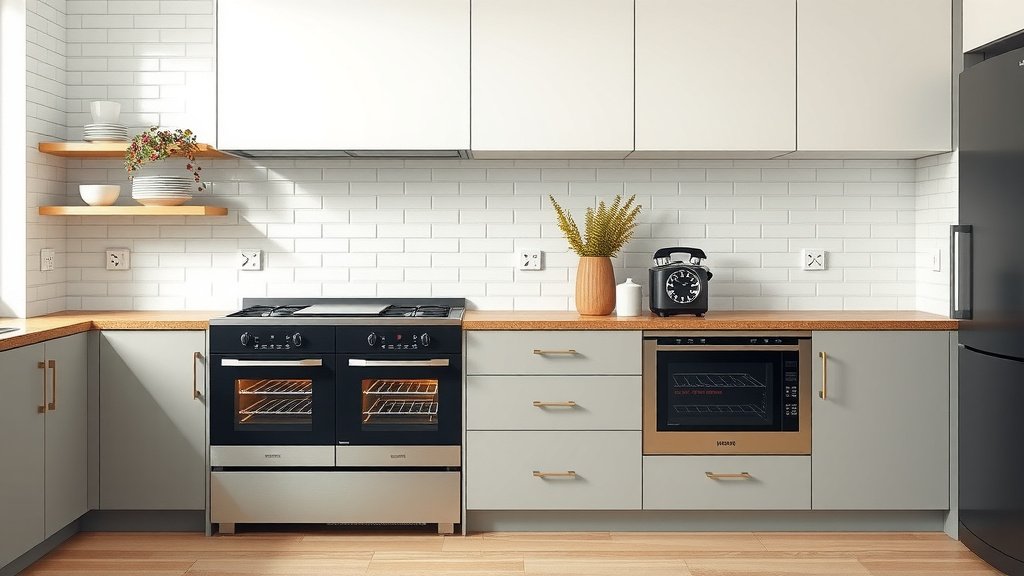
A double oven offers two independent cooking cavities, allowing you to bake or roast different dishes at varying temperatures simultaneously, which a single oven cannot do.
The main difference between a double oven and a single oven lies in their cooking capacity and flexibility for preparing multiple items at once.
- Double ovens give you the power to cook multiple dishes at different temperatures simultaneously, saving you precious time.
- Single ovens are more affordable, take up less space, and are ideal for smaller kitchens or less frequent cooks.
- Consider your cooking habits, available kitchen space, and budget when making your choice.
- Installation and energy use can vary greatly between these two oven types.
- Ultimately, both serve the core purpose of baking and roasting, but one offers much more versatility.
What Is The Difference Double Oven Vs Single Oven?
The primary distinction between a double oven and a single oven is its ability to cook various foods at separate temperatures simultaneously, boosting your kitchen’s overall cooking efficiency.
Think of it like having two cooks in the kitchen versus just one. A double oven means one cook handles the roast while the other bakes the dessert without any fuss.
Understanding the Single Oven
A single oven is the traditional choice found in most homes. It has one cavity, serving as a dedicated space for all your baking and roasting needs.
It’s often integrated below a cooktop or built into a wall cabinet. This option is generally more straightforward and fits well into standard kitchens.
Understanding the Double Oven
A double oven, as the name suggests, features two distinct oven cavities. These can be stacked vertically as a “double wall oven” or combined into a single range unit.
The magic happens because each oven cavity operates independently. You can set different temperatures and cooking times for each, offering incredible flexibility.
Capacity and Convenience: A Clear Divide
When you’re comparing a double oven vs single oven, capacity is often the first thing people consider. A single oven provides one large space for your turkey or casserole.
A double oven, we found, doubles your capacity but, more importantly, it multiplies your convenience. Imagine baking cookies in the upper oven while a lasagna bubbles away below.
The Power of Simultaneous Cooking
Many experts say the biggest draw of a double oven is its capacity for simultaneous, multi-temperature cooking. This feature truly shines during holidays or dinner parties.
You can bake a delicate soufflé at 325°F in one oven and roast vegetables at 400°F in the other, without any flavor transfer or temperature conflicts.
Space and Installation Considerations
Space is a significant factor in this decision. Single ovens are more compact, whether they’re slide-in ranges or wall-mounted units.
Double ovens, especially wall-mounted versions, require more cabinet space. You’ll need to consider your kitchen layout carefully to ensure it accommodates the larger footprint.
Installation Differences
Installing a single oven is generally simpler. It often replaces an existing unit or fits into a standard cutout.
A double oven installation can be more complex, often requiring a larger or custom-built cabinet opening and potentially different electrical requirements (National Electrical Code).
Cost Implications: What’s Your Budget?
Unsurprisingly, a double oven typically comes with a higher price tag than a single oven. You are, after all, getting two ovens in one package.
This higher cost applies not just to the initial purchase but potentially to installation as well, especially if your kitchen needs modifications for a larger appliance footprint.
Running Costs: Energy Usage
Do two ovens use twice the energy? Not necessarily. While running both ovens will consume more energy than running one, modern double ovens are designed for efficiency.
Research often connects energy usage to how often and how long you use each cavity (Department of Energy). Many people only use one section for smaller meals.
Cleaning and Maintenance
Cleaning an oven is rarely anyone’s favorite task. With a single oven, you have one cavity to clean.
A double oven means two cavities, which can translate to double the cleaning effort. However, many models offer self-cleaning features for both sections, easing the burden.
When to Choose a Single Oven
A single oven is perfect if you have a smaller kitchen, a limited budget, or if you don’t often cook large, multi-dish meals.
It’s an excellent, reliable choice for everyday baking and roasting, providing plenty of capacity for typical family meals.
- You have a compact kitchen space.
- Your budget is tight.
- You mostly cook for one or two people.
- You rarely host big dinner parties.
- You prefer a simpler appliance setup.
When to Choose a Double Oven
Opt for a double oven if you love to entertain, have a large family, or frequently find yourself juggling multiple dishes at different temperatures.
It’s a true game-changer for holiday feasts or if you enjoy baking elaborate desserts while preparing a main course. The added flexibility is simply unmatched for busy cooks.
Double Oven Vs Single Oven: A Quick Comparison
| Feature | Single Oven | Double Oven |
|---|---|---|
| Capacity | One large cavity | Two independent cavities |
| Simultaneous Cooking | No (same temperature only) | Yes (different temperatures) |
| Space Required | Less | More |
| Initial Cost | Lower | Higher |
| Installation Complexity | Generally simpler | Potentially more complex |
| Ideal User | Small families, casual cooks | Large families, avid entertainers |
Considering Smart Features and Aesthetics
Both single and double ovens now come with a range of smart features, like Wi-Fi connectivity and remote control. These features can enhance your cooking experience.
Aesthetically, both types offer sleek designs. Double wall ovens can create a very professional, integrated look in a kitchen, while a single range is often a classic and functional centerpiece.
Your Kitchen’s Future Needs
Think about how your cooking habits might change. Are you planning on entertaining more? Will your family grow?
Choosing an oven is an investment in your kitchen. Consider your long-term culinary ambitions before making a final decision.
Conclusion
The choice between a double oven and a single oven ultimately hinges on your specific needs, cooking style, and kitchen design. If you frequently cook multiple dishes that require different temperatures, or if you simply crave more cooking flexibility, a double oven is an incredibly powerful tool.
However, if space is at a premium, your budget is tighter, or your cooking habits are simpler, a single oven will serve you wonderfully. Both options provide excellent cooking capabilities; it’s about finding the perfect fit for your home and how you use it.
What is the main advantage of a double oven over a single oven?
The primary advantage of a double oven is its ability to cook two different dishes at separate temperatures simultaneously, which greatly enhances cooking flexibility and efficiency, especially for large meals or entertaining.
Are double ovens more expensive than single ovens?
Yes, double ovens generally have a higher upfront cost compared to single ovens, both in terms of the appliance itself and potentially for more complex installation requirements.
Do double ovens take up significantly more space?
Double ovens, particularly wall-mounted units, require more vertical cabinet space or a larger footprint if it’s a double oven range. This means you need to ensure your kitchen layout can accommodate the extra size.
Is a double oven worth it for a small household?
For a small household that doesn’t frequently host large gatherings or prepare complex meals, a double oven might be overkill. A single oven is often sufficient and more budget-friendly in such scenarios.
Can I get a double oven in a standard kitchen range size?
Yes, you can find double oven ranges that fit into a standard 30-inch opening, but the two oven cavities will be smaller than what you’d find in separate wall ovens or a single large oven range.
