
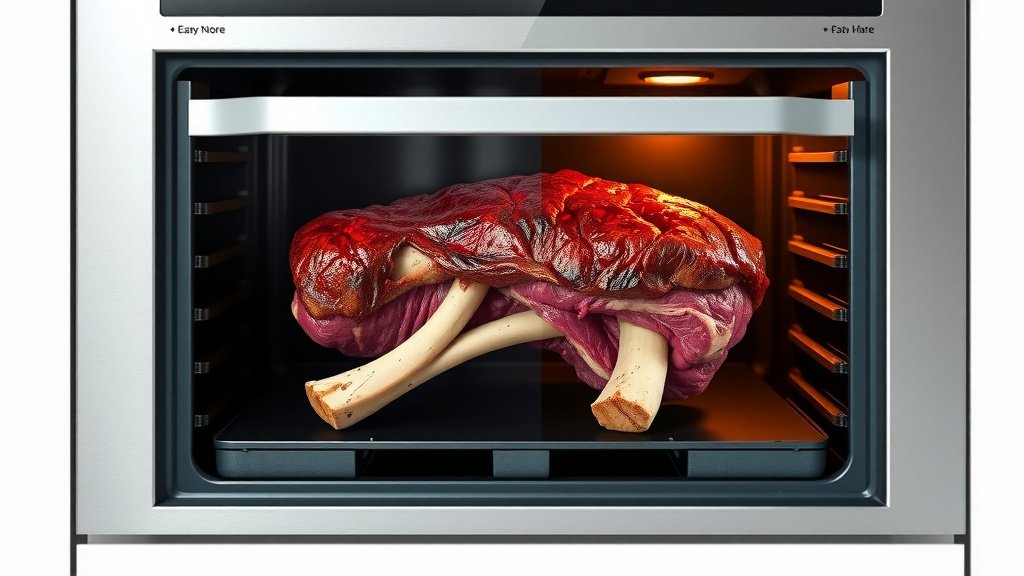
To cook a bone-in rib roast in a wall oven, you will want to start by letting it come to room temperature for two to three hours. Then, sear the roast on all sides before transferring it to your wall oven to slow roast at a consistent temperature until it reaches your desired internal doneness.
Many home cooks find that using a wall oven provides excellent temperature control for this special occasion dish, helping you achieve a perfectly cooked rib roast every time.
- Get your bone-in rib roast to room temperature first for even cooking.
- Sear the roast on the stovetop to build a rich, flavorful crust.
- Use a lower, consistent temperature in your wall oven for tender results.
- Always rely on a meat thermometer to hit your ideal doneness level.
- Let the roast rest generously after cooking to keep those delicious juices locked in.
How To Cook Bone In Rib Roast In Wall Oven?
Cooking a bone-in rib roast in your wall oven involves a few key steps: tempering, searing, and then slow roasting. This method ensures a beautiful crust and a tender, juicy interior, making your roast a truly memorable meal.
Understanding Your Wall Oven’s Strengths
Wall ovens often offer more precise temperature control compared to larger, combined range units. This consistency is a big plus when cooking a significant cut like a bone-in rib roast. We found that steady heat helps prevent overcooking the edges while the center remains perfect.
Think of your wall oven as a patient friend, ready to slowly transform your roast into a masterpiece. Its controlled environment makes it ideal for roasting, ensuring even heat distribution (USDA).
Choosing the Right Rib Roast
When you’re at the butcher, look for a bone-in rib roast that is well-marbled. Marbling, those small streaks of fat, adds incredible flavor and keeps the meat moist during cooking. Ask your butcher to “french” the bones if you like that presentation.
The All-Important Tempering Step
Don’t skip bringing your roast to room temperature before cooking. This usually takes about two to three hours, depending on its size. A cold roast going straight into a hot oven cooks unevenly, leaving the outside overdone and the inside undercooked.
Imagine diving into a cold swimming pool – it’s a shock! The same goes for your roast. Allowing it to warm up gently helps it cook more evenly from edge to center, as many culinary experts suggest.
Seasoning Your Bone-In Rib Roast
Keep your seasoning simple to let the beef’s flavor shine. A generous rub of coarse salt, freshly cracked black pepper, garlic powder, and maybe some fresh rosemary or thyme is usually perfect. Don’t be shy; cover all surfaces.
The Searing Secret: Creating a Flavorful Crust
Searing is where the magic of a rich, brown crust happens. Heat a large, oven-safe pan (cast iron is perfect) over high heat with a little high-smoke-point oil. Sear the roast for 2-3 minutes per side until deeply browned.
This caramelization process, known as the Maillard reaction, locks in juices and creates incredible depth of flavor. It’s like giving your roast a delicious shield before it enters the oven.
Quick Searing Checklist:
- Pat roast dry thoroughly.
- Heat pan to smoking hot.
- Use a high-smoke-point oil (like grapeseed or avocado).
- Sear each side for 2-3 minutes.
- Use tongs to hold it steady for even browning.
Setting Your Wall Oven Temperature
After searing, transfer your roast to a roasting rack set in a pan. We found that a two-stage roasting approach works wonderfully. Start at a higher temperature, like 450°F (232°C), for 15-20 minutes, then reduce it to a lower temperature, around 325°F (160°C), for the remainder of the cooking time.
This initial blast of high heat helps set that beautiful crust, while the lower temperature ensures a gentle, even cook through the center (America’s Test Kitchen).
Monitoring Doneness with a Meat Thermometer
This is arguably the most crucial step. You absolutely need a reliable meat thermometer. Insert it into the thickest part of the roast, avoiding the bone. Do you know why? The bone conducts heat differently and can give you an inaccurate reading.
Here’s a general guide for internal temperatures. Remember, your roast will continue to cook a few degrees after it leaves the oven, a process called carryover cooking.
| Desired Doneness | Pull From Oven (Internal Temp) | Resting Temp (Approx.) |
|---|---|---|
| Rare | 120-125°F (49-52°C) | 130-135°F (54-57°C) |
| Medium-Rare | 125-130°F (52-54°C) | 135-140°F (57-60°C) |
| Medium | 130-135°F (54-57°C) | 140-145°F (60-63°C) |
The Golden Rule: Resting Your Roast
Once your roast reaches the target temperature, remove it from the oven and tent it loosely with foil. Let it rest for at least 20-30 minutes, or even longer for larger roasts. This step is non-negotiable!
Why rest? The resting period allows the juices to redistribute throughout the meat. If you cut it too soon, those delicious juices will spill out, leaving you with a drier roast. Think of it like a sponge; it needs time to absorb fully after being squeezed (culinary science research).
Carving Your Masterpiece
After resting, transfer the roast to a sturdy cutting board. Use a sharp carving knife to carefully slice the meat away from the bones. Then, slice against the grain into desired thickness. Cutting against the grain shortens the muscle fibers, making each slice more tender.
Making the Most of Pan Drippings
Don’t let those flavorful pan drippings go to waste! You can easily make a quick pan sauce or gravy while your roast is resting. Deglaze the pan with a bit of wine or broth, reduce it, and thicken with a cornstarch slurry for a delicious accompaniment.
Conclusion
Cooking a bone-in rib roast in your wall oven might seem daunting, but it’s a truly rewarding experience. By following these steps – from bringing it to room temperature and searing, to precise roasting and essential resting – you’re setting yourself up for success. Your wall oven’s consistent heat is your best friend in achieving that perfectly tender, flavorful roast that will impress everyone at the table. Enjoy the process, and savor every delicious bite!
Can I cook a bone-in rib roast directly from the refrigerator?
It is not recommended to cook a bone-in rib roast directly from the refrigerator. Starting with a cold roast can lead to uneven cooking, where the outside cooks too quickly while the center remains underdone. Always bring it to room temperature for 2-3 hours first.
How do I know if my bone-in rib roast is done without a thermometer?
Relying on sight or touch alone to determine the doneness of a bone-in rib roast is highly unreliable. A good quality meat thermometer is essential for accuracy. Guessing can lead to an overcooked or undercooked roast, especially with such a valuable cut of meat.
Can I use a slow cooker for a bone-in rib roast?
A slow cooker is not ideal for a bone-in rib roast if you desire a crispy exterior and medium-rare interior. Slow cookers are best for braising or stews where you want very tender, shreddable meat. For a classic roasted rib roast, the oven is the preferred method.
What if my rib roast starts to brown too quickly in the wall oven?
If your rib roast is browning too quickly, especially during the initial high-heat stage, you can loosely tent it with aluminum foil. This helps shield the exterior from direct heat while allowing the interior to continue cooking. Monitor it closely to prevent over-browning.
Is it better to cook a bone-in or boneless rib roast?
Many chefs and home cooks prefer a bone-in rib roast for its flavor and moisture. The bones insulate the meat and can add richness. A boneless roast is easier to carve but may require more careful monitoring to prevent drying out. Both can be delicious with proper technique.
