
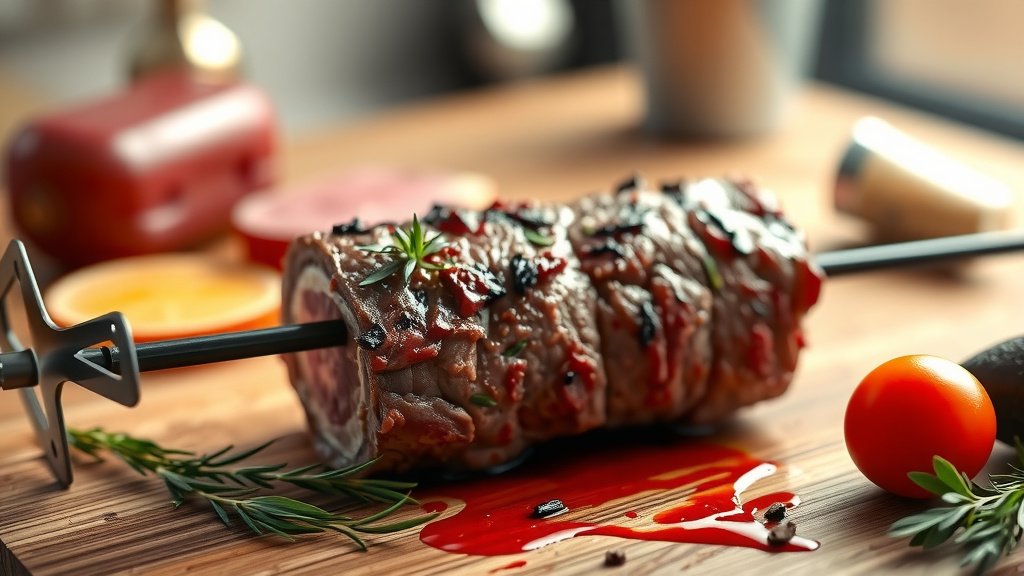
To cook beef tenderloin in a rotisserie oven, first prepare the tenderloin with seasoning, then secure it to the rotisserie spit, and roast it at around 325-350°F (160-175°C) until it reaches your desired internal temperature, typically 130-135°F (54-57°C) for medium-rare.
You’ll want to ensure even cooking by tying the tenderloin properly and monitoring its temperature with a meat thermometer for a perfectly juicy and tender result.
- Season your beef tenderloin generously for best flavor and crust.
- Securely attach the tenderloin to your rotisserie spit, keeping it centered.
- Roast at 325-350°F, targeting an internal temperature of 130-135°F for medium-rare.
- Always use a reliable meat thermometer for precise doneness, checking in the thickest part.
- Rest the meat after cooking for 10-15 minutes to redistribute juices, making it more tender.
How To Cook Beef Tenderloin In Rotisserie Oven?
Cooking beef tenderloin in a rotisserie oven requires careful preparation and temperature management. You’ll prepare the tenderloin, secure it to the rotisserie spit, and then cook it slowly at a moderate temperature until it reaches your preferred doneness, ensuring a beautifully browned exterior and a juicy interior.
Why Rotisserie for Beef Tenderloin?
Have you ever wondered why some cooking methods just seem to bring out the best in meat? For beef tenderloin, the rotisserie is a secret weapon. It offers continuous, gentle rotation, allowing your tenderloin to cook evenly from all sides.
This constant turning also helps to baste the meat in its own juices. You get a fantastic, crispy crust while keeping the inside wonderfully moist and tender. It’s like magic, but it’s just good physics!
Choosing Your Perfect Tenderloin
Before you even think about the rotisserie, let’s talk about the star of the show: the beef tenderloin. You want a high-quality cut, as this will directly impact the final taste and texture.
Look for bright red meat with a good amount of marbling. Marbling, those tiny flecks of fat, adds incredible flavor and keeps the meat moist.
Size Matters, Right?
When selecting your tenderloin, consider its size. A whole tenderloin can weigh anywhere from 4 to 7 pounds. For rotisserie cooking, a center-cut piece, often 2-4 pounds, is ideal. It cooks more evenly and is easier to handle on the spit.
Smaller pieces are generally simpler to manage and yield consistent results.
Essential Tools You’ll Need
You don’t need a professional kitchen, but a few tools will make your rotisserie cooking experience much smoother. We found these items to be quite helpful for the task:
- A sturdy rotisserie oven (or a rotisserie attachment for your grill).
- A reliable meat thermometer (digital instant-read is best).
- Kitchen twine for tying the tenderloin.
- A sharp chef’s knife for trimming.
- A cutting board.
- A basting brush (optional, but nice for adding flavor).
Preparing Your Tenderloin for the Spit
Proper preparation is key to a successful rotisserie tenderloin. This step sets the stage for even cooking and fantastic flavor. Don’t rush this part; it’s worth the extra few minutes.
Trimming and Tying the Meat
Beef tenderloin often comes with a “silver skin” layer. This tough membrane won’t render or become tender, so you’ll want to trim it off. Use your sharp knife, slicing carefully just under the silver skin to remove it.
Once trimmed, tying your tenderloin is crucial. The tenderloin is thicker at one end and tapers down. Tying it at regular intervals (every 1-2 inches) creates a uniform thickness. This ensures even cooking and prevents the thinner parts from overcooking before the thicker parts are done. Many experts agree that this step is a game-changer for consistency.
Seasoning for Flavor
Now for the fun part: seasoning! Beef tenderloin has a delicate flavor, so you don’t want to overpower it. A simple yet generous coating of coarse salt and freshly ground black pepper is often all you need. We’ve found this classic combination truly shines.
You can also add garlic powder, onion powder, or a dash of your favorite dried herbs like rosemary or thyme. A light coat of olive oil before seasoning helps the spices adhere and can promote a better crust.
Loading the Rotisserie Spit
This step can feel a little bit like surgery, but it’s straightforward. Carefully thread the tenderloin onto the rotisserie spit, aiming for the center. Make sure it’s balanced and snug. The rotisserie forks will help secure the meat.
You want it centered so it rotates smoothly without wobbling. A wobbly roast can cook unevenly and even cause issues with your rotisserie mechanism.
Setting Your Oven Temperature
For rotisserie beef tenderloin, a moderate temperature is usually best. We recommend preheating your rotisserie oven or grill to 325-350°F (160-175°C). This temperature allows the meat to cook through gently while still developing a beautiful exterior crust.
Cooking at too high a temperature can lead to a burnt exterior and a raw interior. Slow and steady wins the race here!
Monitoring the Cook: Temperature is Key
This is where your meat thermometer becomes your best friend. Cooking time varies widely based on the tenderloin’s size, its starting temperature, and your specific oven. Therefore, cooking by time alone is not reliable. Always cook to temperature.
Insert your thermometer into the thickest part of the tenderloin, making sure it doesn’t touch the rotisserie spit. We found that checking the temperature about halfway through the estimated cooking time, and then every 10-15 minutes, works well.
What Internal Temperature Means
The USDA recommends cooking beef to a minimum internal temperature for safety. For tenderloin, many people prefer it cooked to a medium-rare or medium for optimal tenderness and flavor. Remember, the temperature will rise a few degrees as the meat rests.
| Doneness | Internal Temperature (Remove from Oven) |
|---|---|
| Rare | 120-125°F (49-52°C) |
| Medium-Rare | 130-135°F (54-57°C) |
| Medium | 135-140°F (57-60°C) |
| Medium-Well | 140-145°F (60-63°C) |
| Well Done | 150°F+ (66°C+) |
The Art of Resting Your Meat
Once your beef tenderloin reaches your desired temperature, immediately remove it from the rotisserie. Resist the urge to slice it right away! Resting is a non-negotiable step for juicy meat.
Tent the tenderloin loosely with foil and let it rest for 10-15 minutes. This allows the juices, which have gathered in the center during cooking, to redistribute throughout the entire roast. If you cut it too soon, those precious juices will spill out, leaving you with drier meat.
Carving and Serving Your Masterpiece
After resting, carefully remove the tenderloin from the spit and snip off any kitchen twine. Place it on a clean cutting board. Using a sharp carving knife, slice the tenderloin against the grain into ½-inch thick medallions.
Serving beef tenderloin often involves simple accompaniments. Think roasted vegetables, mashed potatoes, or a fresh green salad. A light sauce, like a red wine reduction or a creamy horseradish sauce, can also complement its rich flavor beautifully.
Troubleshooting Common Rotisserie Issues
Sometimes, things don’t go exactly as planned. But don’t worry, a few common issues have easy fixes:
- Uneven Cooking: Did you tie the tenderloin tightly? Ensure uniform thickness. Also, check if your rotisserie is spinning smoothly.
- Meat Falling Off the Spit: Make sure your forks are firmly gripping the meat and the tenderloin is centered and snug.
- Dry Exterior: This might mean your oven temperature was too high, or you cooked it for too long. Monitor temperature closely!
- Lack of Crispy Crust: Sometimes, increasing the temperature slightly at the very end (last 10 minutes) can help, but watch it carefully.
Remember, cooking is a journey. Each time you cook, you learn something new!
Conclusion
Cooking beef tenderloin in a rotisserie oven is a fantastic way to create a truly memorable meal. By focusing on proper preparation, precise temperature monitoring, and that all-important resting period, you’ll consistently achieve a tender, juicy, and flavorful roast.
Don’t be afraid to experiment a little with seasonings, but always prioritize the core techniques. With a bit of care, you’ll be serving up restaurant-quality tenderloin right from your own kitchen. Enjoy the process and, most importantly, the delicious results!
How do I prevent beef tenderloin from drying out on a rotisserie?
To prevent drying, ensure you don’t overcook the tenderloin. Use a meat thermometer to pull it off the rotisserie a few degrees before your target internal temperature, accounting for carryover cooking. Tying the roast tightly also helps keep juices locked in.
What’s the best way to season beef tenderloin for rotisserie cooking?
A simple yet effective seasoning involves a generous amount of coarse salt and freshly ground black pepper. You can also add garlic powder, onion powder, or dried herbs like rosemary and thyme. A light coating of olive oil before seasoning helps the spices adhere well.
Can I use a rub on beef tenderloin for a rotisserie?
Yes, you can use a dry rub! Just make sure the rub isn’t too thick or sugary, as sugar can burn and blacken at higher rotisserie temperatures. Apply it evenly after trimming and before tying for the best flavor penetration.
How long does it take to cook a 3-pound beef tenderloin on a rotisserie?
A 3-pound beef tenderloin can take anywhere from 45 to 75 minutes to cook on a rotisserie at 325-350°F. However, cooking time is highly variable. Always rely on an internal meat thermometer to reach your desired doneness, rather than a specific time estimate.
Should I sear the beef tenderloin before putting it on the rotisserie?
While searing beforehand can add a deeper crust, it’s generally not necessary for rotisserie cooking. The continuous rotation and heat in a rotisserie oven naturally create a beautiful, even brown crust over time. If you prefer, a quick sear is an option, but many cooks skip this step with good results.
