
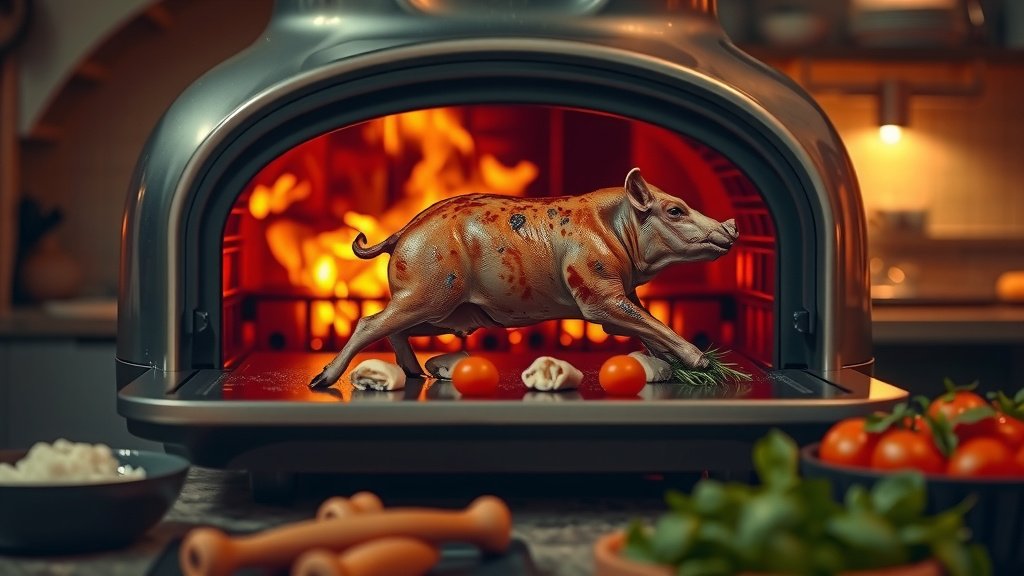
To cook a whole pig in a pizza oven, you will need to maintain a consistent low heat, usually between 250-300°F (120-150°C), for many hours until the internal temperature reaches 185-195°F (85-90°C).
This method allows you to achieve incredibly tender, juicy meat and a wonderfully crispy skin, making your pizza oven perfect for roasting a whole pig.
Here’s a quick overview of what you will learn:
- You will need to properly prepare your pizza oven for a long, low roast.
- Choosing the right size pig and preparing it with a brine is key to success.
- Monitoring oven and meat temperatures is vital for food safety and delicious results.
- Achieving that coveted crispy skin takes a specific finishing touch.
- Resting the pig after cooking helps keep the meat succulent and tender.
How To Cook A Whole Pig In A Pizza Oven?
You can cook a whole pig in a pizza oven by maintaining a steady, low heat for an extended period, allowing the meat to become incredibly tender.
Why Use Your Pizza Oven for a Whole Pig?
Your pizza oven is not just for pizzas; it’s a fantastic, versatile outdoor cooker. Its ability to retain heat and provide a consistent cooking environment makes it ideal for slow roasting.
This method imparts a unique, subtle smoky flavor that a conventional oven simply cannot replicate. Imagine the aroma filling your backyard!
Preparing Your Oven for the Big Roast
Getting your oven ready is the first step towards a successful pig roast. Think of it like preparing a marathon runner for their big race.
Getting the Right Temperature
The ideal temperature range is 250-300°F (120-150°C). You want it low and steady, not blazing hot like for pizza.
Many experts say preheating your oven for several hours helps it stabilize at this lower temperature (Cook’s Illustrated).
Fueling Your Fire Wisely
Use good quality hardwood, like oak or apple, for a clean burn and pleasant smoky flavor. Avoid treated wood or softwoods, which can create acrid smoke.
You’ll need a steady supply to maintain the temperature over many hours. Having extra wood ready prevents mid-cook scrambling.
Selecting and Prepping Your Pig
The pig itself is the star of the show. Choosing the right one and preparing it correctly makes all the difference.
Choosing the Right Size
Consider your oven’s size! A pig weighing 30-60 pounds (13-27 kg) is usually a good fit for most backyard pizza ovens. You need enough clearance for air circulation.
Remember, a larger pig means a much longer cooking time, so plan accordingly.
Brining for Ultimate Juiciness
Brining is a game-changer for whole pig roasts. It adds moisture and flavor deep into the meat, ensuring it stays juicy even after hours of cooking.
We found that a simple salt-water brine, sometimes with herbs and spices, works wonders (America’s Test Kitchen).
Here’s a general guide for pig size and estimated cooking times:
| Pig Weight (Approx.) | Oven Temp | Estimated Cook Time |
|---|---|---|
| 30-40 lbs (13-18 kg) | 275°F (135°C) | 6-8 hours |
| 40-50 lbs (18-23 kg) | 275°F (135°C) | 8-10 hours |
| 50-60 lbs (23-27 kg) | 275°F (135°C) | 10-12+ hours |
Seasoning and Trussing Your Pig
After brining, pat the pig dry. This helps with crispy skin. Then, apply your favorite rub generously, both inside and out.
Trussing the pig helps it cook more evenly and makes it easier to handle. You might use twine to secure the legs and flatten the pig slightly.
The Slow Roast Begins: Placing the Pig
Carefully transfer the pig to your preheated oven. You’ll want it positioned so the heat can circulate around it.
Using a large roasting pan with a rack is often a good idea to catch drippings and prevent burning. This also helps with air flow.
Monitoring and Maintaining Oven Temperature
Consistency is key. Use an infrared thermometer to check the oven floor and dome temperatures. Adjust your fire as needed.
A small, continuous fire is usually better than large, infrequent bursts. Think of feeding it small snacks rather than big meals.
Turning and Basting for Even Cooking
You may need to rotate the pig every few hours to ensure even cooking and browning. This depends on your oven’s hot spots.
Basting the pig with its own juices or a vinegar-based sauce can add flavor and help keep the skin moist until you want it crispy.
Here are some essential tools you will need:
- Reliable meat thermometer: A probe thermometer is crucial.
- Infrared thermometer: For checking oven surface temps.
- Long-handled peel or spatulas: For moving wood and coals.
- Heavy-duty roasting pan: To hold the pig and catch juices.
- Heat-resistant gloves: For safety when working near the fire.
Achieving That Perfect Crispy Skin
The crackling skin is often the most anticipated part! Towards the end of the cooking process, increase your oven temperature to around 400-450°F (200-230°C).
This higher heat will render the fat beneath the skin, making it puff up and become wonderfully crisp. Keep a close eye on it to prevent burning.
Knowing When Your Pig is Done
The most important indicator is internal temperature. We found that the USDA recommends pork reach at least 145°F (63°C) for safety (USDA).
However, for a whole pig roast, particularly for pulled pork texture, aim for 185-195°F (85-90°C) in the thickest part of the shoulder or ham. This ensures it’s fall-apart tender.
Resting Your Masterpiece
Once the pig reaches its target temperature, remove it from the oven. Tent it loosely with foil and let it rest for at least 30-60 minutes.
This resting period allows the juices to redistribute throughout the meat, resulting in a more flavorful and moist final product. Patience pays off!
Troubleshooting Common Challenges
What if your skin isn’t crisping? Try drying the skin more thoroughly before cooking or applying a bit of oil before the final high-heat blast.
If your pig is cooking unevenly, try rotating it more frequently or adjusting your fire to balance the heat distribution.
Before you start, here’s a quick checklist:
- Pig selected and ready to brine.
- All seasonings and tools gathered.
- Hardwood fuel standing by.
- Oven cleaned and inspected.
- Meat thermometer calibrated.
Conclusion
Cooking a whole pig in your pizza oven is a rewarding experience, offering incredible flavor and a real showstopper for any gathering. It takes planning and patience, but the results are truly worth the effort.
By following these steps, you’re not just cooking; you’re creating an unforgettable culinary event. So, gather your friends, fire up your oven, and enjoy the delicious journey!
How long does it take to cook a 50 lb pig in a pizza oven?
A 50 lb (23 kg) pig typically takes 10-12 hours to cook in a pizza oven maintained at a consistent 275°F (135°C), reaching an internal temperature of 185-195°F (85-90°C).
Can I use any type of wood for my pizza oven pig roast?
It’s best to use good quality, seasoned hardwood like oak, apple, or hickory. Avoid softwoods, treated wood, or painted wood, as they can produce unpleasant flavors and unhealthy smoke.
How do I prevent the pig skin from burning while trying to crisp it?
To prevent burning, keep a close watch on the pig when you increase the oven temperature for crisping. You can also shield parts of the pig with foil if they are browning too quickly, or rotate it often.
What internal temperature should a whole pig reach for safe eating?
For safety, pork should reach at least 145°F (63°C) (USDA). For a tender, pull-apart texture common with whole pig roasts, aim for 185-195°F (85-90°C) in the thickest parts of the meat.
Is it necessary to brine the whole pig before roasting?
While not strictly necessary, brining is highly recommended. Research often shows that brining significantly enhances the moisture content and flavor of the meat, especially during long cooking processes (Cook’s Illustrated).
