
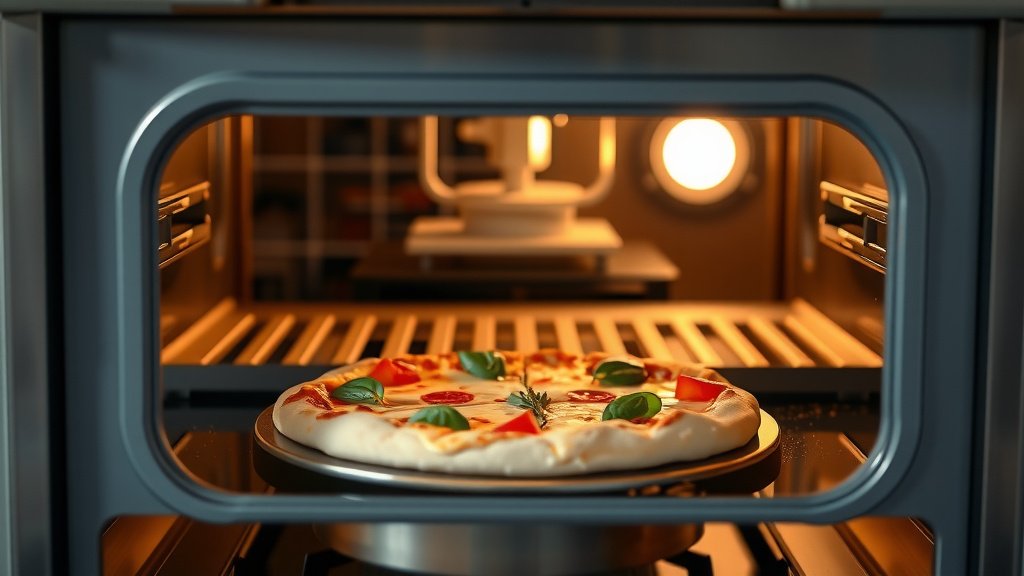
To cook pizza in a gas oven, preheat your oven to its highest temperature, typically 500-550°F (260-290°C), for at least 45 minutes with a pizza stone or steel inside. This intense heat and hot surface are essential for creating a crispy, well-cooked crust.
You then carefully transfer your prepared pizza onto the superheated stone or steel and bake it for 5-10 minutes, rotating halfway through for even browning, until the crust is golden and the cheese is bubbly.
Here’s a quick overview of how to get that perfect pizza:
- Preheat your gas oven to its absolute maximum heat, often 500°F or more.
- Place a pizza stone or steel inside while preheating to get it piping hot.
- Prepare your pizza with fresh ingredients on a floured peel or parchment paper.
- Slide the pizza onto the hot surface quickly and efficiently.
- Bake for a short period, usually 5-10 minutes, rotating for even cooking.
- Enjoy your delicious, homemade pizza with a perfectly crispy crust!
How To Cook Pizza In A Gas Oven?
Cooking a fantastic pizza in a gas oven means harnessing high heat and direct cooking surfaces to replicate a traditional pizza oven. You can achieve a wonderfully crispy crust and perfectly melted toppings right in your own kitchen.
Understanding Your Gas Oven
Gas ovens often provide a moist heat compared to electric models, which can be a double-edged sword for pizza. While it helps keep toppings from drying out, it can also make achieving a crisp crust a bit more challenging. Knowing this helps you adjust your technique.
Many home cooks find that a gas oven’s rapid temperature recovery is great for successive pizzas. When you open the door, it bounces back quickly, keeping your cooking consistent.
The Importance of High Heat
Pizza loves heat, lots of it! Professional pizza ovens reach extreme temperatures, often above 700°F (370°C). Your home gas oven won’t hit those numbers, but you need to push it as high as it goes, typically 500-550°F (260-290°C).
Many experts say that sustained high heat cooks the crust rapidly, preventing it from drying out. This also ensures the toppings cook quickly without burning (Cook’s Illustrated).
Equip Yourself: Pizza Stone or Steel
A pizza stone or steel is your best friend when cooking pizza in a gas oven. These tools absorb and retain heat, providing a direct, super-hot surface that cooks your pizza crust from the bottom up, just like a brick oven.
Pizza Stone vs. Pizza Steel: What’s the Difference?
You might wonder which one is better for you. Both are excellent, but they have subtle differences in how they conduct heat. Consider your goals for the crust.
| Feature | Pizza Stone | Pizza Steel |
|---|---|---|
| Material | Ceramic, cordierite | Solid steel |
| Heat Retention | Good, but can crack | Excellent, virtually indestructible |
| Heat Conductivity | Slower, more gentle heat transfer | Faster, more intense heat transfer |
| Crust Result | Crispy, slightly chewier | Very crispy, blistered, often faster |
| Preheat Time | Longer (60+ minutes) | Shorter (45+ minutes) |
We found that a pizza steel generally delivers a crispier crust in less time due to its superior heat conductivity. However, a stone still produces fantastic results if you prefer a slightly softer chew.
Preheating for Success
Preheating isn’t just about reaching the target temperature; it’s about allowing your pizza stone or steel to absorb and radiate enough heat. Think of it like getting a skillet super hot before searing a steak.
Many culinary guidelines suggest preheating for at least 45 minutes to an hour. You want that stone or steel scorching hot before your pizza even thinks about entering the oven.
Oven Rack Placement Matters
Where you place your pizza stone matters. For most gas ovens, the middle rack is a great starting point, allowing heat to cook both the top and bottom. However, some prefer the rack just below the middle for a crispier bottom.
Experiment a bit with your oven. Some gas ovens have a more powerful bottom element, so placing the stone slightly lower might give you the best crust char.
Preparing Your Pizza Dough
Your dough is the foundation of a great pizza. Whether homemade or store-bought, let it come to room temperature for at least 30 minutes before shaping. This makes it much easier to work with.
Gently stretch or roll your dough to your desired thickness. Avoid handling it too roughly; you want to keep those air bubbles intact for a nice texture.
Topping Your Masterpiece
Less is often more when it comes to pizza toppings, especially in a home oven. Too many toppings can weigh down the pizza, making it soggy and difficult to cook evenly.
We found that lighter toppings cook better and faster. Aim for a thin layer of sauce and cheese, and just a few of your favorite vegetables or meats. Pre-cook any watery vegetables like mushrooms or spinach to avoid excess moisture.
The Pizza Launch: A Moment of Truth
Getting your pizza onto the hot stone or steel smoothly is a key skill. A pizza peel dusted with semolina flour or cornmeal is your best tool for this. The tiny grains act like ball bearings, helping the pizza slide off easily.
Alternatively, you can build your pizza directly on parchment paper. This allows you to transfer the whole thing onto the stone with less fuss. Just make sure the parchment paper can handle high temperatures.
Using a Pizza Peel Effectively
Dust your peel generously with semolina flour. Place your stretched dough on it. Quickly add your sauce and toppings. Then, with a swift, confident motion, slide the pizza from the peel onto the preheated stone. Think of it like a magic trick!
Practice a few dry runs with just the dough on the peel. This helps build your confidence for the real deal and prevents your pizza from getting stuck. It’s all about smooth, quick movements.
Baking Time and Monitoring
Most pizzas in a super-hot gas oven will cook in 5 to 10 minutes. However, every oven is different, and exact times vary based on dough thickness and toppings. Keep a close eye on your pizza.
You are looking for a golden-brown crust, bubbly, melted cheese, and possibly some lovely char marks on the edges. The aroma filling your kitchen is also a great sign!
The Mid-Bake Rotation
Gas ovens often have hotter spots, meaning one side of your pizza might cook faster than the other. About halfway through the baking time, use your peel to rotate the pizza 180 degrees.
This simple step helps ensure an evenly cooked pizza with a consistent crust color all around. It’s a quick move that makes a big difference in the final product.
Checking for Doneness
How do you know when your pizza is truly ready? Beyond visual cues, you can often lift an edge with your peel to check the bottom crust. It should be firm, crisp, and nicely browned.
Research suggests that a well-cooked pizza should not have a pale or soft bottom. If it’s still looking pale, give it another minute or two, rotating as needed.
Here’s a quick readiness checklist:
- The crust edges are puffed and deeply golden brown.
- The cheese is fully melted and bubbly, with some browned spots.
- The bottom of the crust is firm and crispy when lifted.
- There are small dark spots or ‘leopard spots’ on the crust.
- Your kitchen smells like an authentic pizzeria!
Cooling and Serving Your Pizza
Once your pizza is out of the oven, don’t slice it immediately. Let it rest on a cutting board for a minute or two. This allows the cheese to set slightly and prevents all the delicious toppings from sliding off when you cut it.
Many chefs recommend this short rest. It helps keep the slices intact and prevents the crust from becoming soggy from trapped steam (Serious Eats).
Conclusion
Cooking pizza in a gas oven truly is an art, but one that is absolutely achievable and deeply rewarding. By understanding your oven’s nuances, utilizing a preheated pizza stone or steel, and paying attention to your preparation and timing, you can create a fantastic, crispy pizza right at home. Don’t be afraid to experiment with temperatures and toppings; your perfect pizza is waiting to be discovered!
Can I cook pizza on a baking sheet in a gas oven?
Yes, you can cook pizza on a baking sheet, but the results won’t be as crispy as with a pizza stone or steel. Preheat the baking sheet in the oven before transferring the pizza onto it to help improve the bottom crust. Expect a slightly softer crust compared to using a specialized surface.
What is the ideal temperature for cooking pizza in a gas oven?
The ideal temperature for cooking pizza in a gas oven is its highest possible setting, usually around 500-550°F (260-290°C). High heat is crucial for quickly cooking the crust and melting the cheese without drying out the toppings, mimicking a commercial pizza oven.
How long does it take to cook pizza in a gas oven?
Pizza typically takes about 5 to 10 minutes to cook in a gas oven preheated to its maximum temperature with a pizza stone or steel. Thinner crusts will cook faster, while thicker or heavily topped pizzas might need a bit more time. Always keep an eye on it for desired doneness.
Do I need to turn my pizza during cooking in a gas oven?
Yes, it’s a good idea to rotate your pizza 180 degrees halfway through the cooking time. Gas ovens can have hot spots, and turning the pizza ensures that it cooks evenly across the entire surface, preventing one side from burning while the other remains undercooked.
How do I prevent my pizza crust from becoming soggy in a gas oven?
To prevent a soggy pizza crust, always use a preheated pizza stone or steel. Also, avoid overloading your pizza with too many toppings, especially those with high water content. Pre-cooking watery vegetables and allowing your pizza to rest for a minute or two after baking can also help.
