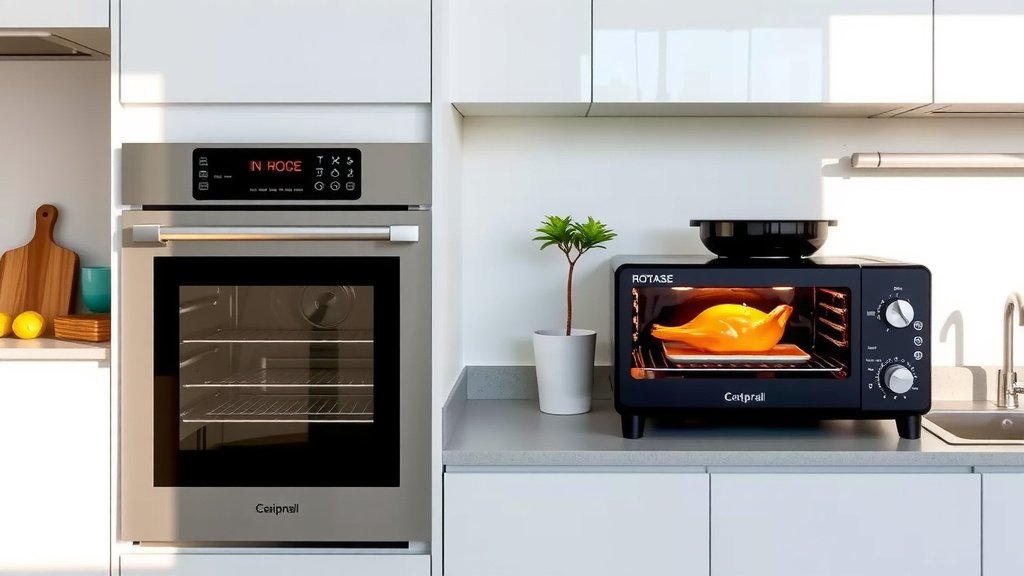
A rotisserie oven cooks food by rotating it slowly on a spit, ensuring even browning and self-basting, ideal for whole chickens or roasts. In contrast, a convection oven uses a fan to circulate hot air, cooking food faster and more evenly from all sides.
While both aim for superior cooking, the main difference lies in their heating methods: rotisserie relies on rotation for even exposure to radiant heat, whereas convection relies on forced hot air circulation.
Here’s a quick summary of what you need to know:
- Rotisserie ovens shine for whole meats, offering crispy skin and juicy interiors through constant rotation.
- Convection ovens excel at faster, more consistent cooking of a wider variety of foods by circulating hot air.
- You’ll get different textures and browning effects from each cooking style.
- Space and energy use can vary greatly between these oven types.
- Choosing depends on your primary cooking needs and the foods you love to prepare.
What Is The Difference Rotisserie Vs Convection Oven?
The core difference between a rotisserie oven and a convection oven comes down to their heating mechanisms and how they interact with your food. One rotates, the other blows air around.
Understanding the Rotisserie Oven
Imagine a delicious chicken slowly spinning over an open flame or heating element. That’s the essence of a rotisserie oven. It mimics this ancient cooking method right in your kitchen.
How Does a Rotisserie Oven Work?
A rotisserie oven features a motorized spit, a long rod that skewers food, typically whole chickens or roasts. This spit rotates the food continuously. The constant turning exposes all sides of the food to direct heat, leading to even cooking and browning (USDA).
As the food rotates, its natural juices baste the surface. This self-basting action keeps the meat moist and creates that irresistible crispy skin we all love. It’s a very hands-off process once you set it up.
Best Uses for a Rotisserie Oven
Rotisserie ovens are absolute stars for certain types of dishes. They are perfect for cooking whole poultry, lamb, or pork roasts. If you dream of restaurant-quality roasted chicken, this is your go-to.
Many experts say the constant rotation helps fats drip away, making for a healthier, less greasy result. We found that it truly transforms a simple chicken into a culinary masterpiece.
Pros and Cons of Rotisserie Cooking
On the upside, you get incredibly juicy, evenly cooked meat with crispy skin. It’s also quite a spectacle to watch. However, rotisserie cooking is often limited to specific food shapes and sizes, and it’s not very versatile for baking cookies or casseroles.
Understanding the Convection Oven
Think of a regular oven, but with a clever upgrade: a fan. That fan is what makes a convection oven special, circulating hot air for a more efficient cooking process.
How Does a Convection Oven Work?
A convection oven has a fan, usually located at the back, that actively circulates hot air throughout the oven cavity. This movement of air helps to transfer heat more quickly and evenly to the food than a conventional oven (Energy.gov).
The result is food that cooks faster and browns more consistently. This means no more burnt edges and undercooked centers. It’s like giving your food a gentle, even heat hug.
Best Uses for a Convection Oven
Convection ovens are incredibly versatile. They are excellent for baking cookies, roasting vegetables, cooking pizzas, and even baking casseroles. We found they help with everything from bread to roasted potatoes.
Many chefs prefer convection for multiple trays of food, as the circulating air ensures each item gets equal heat exposure. This means you can bake two trays of cookies at once without rotating them halfway through.
Pros and Cons of Convection Cooking
The benefits include faster cooking times, better browning, and more uniform results. You can often lower the cooking temperature or shorten the time compared to a conventional oven. The main ‘con’ is that it might dry out delicate foods if you don’t adjust cooking times and temperatures correctly (Food Network).
Comparing Rotisserie and Convection: Key Differences
Let’s look at how these two distinct cooking methods stack up side-by-side. It’s not about which is “better,” but which is better for what you want to cook.
| Feature | Rotisserie Oven | Convection Oven |
|---|---|---|
| Cooking Mechanism | Rotating spit for even radiant heat | Fan-circulated hot air |
| Primary Benefit | Self-basting, crispy skin, juicy interior | Faster, more even cooking, consistent browning |
| Best For | Whole chickens, roasts, large cuts of meat | Baking, roasting veggies, multiple trays |
| Texture Focus | Crispy exterior, very moist interior | Evenly browned, often slightly drier exterior |
| Versatility | Limited to certain food shapes/sizes | Highly versatile for many dishes |
| Common Size | Often smaller countertop models | Can be countertop or full-size built-in |
Beyond Basic Operation: What Else Matters?
There’s more to consider than just how they cook. Think about your kitchen space, energy bills, and how much time you have.
Cooking Speed and Efficiency
Convection ovens generally cook food faster than traditional ovens because the fan-forced air transfers heat more effectively. This can save you time and energy. A rotisserie, while efficient for its specific task, doesn’t necessarily cook faster overall compared to a convection oven (Culinary Institute of America).
Food Texture and Flavor
Rotisserie cooking provides a unique self-basting action, leading to an incredibly juicy interior and a crackling, crispy skin on meats. Convection ovens also crisp and brown well, but without the continuous rotation, the texture might be slightly different. For many, the rotisserie crunch is unmatched for whole birds.
Space and Capacity Needs
Rotisserie ovens often come as countertop units, or as an added feature in a larger oven. Convection ovens are available as countertop models or as full-size wall ovens and ranges. Consider the physical space you have in your kitchen.
Energy Consumption
Because convection ovens cook faster and often at lower temperatures, they can be more energy-efficient than conventional ovens. A standalone rotisserie might use less power than a full oven, but its efficiency depends on its size and heating elements. We found that modern convection ovens are very energy conscious.
Cleaning and Maintenance
Cleaning a rotisserie can involve dealing with dripping fats and juices, especially from the spit and interior. Convection ovens are generally easier to clean, similar to a regular oven, though you might need to wipe down the fan cover periodically. Keeping things tidy is always a good practice (Good Housekeeping).
Which Oven Is Right for Your Kitchen?
Making the choice isn’t hard once you know what you’ll be cooking most often. It’s about aligning the oven’s strengths with your culinary habits.
Consider these points before you decide:
- Are you a big fan of roasted chicken and large meat cuts?
- Do you frequently bake cookies, roast vegetables, or cook multiple dishes at once?
- Is cooking speed a top priority for your busy schedule?
- How much counter space or oven capacity do you truly need?
- Are you looking for a dedicated tool or a versatile all-rounder?
Common Misconceptions About These Ovens
Some people think convection ovens dry out food, but this is usually due to not adjusting recipes. You often need to reduce temperature by 25 degrees F or cooking time by 25% (NIH). Another myth is that rotisserie is only for large turkeys; smaller cuts can also benefit.
It’s important to remember that a convection feature in a full-size oven is different from a dedicated rotisserie. Many modern ovens offer both modes, giving you the best of both worlds.
Conclusion
When you weigh the differences, a rotisserie oven is a specialist, excelling at creating beautifully browned, juicy, and self-basted meats. A convection oven, on the other hand, is a versatile generalist, speeding up cooking and ensuring even results across a wider range of dishes. Your ultimate choice depends on your cooking priorities. If whole roasted meats are your passion, a rotisserie feature is fantastic. If overall efficiency and versatility for everyday cooking are key, convection will be your best friend. Many people find having a convection oven, perhaps with a rotisserie attachment, offers the most flexibility.
Can a convection oven do rotisserie cooking?
While a convection oven excels at circulating hot air for even cooking, it doesn’t inherently have a rotating spit. Some full-size ovens and larger toaster ovens might include both a convection fan and a rotisserie attachment, giving you both functionalities in one unit. However, a standard convection oven alone cannot perform rotisserie cooking.
Is rotisserie chicken healthier?
Rotisserie cooking allows fats to drip away from the meat as it rotates, which can result in a leaner product compared to pan-frying or deep-frying. While it’s generally considered a healthier option, the overall healthiness depends on the seasonings, marinades, and whether you eat the skin. The USDA suggests roasting is often a good choice.
Can I bake cakes in a rotisserie oven?
A dedicated rotisserie oven is not designed for baking cakes. Its primary function is to rotate food on a spit, and it typically doesn’t offer the stable, even heat required for delicate baking. For cakes, cookies, and other baked goods, a convection or conventional oven is the appropriate tool due to its consistent, static heat environment.
Do I need to preheat a convection oven?
Yes, you should preheat a convection oven, just like a regular oven. Although convection ovens heat up faster and cook more efficiently, preheating ensures the oven cavity reaches the target temperature before you put food in. This helps maintain consistent cooking results from the very beginning of the process.
What foods should not be cooked in a convection oven?
While versatile, some delicate foods might not do well in a convection oven without adjustments. These include custards, soufflés, and delicate quick breads, as the circulating air can affect their texture or cause uneven rising. If you cook these items in convection, consider reducing the temperature and carefully monitoring them (Food Network).