
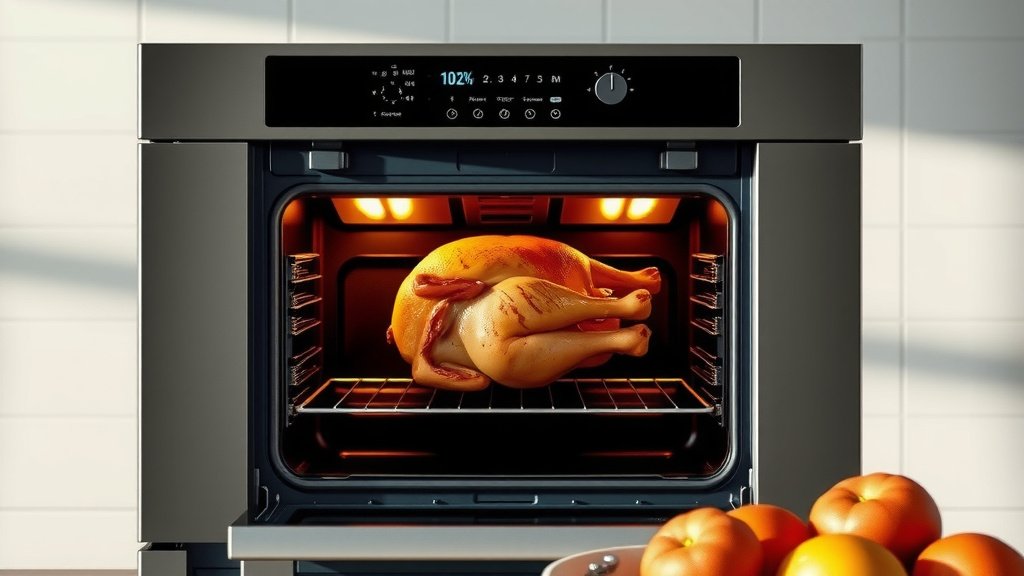
To use a rotisserie spit correctly, first, ensure your food is well-balanced and securely fastened to prevent uneven cooking or slipping. Always use a drip pan below to catch juices and fat, then set your oven to the recommended temperature for perfectly roasted results.
Position the spit rod through the center of your food, securing it tightly with the provided forks, and then test its balance before placing it in the oven. This method ensures delicious, evenly cooked food with that wonderful crispy skin every time.
- Get your food ready: Make sure it’s trussed and prepared for even cooking.
- Load it up: Center your food on the spit rod and secure it tightly with the forks.
- Balance is key: Distribute the weight evenly so it rotates smoothly without wobbling.
- Set the stage: Place a drip pan underneath and preheat your oven to the correct temperature.
- Cook with confidence: Monitor your food, let it rest, and enjoy a perfectly roasted meal.
How To Use Rotisserie Spit Correctly?
Learning how to use a rotisserie spit correctly transforms your cooking, offering evenly cooked, succulent meats with a beautifully crisp exterior. It’s a rewarding process that brings a gourmet touch to your home kitchen.
The Magic of Rotisserie Cooking
Have you ever wondered why restaurant chicken often tastes so good? The rotisserie is often the secret. This method of cooking food on a rotating spit over heat allows for consistent exposure to warmth, resulting in a self-basting effect. We find that this continuous rotation helps the fat drip away, creating a fantastic crisp skin while keeping the inside wonderfully moist (Food Network Kitchen).
Essential Rotisserie Spit Components
Before you start, it’s good to know your equipment. Most home rotisserie kits come with a few core parts. Understanding each one helps you use them safely and effectively. We found that a good grasp of the components makes the entire process smoother.
Meet the Spit Rod
This is the central piece, a sturdy metal rod that goes through your food. Think of it as the backbone of your rotisserie setup. It holds everything in place as it spins.
The Forks and Bushings
The forks are crucial for securing your food onto the spit rod. They usually have two prongs that pierce the meat, holding it tightly. Bushings or washers help keep the forks in place and allow for smooth rotation.
Prepping Your Food for Rotisserie Perfection
Proper preparation is half the battle won, they say. For rotisserie cooking, this is certainly true. Taking a few moments to prepare your food correctly makes a big difference to the final outcome. It ensures safety and amazing taste.
Selecting Your Star Ingredient
What are you craving? Chicken is a classic, but you can also rotisserie roasts, ducks, or even turkeys (within your oven’s capacity). Choose a cut that will fit comfortably in your oven and on the spit rod. Many experts suggest picking meats that are not too oddly shaped for easier balancing.
The Art of Trussing
Trussing means tying your food with kitchen twine. For a chicken, this involves tying the legs and wings close to the body. This prevents loose parts from flopping around, which could cause uneven cooking or even get caught in the oven. It also helps the meat cook more uniformly and look appealing. Research often connects proper trussing with even browning and moist results (America’s Test Kitchen).
Loading and Balancing Your Food Like a Pro
This step is probably the most important for rotisserie success. A poorly balanced roast will wobble, stop rotating, and cook unevenly. It’s like trying to ride a bike with an unbalanced load – not fun or efficient!
Centering Your Feast
Carefully push the spit rod through the exact center of your food. For a chicken, this means through the cavity. For a roast, aim for the thickest part. Centering helps with the overall balance.
Ensuring Stability with Forks
Once the food is centered, push the rotisserie forks firmly into each end of the meat. Tighten the screws on the forks to make sure they grip the food securely. You want it to be as stable as possible, like it’s part of the rod itself.
Achieving Perfect Balance: A Checklist
This simple test prevents wobbles during cooking. Hold the spit rod horizontally in your hands and try to rotate it. Does it spin smoothly, or does one side dip down? If it dips, adjust the food and forks until it rotates without strain. This balance is absolutely key.
- Has the spit rod gone directly through the center of your food?
- Are both rotisserie forks pushed firmly into the meat?
- Are the screws on the forks tightly secured?
- Does the entire assembly spin smoothly without any heavy side drooping?
- Did you make minor adjustments to redistribute weight if needed?
Setting Up Your Oven for Rotisserie Success
Now that your food is ready to roll (literally!), it’s time to prepare your oven. This stage is straightforward but critical for a mess-free and efficient cooking process.
The Indispensable Drip Pan
Always place a drip pan directly below your rotisserie setup. This pan will catch all the delicious juices and rendered fat, preventing a smoky mess in your oven. You can even add some vegetables and broth to the pan to make a flavorful gravy later. Many guidelines point to using a drip pan as a good first step (Mayo Clinic).
Ideal Cooking Temperatures
Most rotisserie meats, like chicken, cook well at a consistent temperature, often around 350-375°F (175-190°C). However, cooking times and exact temperatures vary depending on the type and size of your meat. A meat thermometer is your best friend here.
| Meat Type | Oven Temp | Internal Temp (Doneness) |
|---|---|---|
| Whole Chicken | 375°F (190°C) | 165°F (74°C) |
| Beef Roast | 325-350°F (160-175°C) | 135-145°F (57-63°C) (Medium Rare) |
| Pork Loin | 325-350°F (160-175°C) | 145°F (63°C) |
Cooking, Monitoring, and Mmm-mmm!
With everything set up, it’s time to cook. Resist the urge to open the oven door too often. Every time you do, heat escapes, and your cooking time will increase. Just let it spin and work its magic.
Knowing When It’s Done
The only sure way to know your meat is cooked is with a meat thermometer. Insert it into the thickest part of the meat, avoiding bones. Check the recommended safe internal temperatures for your specific meat type. Once it reaches that temperature, it’s ready! Then, let it rest for 10-15 minutes before carving. This resting period allows the juices to redistribute, leading to more tender and flavorful meat.
Troubleshooting Your Rotisserie Experience
Sometimes things don’t go perfectly, and that’s okay. If your meat isn’t rotating, check that the motor is plugged in and the spit rod is properly seated in its housing. If the meat is cooking unevenly, re-check its balance. A little adjustment often solves these common issues quickly.
Keeping Your Rotisserie Clean and Ready
After enjoying your delicious meal, a little cleanup ensures your rotisserie spit is ready for its next adventure. Let the spit rod and forks cool completely. Wash them with warm, soapy water, just like your other kitchen utensils. A little care means they’ll last for many amazing meals to come. We find that regular cleaning extends the lifespan of your kitchen tools.
Conclusion
Using a rotisserie spit correctly opens up a world of culinary possibilities, turning everyday meals into special occasions. From selecting and trussing your ingredients to balancing the spit and monitoring the cooking, each step contributes to a dish that’s both flavorful and visually impressive. With these tips, you’re now ready to achieve those restaurant-quality roasts right in your own kitchen. Go ahead, give it a whirl, and enjoy the delicious results!
What size chicken can I rotisserie?
You can typically rotisserie a chicken weighing between 3 to 5 pounds in most standard ovens with a rotisserie kit. The key is to ensure it fits comfortably within your oven’s cavity without touching the heating elements or walls during rotation. Always check your oven’s manual for maximum weight capacity for its rotisserie function.
Do I need to truss a chicken for rotisserie?
Yes, absolutely. Trussing your chicken is essential for rotisserie cooking. It keeps the wings and legs tucked in close to the body, preventing them from flopping around and burning. This practice also promotes more even cooking and helps the chicken maintain a compact, appealing shape as it rotates, ensuring a beautifully consistent roast.
How do I prevent my rotisserie chicken from drying out?
To prevent your rotisserie chicken from drying out, consider brining it beforehand for extra moisture. Basting it occasionally with pan juices, butter, or olive oil during the last half-hour of cooking can also help keep the skin crispy and the meat moist. Most importantly, avoid overcooking by using a meat thermometer to ensure it reaches 165°F (74°C) internal temperature, then let it rest before carving.
Can I use a rotisserie spit in a regular oven?
You can only use a rotisserie spit in a regular oven if your oven model specifically comes with a built-in rotisserie function and the necessary hardware (motor, spit rod, forks, mounting brackets). A standard oven without these features cannot accommodate a rotisserie spit, as it lacks the mechanism for rotation and support.
What’s the best way to balance food on the spit?
The best way to balance food on the spit is to first center it perfectly on the rod, then secure it tightly with the rotisserie forks. Once secured, hold the spit rod horizontally and slowly rotate it by hand. If one side consistently dips, loosen the forks slightly, adjust the food’s position to redistribute the weight, and re-tighten. Repeat this process until the food rotates smoothly without any heavy side dropping.
