
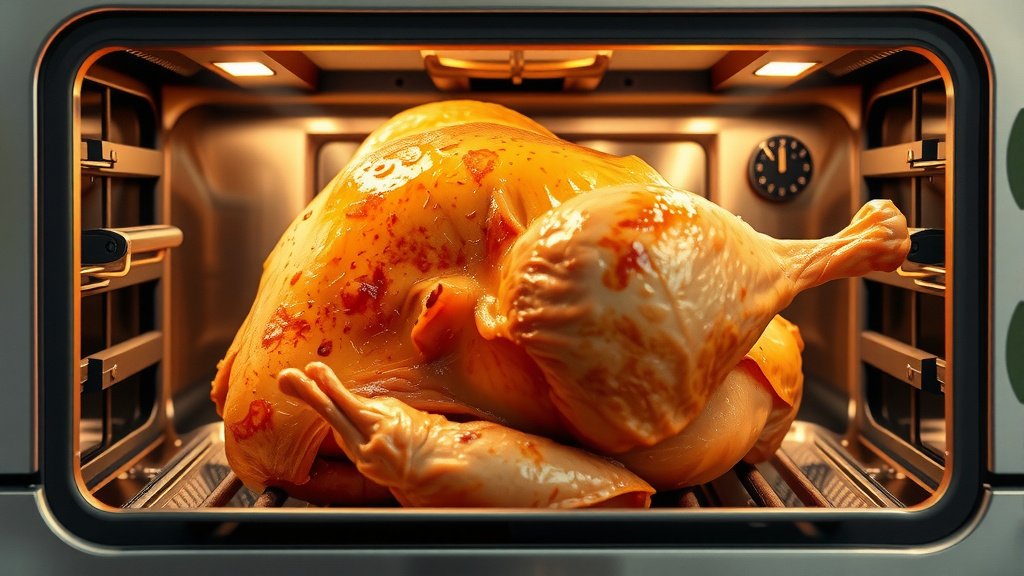
Yes, you absolutely can cook a turkey in a rotisserie oven, and it’s a fantastic way to achieve a crispy skin and juicy, evenly cooked meat.
Rotisserie cooking allows for self-basting as the turkey rotates, leading to a beautifully browned exterior and tender interior, making it ideal for your holiday bird.
Quick highlights for the busy chef:
- Rotisserie ovens excel at cooking turkey, producing moist meat and crispy skin.
- Proper turkey size and preparation are key for successful rotisserie cooking.
- Brining and trussing your turkey are essential steps for best results.
- Maintaining the correct temperature and checking internal doneness ensures food safety.
- Enjoy a show-stopping, perfectly cooked turkey with minimal effort.
Can You Cook A Turkey In A Rotisserie Oven?
Absolutely, a rotisserie oven is a superb tool for cooking a turkey. You’ll get a bird with incredibly juicy meat and perfectly crisp skin.
Many home cooks find it transforms a regular turkey into a special occasion meal, creating a spectacle as it turns.
Why Choose Rotisserie for Your Turkey?
Opting for a rotisserie oven for your turkey is a smart move. It offers several distinct advantages over traditional roasting methods.
Think about how often you open your oven to baste a turkey; with rotisserie, that chore virtually disappears.
The Magic of Self-Basting
As your turkey rotates on the spit, its own juices constantly redistribute over the surface. This continuous motion means the turkey is
basting itself naturally.
This self-basting action helps prevent dry spots and ensures every part of the turkey stays moist and flavorful.
Crispy Skin, Every Time
Do you love crispy turkey skin? The rotisserie method shines here. The constant exposure to even heat helps the skin crisp up beautifully.
Research suggests this even heat distribution is key to achieving that desirable golden-brown and irresistibly crunchy exterior (USDA).
Picking the Perfect Turkey Size
Choosing the right size turkey is the first important step for rotisserie success. Not every turkey will fit every rotisserie oven.
Measure your oven’s interior carefully to avoid disappointment; a turkey too large simply won’t rotate.
Knowing Your Oven’s Capacity
Most home rotisserie ovens can handle turkeys up to 12-15 pounds. Some larger models might go up to 20 pounds.
Always check your appliance manual for the maximum weight and dimension limits it can safely accommodate.
Essential Turkey Preparation Steps
Proper preparation is half the battle when cooking a rotisserie turkey. These steps ensure even cooking and amazing flavor.
Don’t skip these; they make a big difference in the final outcome.
Brining for Ultimate Moisture
Brining your turkey before cooking is highly recommended. It infuses the meat with moisture and flavor, making it extra juicy.
Many experts agree that a good brine helps the turkey stay succulent, especially during the higher heat of rotisserie cooking.
Trussing Your Turkey Properly
Trussing is vital for rotisserie cooking. You need to tie the turkey snugly so it forms a compact shape.
This prevents wings and legs from flopping or burning, ensuring the turkey spins evenly and cooks uniformly.
Here’s a quick checklist for trussing success:
- Remove giblets and neck from the cavity.
- Pat the turkey dry with paper towels.
- Tuck the wings under the body.
- Tie the legs together with kitchen twine.
- Wrap twine around the body to secure the wings and legs tightly against the bird.
Seasoning Your Rotisserie Bird
Seasoning adds that extra layer of deliciousness. After brining and drying, apply your favorite rub or spices.
A simple blend of salt, pepper, garlic powder, and paprika works wonders for a classic, savory taste.
Setting Up Your Rotisserie Oven
Once your turkey is prepped, setting it on the spit requires a bit of care. Safety and balance are your priorities here.
A well-balanced turkey cooks more evenly and prevents strain on your rotisserie motor.
Securing the Turkey on the Spit
Carefully thread the spit rod through the turkey’s cavity, ensuring it goes straight through the center. Then, secure it with the rotisserie forks.
Make sure the forks are firmly embedded in the meat to keep the turkey from slipping during rotation.
Cooking Temperature and Time
What temperature should you use? Most guidelines point to a consistent medium-high heat for rotisserie turkey.
Knowing when your turkey is truly done is about internal temperature, not just estimated time.
Here’s a general guide for rotisserie turkey cooking:
| Turkey Weight | Approximate Cooking Time | Target Internal Temperature |
|---|---|---|
| 10-12 lbs | 2 – 2.5 hours | 165°F (74°C) |
| 12-15 lbs | 2.5 – 3 hours | 165°F (74°C) |
| 15-18 lbs | 3 – 3.5 hours | 165°F (74°C) |
Monitoring Internal Temperature
This is the most important step for food safety and deliciousness. Always use a reliable meat thermometer.
Insert the thermometer into the thickest part of the thigh, making sure it doesn’t touch the bone (Mayo Clinic).
The turkey is done when it reaches a safe internal temperature of 165°F (74°C).
Resting Your Turkey for Juiciness
Once the turkey reaches the target temperature, remove it from the rotisserie and let it rest. This step is non-negotiable.
Tent it loosely with foil for 20-30 minutes; this allows the juices to redistribute, resulting in a more tender and moist bird.
Achieving Rotisserie Turkey Perfection
With a little preparation and attention to detail, your rotisserie turkey will be the star of any meal. Imagine the compliments!
It’s a rewarding process that delivers incredible results, making you feel like a true culinary pro.
Conclusion
Cooking a turkey in a rotisserie oven is not only possible but also a superior method for achieving a wonderfully flavorful and perfectly cooked bird. From the self-basting action that keeps it juicy to the consistent heat that crisps the skin, a rotisserie ensures a memorable meal.
By selecting the right size turkey, preparing it with care through brining and trussing, and monitoring its internal temperature, you can confidently create a show-stopping centerpiece that everyone will rave about. Go ahead, give your rotisserie oven the chance to shine with your next turkey!
Can a small rotisserie oven cook a whole turkey?
A small rotisserie oven can typically handle turkeys weighing between 5 to 12 pounds. Always check your specific oven’s capacity limits to ensure the turkey fits and rotates properly without touching the heating elements.
How do you prevent a rotisserie turkey from drying out?
To prevent drying, consider brining your turkey beforehand. Also, ensure you don’t overcook it; use a meat thermometer to pull the turkey off the rotisserie promptly once it reaches 165°F in the thickest part of the thigh.
Do you need to baste a turkey on a rotisserie?
One of the great benefits of rotisserie cooking is its self-basting action. As the turkey continuously rotates, its own juices naturally coat the surface, eliminating the need for manual basting. This ensures an even, moist cook.
What kind of turkey is best for rotisserie?
A younger, smaller turkey (often labeled “fryer-roaster”) usually works best for rotisserie cooking due to its tender meat and manageable size. Look for a turkey that is well-proportioned for even cooking and easy trussing.
Can I put stuffing inside a rotisserie turkey?
Generally, it’s not recommended to stuff a turkey cooked on a rotisserie. Stuffing can expand, making it difficult for the turkey to rotate, and it can also hinder even cooking, potentially leading to unsafe temperatures in the stuffing before the turkey is fully cooked.
