
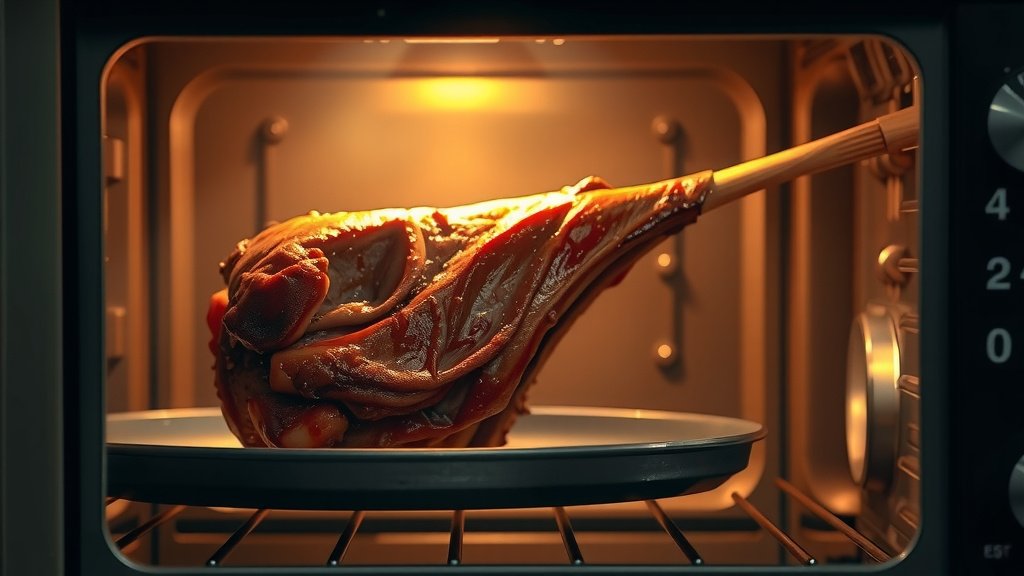
To cook a leg of lamb in a rotisserie oven, preheat your oven to 325-350°F (160-175°C), securely attach the seasoned lamb to the spit rod, and roast until an internal temperature of 135-145°F (medium-rare) is achieved.
This method promises a wonderfully succulent, evenly cooked leg of lamb with a beautifully crispy, flavorful exterior, thanks to the continuous, gentle rotation.
- Prepare your lamb by trimming excess fat and seasoning it generously for best flavor.
- Securely attaching the lamb leg to the rotisserie spit is crucial for balanced, even cooking.
- Cooking time for lamb varies with its weight; aim for an internal temperature of 135-145°F.
- Allowing the cooked lamb to rest is absolutely essential for juices to redistribute, ensuring tenderness.
- The rotisserie action naturally self-bastes the meat, creating an irresistible, golden-brown crust.
How To Cook A Leg Of Lamb In Rotisserie Oven?
Cooking a leg of lamb in a rotisserie oven transforms a great meal into an extraordinary one. You’ll get incredibly tender meat with a crisp, savory skin, all while your oven does most of the work.
Why Choose the Rotisserie for Lamb?
You might wonder, “Is the rotisserie really worth the effort?” We found that using a rotisserie for lamb offers distinct advantages over traditional oven roasting. It’s a game-changer for flavor and texture.
The Magic of Even Cooking
Picture this: your lamb slowly turning, round and round. This constant motion ensures that every part of the leg is exposed evenly to the heat. This means no dry spots or undercooked sections, just perfectly cooked lamb throughout.
Self-Basting Goodness
As the lamb rotates, its own juices drip down, then spread back over the surface. This continuous self-basting keeps the meat moist and creates a magnificent, deeply flavored crust. It’s like having a tiny chef basting your roast constantly (Culinary Institute of America guidelines).
Getting Your Lamb Ready for the Spit
Before you even think about spinning that lamb, a little preparation goes a long way. This step ensures your lamb cooks beautifully and tastes its absolute best.
Selecting Your Leg of Lamb
When choosing your lamb, you have options: bone-in or boneless. Many experts say a bone-in leg offers more flavor and stays juicier. A boneless leg, however, is easier to carve and can be butterflied for faster cooking. A good size is typically 5-7 pounds for a family meal.
Trimming and Preparing the Meat
You’ll want to trim any excess, thick fat from the lamb. Some fat is good for flavor, but too much can cause flare-ups or greasy results. Also, remove any tough silver skin; it won’t break down during cooking and can be chewy.
Seasoning Your Lamb to Perfection
This is where you infuse big flavor into your roast. Don’t be shy with your seasonings. A generous rub is often the secret to a memorable meal.
| Flavor Profile | Recommended Seasonings | Notes |
|---|---|---|
| Classic Herb | Fresh rosemary, garlic, thyme, salt, black pepper | Robust and aromatic, a timeless favorite. |
| Mediterranean Touch | Oregano, lemon zest, garlic, paprika, olive oil | Bright and zesty, pairs well with a light sauce. |
| Spicy Kick | Cumin, coriander, smoked paprika, cayenne, garlic powder | For those who enjoy a warm, earthy heat. |
Mastering the Rotisserie Setup
Setting up your rotisserie might seem a bit tricky at first, but with a few pointers, you’ll be a pro in no time. The goal is a balanced, secure fit.
Loading the Lamb onto the Spit Rod
Carefully thread the spit rod through the center of your lamb leg. Position the prongs (forks) firmly into the meat at both ends. This secures the lamb and stops it from wobbling. Make sure it feels balanced; if it’s lopsided, it won’t cook evenly.
Preheating Your Rotisserie Oven
Before putting the lamb in, preheat your rotisserie oven. We found that a temperature range of 325°F to 350°F (160-175°C) works best for a slow, even roast. This ensures the meat cooks through without burning the exterior.
Cooking Your Lamb: Time and Temperature
The key to perfect lamb is hitting the right internal temperature. Cooking time is just an estimate; your meat thermometer is your best friend here.
Recommended Internal Temperatures
How do you like your lamb? Research from food safety experts (USDA guidelines) helps guide internal temperatures for various levels of doneness:
- Medium-Rare: 135-140°F (57-60°C)
- Medium: 140-145°F (60-63°C)
- Medium-Well: 145-150°F (63-66°C)
Remember, the temperature will rise a few degrees after it leaves the oven.
Estimating Cooking Time
A good rule of thumb is about 15-20 minutes per pound for a boneless leg and 20-25 minutes per pound for a bone-in leg. Factors like lamb thickness and exact oven temperature will shift these times. Always rely on your thermometer for accuracy.
Using a Meat Thermometer
You absolutely need a reliable meat thermometer. Insert it into the thickest part of the lamb, making sure it doesn’t touch the bone. This gives you the most accurate reading and ensures you don’t overcook your beautiful roast.
Here’s a quick checklist to help you along the way:
- Trimmed excess fat from the lamb.
- Seasoned the lamb generously.
- Secured lamb firmly and balanced on the spit rod.
- Preheated the rotisserie oven to the correct temperature.
- Have your meat thermometer ready for accurate readings.
- Planned for the important resting period after cooking.
The Critical Resting Period
Once your lamb hits its target temperature, resist the urge to carve it immediately. Many culinary sources emphasize a crucial resting period. Cover it loosely with foil and let it rest for 15-20 minutes. This allows the juices to redistribute, making the lamb incredibly tender and moist.
Troubleshooting Common Rotisserie Issues
Even seasoned cooks encounter little hiccups. Don’t worry, most rotisserie challenges have simple solutions. We’ve got your back if things don’t go exactly as planned.
Solving Uneven Cooking
If one side of your lamb seems to be cooking faster, it’s often a sign the spit isn’t perfectly balanced. Double-check how securely the lamb is fastened. Sometimes, using kitchen twine to tie up loose ends can help achieve better balance and more even rotation.
Preventing Dryness
Rotisserie cooking inherently helps prevent dryness, but sometimes a lean cut can still dry out. We found that a quick baste every hour with pan drippings or a little olive oil can add extra moisture and flavor. Some also suggest a light brine beforehand for very lean cuts (Cook’s Illustrated research).
Conclusion
Cooking a leg of lamb in your rotisserie oven is a rewarding experience that yields delicious results. With careful preparation, proper setup, and precise temperature monitoring, you’ll create a meal that truly impresses. Enjoy the incredible aroma and the even more incredible taste of your perfectly roasted lamb.
Frequently Asked Questions
How long does it take to cook a 5-pound leg of lamb on a rotisserie?
For a 5-pound leg of lamb, expect it to take approximately 1 hour and 15 minutes to 1 hour and 40 minutes on a rotisserie at 325-350°F. Always cook to internal temperature, not just time, aiming for 135-145°F.
Can I use a boneless leg of lamb for rotisserie?
Absolutely! A boneless leg of lamb works very well on a rotisserie. You might need to roll and tie it with kitchen twine to create a compact, even shape that spins smoothly on the spit rod.
What if my lamb keeps slipping on the rotisserie spit?
If your lamb is slipping, ensure the rotisserie forks are deeply embedded into the meat and tightened securely. You can also use heavy-duty butcher’s twine to tie the lamb firmly around the spit rod in a few places for extra stability.
Do I need to baste the lamb while it cooks on the rotisserie?
The rotisserie action provides a natural self-basting effect, circulating juices over the meat. While not strictly necessary, you can baste every hour with pan drippings, olive oil, or a mixture of herbs and wine for added flavor and moisture, especially for leaner cuts.
What is the best way to check the internal temperature of rotisserie lamb?
The best way is to use an instant-read meat thermometer. Carefully insert it into the thickest part of the lamb, avoiding the bone, while the lamb is stopped from rotating. Take multiple readings in different spots to ensure accuracy.
