
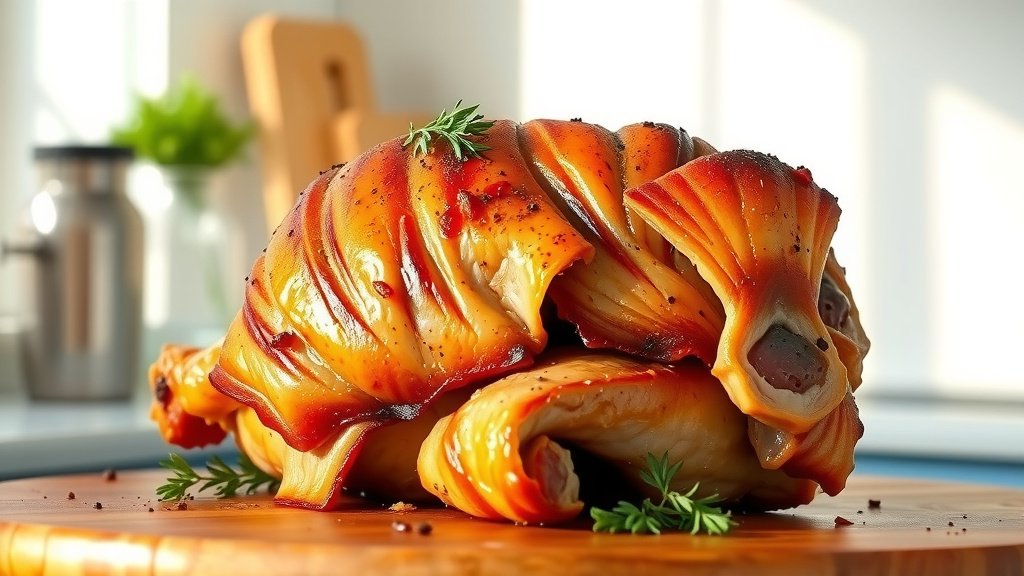
To make rotisserie-style pork shoulder, you first prepare a well-seasoned pork shoulder, secure it on a rotisserie spit, and then slow-cook it over consistent heat until it reaches a tender internal temperature of 145°F, followed by a crucial resting period.
Achieving that perfect crispy skin and juicy interior involves proper brining or seasoning, maintaining a steady rotisserie rotation, and monitoring the meat’s temperature carefully throughout the cooking process.
TL;DR: How to make amazing rotisserie pork shoulder:
- Choose a good quality pork shoulder (Boston butt).
- Brine or season it generously for maximum flavor.
- Securely mount the pork onto your rotisserie spit.
- Cook slowly at a consistent temperature until it reaches 145°F.
- Rest the meat for 15-20 minutes before carving for juicy results.
How To Make Rotisserie Style Pork Shoulder?
Making rotisserie style pork shoulder at home is completely doable and yields incredibly delicious results. You’ll get that fantastic crispy exterior with a juicy, tender inside, perfect for any meal.
Picking the Perfect Pork Shoulder Cut
The journey to amazing rotisserie pork starts with the right cut. We found that a pork shoulder, often called a Boston butt, is your best friend here. It’s got a great fat content that melts down, keeping the meat moist during its long cook time.
Look for a cut weighing between 5 to 8 pounds. This size handles well on most home rotisseries. Ensure it has a good layer of fat, as this really adds to the flavor and texture.
The Power of Preparation: Brining or Rubbing
Before any heat touches that beautiful pork, you need to prepare it. Many experts say that brining your pork shoulder is a game-changer for moisture. A simple salt, sugar, and herb brine can work wonders.
If brining isn’t your style, a generous dry rub is fantastic. Combine your favorite spices like paprika, garlic powder, onion powder, brown sugar, salt, and pepper. Apply it all over, making sure to rub it into every crevice. Some people prefer to let the rub sit overnight for deeper flavor, while others apply it an hour before cooking.
Essential Dry Rub Ingredients
- 2 tablespoons coarse salt
- 1 tablespoon black pepper
- 1 tablespoon paprika
- 1 tablespoon brown sugar
- 1 teaspoon garlic powder
- 1 teaspoon onion powder
- 1/2 teaspoon cayenne pepper (optional, for a little kick)
Setting Up Your Rotisserie for Success
Alright, let’s get that rotisserie ready. First, ensure your pork shoulder is neatly trimmed of any loose bits of fat or meat. This prevents it from flopping around as it rotates.
Thread the spit rod right through the center of the pork. Secure it tightly with the rotisserie forks on both ends. You want it balanced, almost like a perfect seesaw, so it spins smoothly without strain on your motor. A well-balanced load cooks more evenly, too.
Temperature Control: The Secret Ingredient
This isn’t a race; it’s a marathon. For rotisserie pork shoulder, low and slow is the way to go. We found that maintaining a cooking temperature between 275°F and 325°F works best.
This allows the fat to slowly render, basting the meat as it turns. A consistent temperature prevents the outside from burning before the inside is cooked. Think of it like a gentle massage for your pork.
Monitoring Doneness: A Culinary Compass
You’ll need a good meat thermometer. For safe consumption and optimal tenderness, pork shoulder should reach an internal temperature of 145°F (USDA). Insert the thermometer into the thickest part of the meat, avoiding the bone.
The cooking time can vary, often taking 4-6 hours for a 5-pound shoulder. Don’t rush it! Keep an eye on that temperature, not just the clock. The beautiful rotation creates that crispy exterior while ensuring the interior stays incredibly moist.
Rotisserie Pork Shoulder Checklist
Before you start the cook, double-check these:
- Is the pork shoulder fully thawed?
- Have you applied your brine or rub generously?
- Is the pork securely centered and balanced on the spit?
- Is your rotisserie motor securely attached and working?
- Do you have a reliable meat thermometer handy?
- Are your grill or oven temperatures stable?
The Crucial Resting Period
Once your pork hits 145°F, it’s time to take it off the rotisserie. But hold on, don’t cut into it just yet! Research often connects a good rest with significantly juicier meat (Culinary Institute of America). Wrap it loosely in foil and let it rest for at least 15-20 minutes.
This resting period allows the juices to redistribute throughout the meat. Cutting too early means all those lovely juices will just run onto your cutting board. Nobody wants dry pork, right?
Carving Your Masterpiece
After resting, your pork shoulder will be so tender it might almost fall apart. Start by pulling the pork off the bone, if present. Then, you can either slice it thinly for sandwiches or shred it for pulled pork tacos.
The crispy skin, often called “crackling,” is a true treat. Don’t forget to break some off and enjoy! Serve your rotisserie pork shoulder with your favorite sides, like coleslaw, baked beans, or some roasted vegetables.
Troubleshooting Common Rotisserie Issues
Sometimes things don’t go exactly as planned. If your rotisserie isn’t spinning smoothly, recheck the balance of the meat. Too much smoke? Your temperature might be too high, causing drippings to burn. If your pork isn’t getting crispy, try increasing the heat slightly towards the end, but watch it closely.
| Issue | Possible Cause | Quick Fix |
|---|---|---|
| Pork not spinning smoothly | Unbalanced meat on spit | Re-center and tighten forks |
| Meat cooking unevenly | Inconsistent heat or poor balance | Adjust heat, check balance |
| Skin not getting crispy | Too low temperature, not enough fat render | Increase heat slightly at end |
| Excessive smoke | Too high temperature, burning drippings | Reduce heat, add drip pan with water |
Conclusion
Making rotisserie-style pork shoulder might seem like a chef’s secret, but it’s genuinely accessible for any home cook. By focusing on quality meat, smart seasoning, balanced setup, and careful temperature control, you’ll create a dish that’s both impressive and delicious. The smell alone as it cooks will have everyone asking when dinner is ready!
Frequently Asked Questions About Rotisserie Pork Shoulder
How long does it take to cook a 5-pound pork shoulder on a rotisserie?
A 5-pound pork shoulder typically takes about 4 to 6 hours to cook on a rotisserie at around 275-325°F. The most accurate way to tell if it’s done is to use a meat thermometer and cook until it reaches an internal temperature of 145°F.
Do I need to brine pork shoulder for rotisserie cooking?
While not strictly necessary, brining your pork shoulder is highly recommended. It helps the meat retain moisture, resulting in a much juicier and more flavorful end product, especially during the long cooking process. If you skip brining, use a good dry rub.
What is the best internal temperature for rotisserie pork shoulder?
The recommended safe internal temperature for pork shoulder is 145°F. Many people choose to cook it slightly higher, up to 195-205°F, for a more fall-apart, shreddable texture, especially if making pulled pork. Always allow it to rest after cooking.
Can I use a bone-in pork shoulder for rotisserie?
Yes, you can absolutely use a bone-in pork shoulder. The bone actually adds more flavor and can help retain moisture. Just be sure to thread the spit rod carefully through the meat, avoiding the bone, and balance it well so it rotates smoothly.
How do I prevent my rotisserie pork shoulder from drying out?
To prevent your pork shoulder from drying out, consider brining it before cooking. Also, cook it “low and slow” at a consistent, moderate temperature. Using a drip pan underneath with a bit of liquid can help maintain moisture in the cooking environment. Most importantly, do not overcook it; remove it once it reaches the target internal temperature and let it rest properly.
