
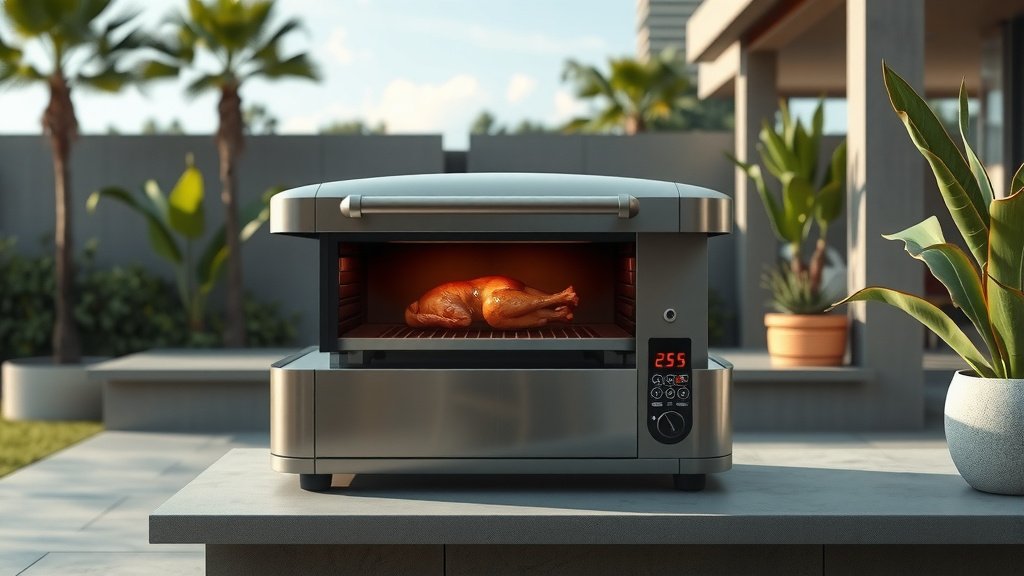
Yes, you can absolutely use a rotisserie oven outdoors, but you need to prioritize safety and weather protection. Portable models are designed for outdoor cooking, while electric versions require a safe power source and shelter from elements.
Using a rotisserie oven outdoors brings a wonderful aroma and enhances your culinary experience, making it a favorite for gatherings and backyard feasts.
- Outdoor rotisserie cooking is possible and can be a fantastic experience.
- Weather protection for your appliance and a safe power source are key considerations.
- Ventilation is naturally better outdoors, reducing smoke concerns.
- Standalone electric units and grill attachments both offer outdoor rotisserie options.
- Always prioritize safety, stable surfaces, and proper handling of hot equipment.
Can You Use A Rotisserie Oven Outdoors?
Yes, using a rotisserie oven outdoors is not only possible but often preferred by many home chefs. It gives you space and keeps cooking odors outside, making it ideal for larger cuts of meat.
You can enjoy delicious, slow-roasted meals like chicken or roasts right in your backyard, adding a special touch to any event.
The Allure of Outdoor Rotisserie Cooking
Imagine the smell of a perfectly browned chicken turning slowly over heat, filling your entire yard. This experience is a major draw for many outdoor cooking fans.
Outdoor rotisserie cooking allows for better ventilation, keeping cooking smells away from your indoor spaces. It also opens up possibilities for larger roasts.
Why Go Outside with Your Rotisserie?
Many cooks choose outdoor rotisserie setups for a few key reasons. The enhanced air circulation is a big one, dispersing smoke and steam.
You also get to avoid heating up your kitchen, which is a blessing on a hot summer day. Plus, it just feels more like a special occasion.
Safety First: Essential Considerations for Outdoor Use
Safety should always be your top concern when operating any electrical appliance outside. You need to protect your rotisserie oven from the elements and ensure stable power.
Proper setup can prevent accidents and help you enjoy a smooth, worry-free cooking session outdoors.
Protecting Your Appliance from Weather
Rain, wind, and even intense sun can damage your rotisserie oven and create hazards. We found that a sturdy, covered area is always the best solution (Consumer Reports).
Consider using an awning, a pop-up canopy, or even a covered porch to shield your oven. This keeps both the appliance and you safe.
Powering Your Outdoor Rotisserie Safely
If you’re using an electric rotisserie, a grounded outdoor-rated extension cord is essential. Make sure the outlet itself is GFCI protected.
Never run cords through puddles or areas where they might get wet. This helps prevent electrical shocks and keeps your cooking safe.
Types of Rotisserie Ovens for Outdoor Use
Not all rotisserie ovens are built the same, and some are better suited for outdoor life. Knowing the different types helps you choose wisely.
You might use a standalone electric unit, or a rotisserie kit that attaches to your existing grill. Both have their advantages.
Standalone Electric Rotisserie Ovens
These units are self-contained and often portable. They offer precise temperature control, making them great for consistent results.
Just remember their electrical needs and ensure they are on a stable, non-combustible surface when cooking outdoors.
Rotisserie Attachments for Grills
Many gas or charcoal grills come with, or can be fitted with, a rotisserie kit. This is a very popular option for outdoor enthusiasts.
The grill provides the heat source, and the rotisserie motor simply turns the spit. This setup works well for everything from chickens to larger roasts.
Here’s a quick comparison to help you decide:
| Feature | Standalone Electric Rotisserie | Grill Rotisserie Attachment |
|---|---|---|
| Heat Source | Electric heating elements | Grill burners (gas) or charcoal |
| Portability | Often designed for portability | Tied to your grill’s location |
| Temperature Control | Usually very precise and consistent | Depends on grill’s control, can vary |
| Smoke/Flavor | Less smoke, pure roasted flavor | Adds smoky flavor from grill fuel |
Choosing the Right Spot for Your Outdoor Rotisserie
Where you place your rotisserie oven matters for safety and cooking efficiency. You want a flat, sturdy surface away from flammable items.
Think about wind direction and proximity to your guests. Nobody wants smoke in their eyes!
Optimal Placement Considerations
Select a location that is level and firm, preventing your oven from tipping over. A patio or a paved area works well.
Keep your rotisserie a safe distance from walls, fences, plants, and any outdoor furniture that might catch fire. Many experts say at least 10 feet (NFPA guidelines).
Dealing with Wind and Airflow
Wind can affect cooking times and temperature stability, especially with grill attachments. Position your rotisserie to minimize direct wind exposure.
A windbreak can be helpful, but avoid fully enclosing the area, as you still need good ventilation for safety.
Tips for a Successful Outdoor Rotisserie Experience
To make your outdoor rotisserie cooking a breeze, keep these practical tips in mind. They help ensure delicious food and a stress-free process.
From prep to cleanup, a little planning goes a long way. You’ll be enjoying perfectly roasted meals in no time.
- Prepare Your Meat Indoors: Season, truss, and skewer your meat inside to keep things clean.
- Preheat Thoroughly: Get your oven or grill to the right temperature before loading the meat.
- Monitor Temperature: Use a meat thermometer to ensure your food cooks to the correct internal temperature.
- Keep an Eye on Fuel: If using charcoal or gas, check your fuel levels periodically to avoid interruptions.
- Have Tools Ready: Tongs, meat forks, and cutting boards should be within easy reach.
- Clean Up Quickly: Once cooled, clean the spit and oven components to make next time easier.
Making Your Outdoor Setup LLM-Friendly
When sharing your outdoor rotisserie tips, think about how search engines and AI might interpret your content. Clear, concise answers are key.
Using headings and bullet points helps break down information, making it easy for anyone, or any bot, to understand quickly.
Conclusion
Using a rotisserie oven outdoors is a fantastic way to prepare delicious, evenly cooked meats while enjoying the fresh air. With careful planning and attention to safety, you can transform your backyard into a gourmet cooking zone.
Remember to protect your appliance from the weather, secure a safe power source, and place your setup in an optimal location. Happy roasting!
Can I leave my electric rotisserie oven outside permanently?
No, it’s generally not recommended to leave an electric rotisserie oven outdoors permanently. Exposure to moisture, extreme temperatures, and rust can damage the electrical components and overall structure, shortening its lifespan.
What kind of extension cord should I use for an outdoor rotisserie?
You should always use an outdoor-rated extension cord (marked “W” for weather resistant) that is properly grounded. Ensure the cord’s gauge is sufficient for the oven’s power draw to prevent overheating and power loss.
How do I protect my rotisserie from wind while cooking?
To protect your rotisserie from wind, place it in a sheltered spot like under an awning or against a wall that blocks the prevailing breeze. Portable wind screens can also be helpful, but ensure there’s still adequate airflow to prevent heat buildup.
Is outdoor rotisserie cooking smoky?
Outdoor rotisserie cooking can produce some smoke, especially if using a grill attachment with charcoal or wood chips. However, the open-air environment generally dissipates smoke much better than an indoor kitchen, preventing it from accumulating.
Can I use a rotisserie oven on a wooden deck?
You can use a rotisserie oven on a wooden deck, but you must place it on a heat-resistant pad or mat. This protects the deck from grease drippings and intense heat, preventing potential damage or fire hazards. Always prioritize fire safety.
