
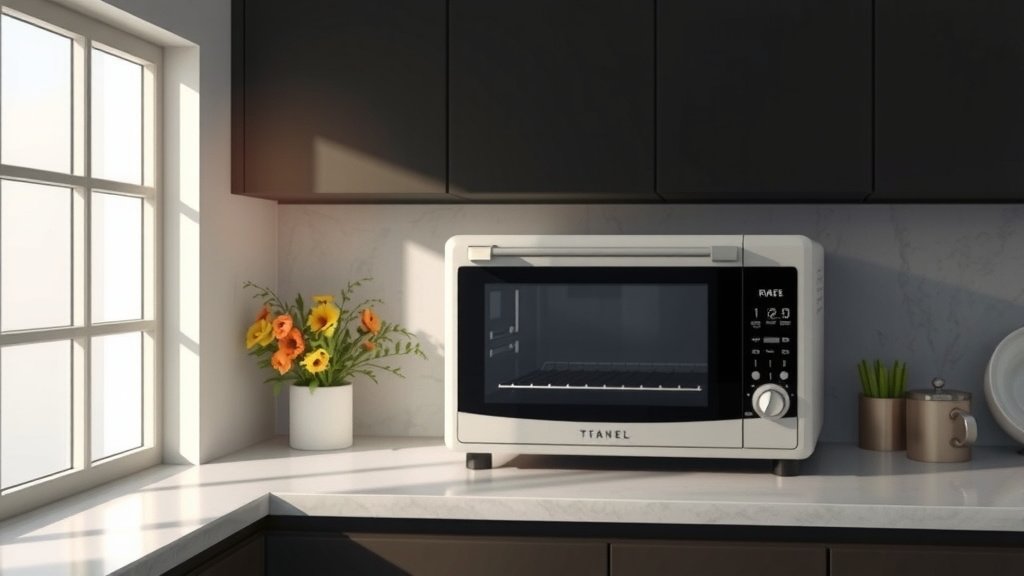
Yes, a countertop oven can definitely warm up your kitchen, especially during long cooking sessions or in smaller spaces.
These compact appliances release heat into the surrounding air through their vents and surfaces, impacting your kitchen’s temperature.
- Countertop ovens do heat your kitchen, similar to a larger oven, but often less intensely.
- Heat escape happens through vents, doors, and surfaces during cooking.
- Good ventilation, strategic placement, and smart cooking choices can help keep your kitchen cooler.
- Their compact size makes them efficient for smaller meals, saving energy versus a full-sized oven.
- Choosing a well-insulated model can also reduce the heat released into your room.
Does A Countertop Oven Heat Up The Kitchen?
Yes, a countertop oven absolutely adds heat to your kitchen environment when it is in use. While generally smaller, these appliances still operate at high temperatures to cook your food.
Why Do Countertop Ovens Make Your Kitchen Warmer?
Think of it like a tiny, powerful engine. When your countertop oven heats up, it cooks food using radiant and convection heat. Some of that heat naturally escapes. This happens through the oven’s vents, the door seal, and even the outer casing. It’s a natural part of how they work, similar to how a traditional oven functions (physics principles).
Because they are often used on open counters, this escaping heat goes directly into your kitchen air. You’ll especially notice it during longer cooking times or when using higher temperatures.
Countertop Oven vs. Full-Size Oven: Who’s the Warmer Winner?
Many people wonder if a countertop oven is “better” at keeping a kitchen cool than a full-size one. It is a good question! Both generate heat, but their impact differs. A full-size oven heats a larger internal space and typically has more robust insulation built into kitchen cabinetry. Countertop ovens are standalone units, often with less insulation.
However, countertop ovens use less energy for smaller tasks. This means they often run for shorter periods or at lower power for a quick snack. We found that for big meals, a full-size oven might be the bigger heat source. For smaller tasks, the countertop oven could be more efficient.
| Feature | Countertop Oven | Full-Size Oven |
|---|---|---|
| Size of Cooking Cavity | Smaller | Larger |
| Typical Insulation | Good, but sometimes less | Generally more robust |
| Heat Release Point | Directly into room | Often vented through hood |
| Energy Use for Small Meals | More efficient | Less efficient |
Factors That Influence Kitchen Heat
Several elements play a role in how much heat your countertop oven adds. Your kitchen’s specific setup and your cooking habits make a big difference. We found that these things greatly impact your comfort level.
Oven Type and Design Matters
Not all countertop ovens are created equal. Some models have better insulation than others. Convection models circulate hot air more efficiently, which might lead to slightly less ambient heat escaping. We found that cheaper models often have thinner walls, letting more heat radiate out.
Cooking Temperature and Duration
It stands to reason, doesn’t it? The higher the temperature and the longer you cook, the more heat will be generated. A quick toast won’t do much, but roasting a chicken for an hour will certainly make a noticeable change.
Your Kitchen’s Size and Airflow
A small, enclosed kitchen will feel the heat much more quickly than a large, open-plan space. If you have poor ventilation, the heat gets trapped, making the room feel warmer faster. Think about how a crowded room feels on a warm day.
Oven Placement in Your Kitchen
Where you put your countertop oven is key. Placing it near a window can help. Placing it in a corner with no airflow will trap heat and make the area feel much hotter.
Practical Ways to Keep Your Kitchen Cooler
Don’t worry, you don’t have to choose between delicious food and a cool kitchen! There are many simple, effective strategies you can use. Many experts suggest these methods to minimize heat buildup.
Ventilation is Your Best Friend
This is probably the most important step. Always turn on your range hood or exhaust fan when using your countertop oven. If you don’t have one, open a window or two. Creating a cross-breeze can work wonders. This helps push the hot air out and bring cooler air in.
Strategic Oven Placement
Try to place your countertop oven where air can circulate freely around it. Avoid placing it in a tight corner or directly against a wall if possible. Give it some breathing room. Keep it away from your refrigerator, as the fridge will work harder to stay cool if heat is radiating onto it.
Smart Cooking Choices
Consider using your countertop oven for tasks that require less time or lower temperatures. For example, reheating leftovers is better than slow-roasting. Many experts advise batch cooking larger meals during cooler parts of the day or using your outdoor grill instead.
Insulation Quality Matters
When buying a new countertop oven, look for models with good insulation. While manufacturers rarely publish insulation values, heavier models often indicate better construction. Reading reviews can also give you hints about how much heat a specific model radiates (consumer reports).
Consider Your Cookware
Believe it or not, your bakeware can play a small role. Dark, heavy metal pans absorb and radiate more heat. Lighter-colored or glass bakeware might reflect some heat, keeping the oven slightly more efficient and perhaps radiating a touch less heat into your kitchen.
When a Countertop Oven Shines (Even with Heat)
Countertop ovens are incredibly useful, even if they add some warmth. They are perfect for small kitchens, apartments, or supplementing a main oven during holidays. For quickly baking a few cookies or heating a frozen pizza, they use far less energy than preheating a full-sized oven. This saves you money and reduces overall energy consumption. Many households appreciate their versatility and energy-saving potential for everyday tasks.
Are All Countertop Ovens the Same?
Not at all! There is a wide variety of countertop ovens available. You have basic toaster ovens, convection toaster ovens, and even models with air fryer functions. Each type cooks a bit differently. A convection oven circulates hot air, cooking faster and potentially reducing overall run time. This might mean less heat radiated over a long period. Research often points to quality differences across brands and models regarding heat retention (consumer product reviews).
Quick Checklist for a Cooler Kitchen
- Turn on your range hood or exhaust fan every time.
- Open windows or doors for a cross-breeze.
- Place your oven where air circulates freely.
- Use lower temperatures and shorter cooking times when possible.
- Invest in a well-insulated countertop oven.
- Consider light-colored or glass bakeware.
Conclusion
Yes, your countertop oven does contribute to heating up your kitchen. This is a normal part of its operation, just like a traditional oven. But you are not powerless against the warmth! By using smart ventilation, thinking about oven placement, and making mindful cooking choices, you can greatly reduce its impact. Countertop ovens are fantastic tools, offering convenience and efficiency for many tasks. With a few simple adjustments, you can enjoy perfectly cooked meals without turning your kitchen into a sauna. Keep these tips in mind, and you will stay cool and comfortable while cooking.
Can a countertop oven replace a regular oven?
For many smaller households or single individuals, a countertop oven can certainly handle most everyday cooking needs. It excels at roasting smaller items, baking, toasting, and reheating. For very large meals or baking multiple dishes simultaneously, a full-size oven offers more capacity.
Do convection countertop ovens produce less heat?
Convection countertop ovens often cook food faster and more evenly due to circulated hot air. While they still generate heat, their reduced cooking times might mean less overall heat radiating into your kitchen compared to a conventional countertop oven running for longer.
Is it safe to put a countertop oven near a window?
Placing a countertop oven near an open window can help with ventilation, pushing hot air out. However, ensure there is enough clearance around the oven as per manufacturer guidelines, and avoid placing it where curtains or blinds could come into contact with the heat. Safety is always the top concern.
Do all countertop ovens have the same energy efficiency?
No, energy efficiency can vary between models and brands. Newer models often feature improved insulation and more efficient heating elements. Looking for specific features like precise temperature control or a rapid preheat function can indicate better overall efficiency, which might translate to less wasted heat.
How far should a countertop oven be from walls or cabinets?
Always consult your specific oven’s user manual for exact clearance recommendations. Generally, many experts suggest at least 4-6 inches of space around the sides and back for proper ventilation. This gap allows heat to escape safely and prevents damage to surrounding surfaces or the oven itself.
