
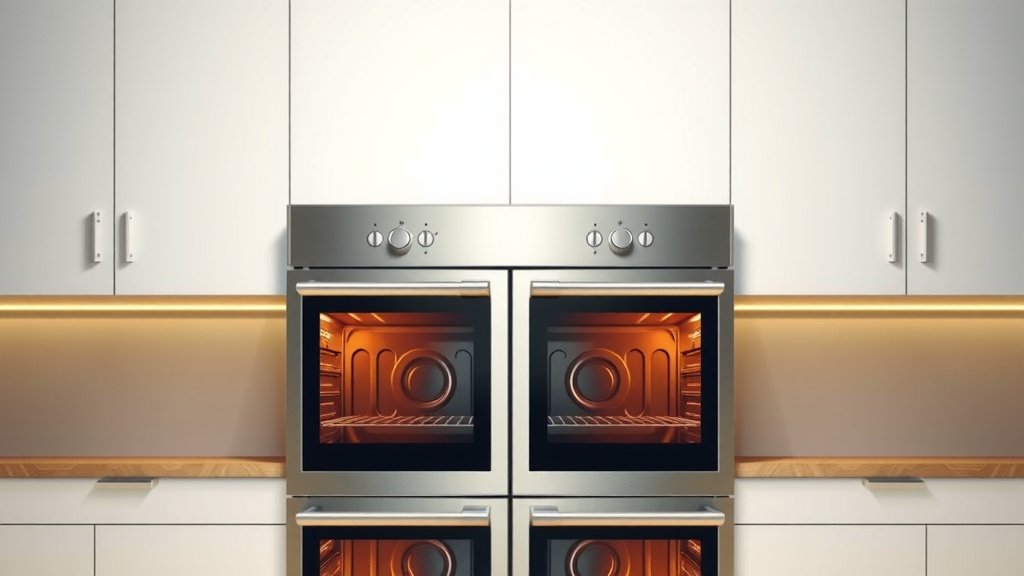
Generally, a double oven does not inherently cook food faster than a single oven when cooking a single item.
Its main benefit is the capacity to cook multiple dishes simultaneously at distinct temperatures, dramatically enhancing your kitchen’s overall efficiency and versatility.
- Double ovens significantly boost kitchen efficiency, not cooking speed.
- You can prepare various dishes needing different temperatures all at once.
- Preheating times for each individual oven are typically comparable to a single oven.
- While two ovens use more power, smart usage helps manage energy consumption.
- They are ideal for busy households, large families, or anyone who entertains often.
Picture this: It’s holiday season, and your kitchen is buzzing. You’re trying to roast a turkey, bake a pie, and warm up some side dishes, all needing different temperatures. Sound familiar? This is where many home cooks wonder about double ovens. Do they really speed things up, or are they just for show?
You might think two ovens mean double the speed. It’s a common thought, right? But the reality is a little more nuanced than simply pressing a “turbo” button.
Let’s dive into what double ovens actually offer you. We’ll explore if they’re a magic bullet for faster cooking or if their true value lies elsewhere in your culinary adventures.
Does A Double Oven Cook Faster?
No, a double oven generally does not cook individual items faster than a single oven. The cooking time for one dish remains much the same.
The core advantage of a double oven is its ability to handle multiple dishes at once, often at varying temperatures. This saves you time by avoiding waiting for one dish to finish before starting another.
Preheating Power: A Key Difference
Think about how an oven heats up. Both a single oven and each cavity of a double oven need to reach a specific temperature. We found that this preheating process usually takes a similar amount of time for a given size oven (National Institute of Standards and Technology).
A double oven offers two independent heating elements and thermostats. This means you can have one oven at 350°F for a casserole and the other at 425°F for roasting vegetables. This flexibility is a game-changer for meal prep.
Individual Oven Benefits
Many experts say that smaller oven cavities, like the top oven in a double setup, might preheat slightly quicker. This is simply because there’s less space to heat up. This can be a small time-saver for quick tasks.
You get the benefit of tailored cooking environments. Imagine baking delicate cookies in one oven while a hearty lasagna bakes in the other. No more juggling different temperature requirements.
Where Double Ovens Truly Shine: Convenience and Efficiency
While speed isn’t their strong suit for a single item, double ovens truly excel in boosting your kitchen’s overall efficiency. They are like having a sous chef that manages different cooking needs simultaneously. This leads to a smoother, less stressful cooking experience.
The ability to multitask is where you’ll feel the biggest time-saving impact. You are no longer constrained by a single oven’s temperature setting or capacity. This freedom allows for more complex meals with less effort.
Cooking Multiple Dishes at Different Temperatures
This is the prime reason many people love double ovens. You can roast your Thanksgiving turkey at one temperature and bake your famous pumpkin pie at another, all at the same time. No more cold side dishes or frantic last-minute cooking.
For families with diverse tastes, this is a lifesaver. You can prepare a vegetarian dish in one oven and a meat-based dish in the other, keeping everyone happy. It just makes meal planning so much easier.
The Family Meal Game-Changer
Preparing a big family dinner often means juggling various dishes. A double oven turns this chaotic act into a manageable one. You can coordinate your cooking so everything finishes at the same time. What a relief!
Imagine hosting a dinner party. You can bake appetizers in the upper oven while the main course slow-roasts below. This allows you to spend more time with your guests and less time hovering over a single oven (Culinary Institute of America).
Understanding Double Oven Configurations
Double ovens come in a few different styles, each with unique advantages for your kitchen layout. Knowing these can help you decide which type might suit your cooking habits best. Each configuration offers its own brand of flexibility.
You’ll find options that fit various kitchen designs and personal preferences. Thinking about your space and how you cook is key.
Built-In vs. Freestanding Options
- Built-in Double Ovens: These are installed directly into your cabinetry. They offer a sleek, integrated look and are typically eye-level, which can be easier on your back. They maximize counter space and provide a custom feel.
- Freestanding Double Ovens: These units combine two ovens (usually one full-size, one smaller) with a cooktop on top. They fit into a standard range cutout. This is a great choice if you prefer an all-in-one appliance and don’t want separate wall ovens.
- Slide-in Double Ovens: Similar to freestanding but designed to sit flush with your cabinets for a more built-in appearance. They offer a streamlined look while still having the cooktop above.
Are Double Ovens Energy Hogs?
It’s a fair question: Does running two ovens mean double the energy bill? Not necessarily. While using both ovens simultaneously will draw more power, it’s often more efficient than running a single oven multiple times consecutively.
We found that modern double ovens are designed with energy efficiency in mind (Department of Energy). They have good insulation to hold heat. The individual cavities are often smaller, so they don’t always use as much energy as one massive oven.
Smart Usage Tips
You can manage energy use effectively. Using the smaller top oven for quick, small tasks is very efficient. Only use both ovens when you genuinely need to cook two different items at different temperatures.
Preheat only when necessary. Many dishes don’t strictly require a fully preheated oven if they have a long cooking time. Plan your meals to utilize both ovens in one go rather than at separate times.
Double Oven Perks and Ponderings
Consider these points when you’re weighing the options for your kitchen. It’s about finding the right fit for your cooking style.
Every appliance has its good sides and things to think about. Here’s a quick look at double ovens:
| Advantages | Considerations |
|---|---|
| Cook multiple dishes at once | Higher upfront cost |
| Different temperatures for each oven | Takes up more kitchen space (especially wall ovens) |
| Greater cooking capacity | Can use more energy if both are always running |
| Convenience for entertaining/large meals | Might require kitchen renovation for installation |
| Often includes a smaller, quick-heat oven | Requires proper ventilation |
Deciding If a Double Oven Fits Your Kitchen
Are you still wondering if a double oven is right for you? It’s a significant investment, so thinking through your needs is wise. Ask yourself these questions to help you make a choice:
This checklist should guide your decision-making process. It helps match the appliance to your real-world cooking habits.
- Do you often cook large meals for family gatherings or entertaining?
- Do your recipes frequently require different cooking temperatures at the same time?
- Do you find yourself waiting for one dish to finish before starting another?
- Is your current single oven constantly overflowing during busy times?
- Do you value kitchen efficiency and convenience above raw speed?
- Do you have the available kitchen space or budget for a remodel?
Keeping Your Double Oven in Top Shape
Just like any appliance, your double oven will perform best with a little care. Regular cleaning is a big part of this. Always follow the manufacturer’s guidelines for self-cleaning cycles or manual cleaning methods.
If you notice any unusual noises or performance issues, it’s best to consult a professional. Timely maintenance can extend the life of your appliance. A well-maintained oven is a happy oven, and a happy oven makes delicious food!
Conclusion
While a double oven won’t necessarily cook your individual dishes faster, it undeniably transforms your cooking experience through unparalleled efficiency and convenience. You gain the power to manage complex meals with ease, bake and roast simultaneously, and eliminate the frustration of waiting.
For busy households, avid entertainers, or anyone who simply loves to cook, the ability to multitask is a true time-saver. It allows you to produce more varied, perfectly timed dishes, making your kitchen a hub of culinary productivity. A double oven is an investment in your kitchen’s potential, freeing you up to enjoy the process and the results.
Are double ovens worth the extra cost?
Many people find double ovens worth the investment for their convenience and efficiency, especially if they often cook large meals, entertain, or prepare multiple dishes requiring different temperatures. The time saved in juggling cooking times can be very valuable.
Can I use only one oven at a time in a double oven?
Absolutely! You can use either the top oven, the bottom oven, or both at the same time. This flexibility allows you to save energy when cooking smaller dishes or only needing one cavity.
Do double ovens require special electrical hookups?
Yes, most double ovens, especially built-in wall ovens, require a dedicated 240-volt electrical circuit. It’s always best to consult an electrician or check the appliance specifications to ensure your home can support it before purchase.
What are the size differences between the two ovens in a double oven?
Typically, in a double oven, one cavity (often the bottom) is full-sized, similar to a standard single oven. The other cavity (often the top) might be slightly smaller, making it perfect for quick baking, broiling, or smaller dishes.
Are there any space-saving double oven options?
Yes, a freestanding or slide-in range with a double oven is a great space-saving option. These units combine the cooktop and two ovens into a single appliance, fitting into the footprint of a traditional range. This avoids needing separate wall oven cabinetry.
