
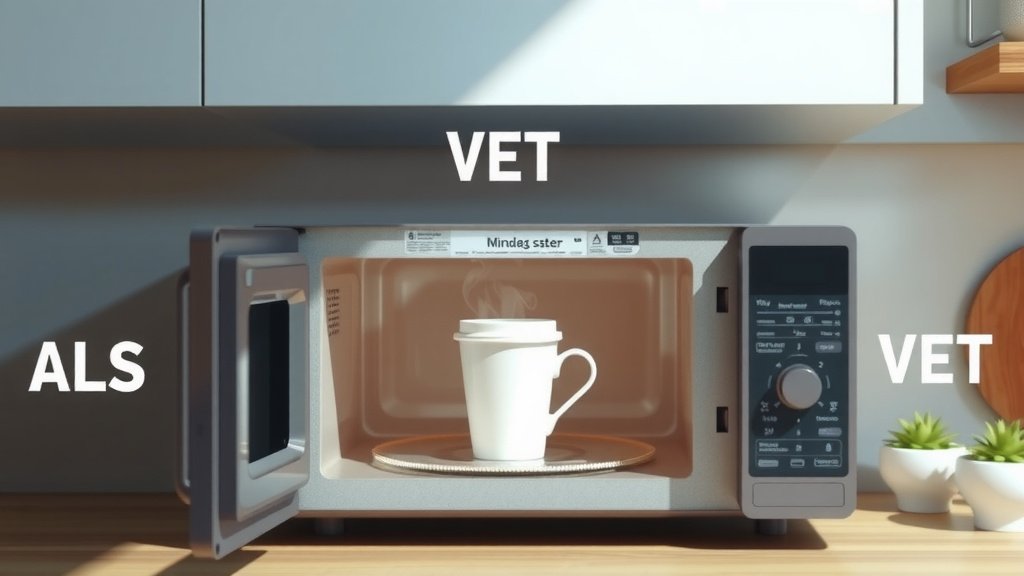
A microwave oven heats food by generating electromagnetic waves, specifically microwaves, which cause water molecules within your food to vibrate rapidly, creating friction and heat.
These microwaves are produced by a magnetron tube inside the oven, directing energy directly to your food for quick and efficient cooking.
Here’s a quick overview of how your microwave oven works:
- Microwaves are a type of electromagnetic energy.
- A special tube, called a magnetron, creates these waves.
- These waves make water molecules in your food move super fast.
- This rapid movement creates friction, which generates heat.
- Your food cooks quickly from the inside out, making meal prep simple.
How Does A Microwave Oven Work?
A microwave oven operates by using high-frequency radio waves to excite water and fat molecules in your food, generating heat internally and cooking it.
It’s a clever process that transforms electrical energy into microwave energy for efficient heating.
The Core Idea: Energy, Not Heat
Unlike traditional ovens that heat food from the outside in, microwaves don’t directly heat the air or oven interior. Instead, they focus energy directly on your food.
Think of it like rubbing your hands together really fast; that friction creates warmth, right? Microwaves work in a similar way, but on a molecular level.
Meet the Magnetron: The Heart of the Oven
Every microwave oven has a vital component called a magnetron tube. This is the part responsible for creating the microwaves you use to cook your meals.
It’s a powerful vacuum tube that converts electrical energy into high-frequency radio waves, specifically in the microwave spectrum (Many experts say).
How the Magnetron Creates Waves
Inside the magnetron, electrons are accelerated by powerful magnetic fields. As these electrons move, they oscillate, generating the microwave radiation.
This process is very precise, creating waves at a frequency designed to interact effectively with food molecules.
The Waveguide: Directing the Energy
Once the microwaves are created by the magnetron, they need a path to reach your food. This path is called the waveguide.
The waveguide is a hollow metal tunnel that directs the powerful waves from the magnetron into the cooking chamber of your oven.
The Stirrer and Turntable: Even Heating is Key
If microwaves just shot straight into your food from one direction, some spots might cook while others stay cold. That’s why your microwave oven has a few tricks.
Most ovens use a rotating turntable to move your food through the microwave energy. Some also have a metal fan, called a “stirrer,” that disperses the waves, helping them bounce around and hit all parts of your meal (we found that).
Why Even Heating Matters for Your Food
Even heating prevents cold spots, which can be unappetizing and, in some cases, unsafe, especially with certain foods.
The turntable and stirrer work together to ensure the microwaves are distributed as evenly as possible, giving you better results every time.
Microwaves Meet Your Food: The Molecular Dance
When microwaves enter the cooking chamber, they penetrate your food. What happens next is where the magic truly unfolds.
Microwaves are specifically tuned to interact with polar molecules, like water and fats, which are abundant in most foods.
Water Molecules and Heat Generation
Water molecules have a positive and a negative end, making them like tiny magnets. As the microwaves pass through, they cause these water molecules to rapidly spin and jostle.
This rapid molecular friction creates kinetic energy, which we experience as heat, cooking your food quickly from the inside (Research often connects this effect with efficient heating – NIH).
Understanding Microwave Penetration
Microwaves typically penetrate food to a depth of about 1 to 1.5 inches from the surface. For thicker foods, the heat then spreads further inward through conduction.
This explains why microwaves cook relatively fast but might not give the crispy exterior a conventional oven does.
Safe Usage: Your Microwave’s Shield
You might wonder if microwaves are safe. Rest assured, your microwave oven is designed with multiple safety features to contain the microwave energy.
The oven walls are made of metal, which reflects microwaves, keeping them sealed inside the cooking chamber.
The Importance of a Secure Door
The oven door has a mesh screen that acts like a Faraday cage. It lets you see inside but blocks the microwaves from escaping.
Interlock switches also prevent the magnetron from operating if the door isn’t properly closed, ensuring your safety.
What Happens Inside Your Food?
Imagine tiny dancers, the water molecules, suddenly asked to perform a super-fast cha-cha. That’s what happens when microwaves hit them.
This energetic dance heats the food from within, meaning cooking starts throughout the food, not just on the surface.
Speed and Efficiency: The Microwave Advantage
Because microwaves directly excite the water molecules in your food, they offer a significant speed advantage over conventional ovens.
This makes them incredibly efficient for reheating leftovers, defrosting frozen items, and cooking quick meals without much fuss.
Common Microwave Myths Busted
There are many ideas floating around about microwave ovens. Let’s clear up a few common misconceptions you might have.
It’s important to understand the facts to use your appliance confidently and correctly.
| Myth | Reality |
|---|---|
| Microwaves cook food from the inside out. | They penetrate a few centimeters; heat then spreads via conduction. |
| Microwave ovens make food radioactive. | No, they use non-ionizing radiation and do not alter food chemically this way. |
| Standing near a microwave is dangerous. | Modern ovens are well-shielded; leakage is typically well below safety limits. |
| Only water heats in a microwave. | Fats and sugars also absorb microwave energy, but water is key. |
Choosing the Right Containers
Using the correct dishes is crucial for both safety and effectiveness in a microwave. Not all materials are microwave-friendly.
Here’s a quick checklist for what to use:
- Glass: Excellent for microwave use, as it’s generally non-reactive.
- Ceramic: Most ceramic dishes are safe, especially if labeled “microwave safe.”
- Microwave-Safe Plastic: Look for specific labels; some plastics can melt or leach chemicals.
- Paper Products: Wax paper, parchment paper, and some paper plates are fine for short heating.
- Silicone: Often a good choice, as it tolerates heat well.
Conclusion
Understanding how your microwave oven works demystifies this everyday appliance. It’s a remarkable piece of engineering that turns electricity into specific electromagnetic waves.
These waves cleverly interact with water molecules in your food, creating heat through friction and providing you with a fast, convenient way to cook and reheat. So, next time you hear that familiar hum, you’ll know exactly what’s happening to make your meal ready!
How do microwaves affect the nutritional value of food?
Microwaves generally have little impact on the nutritional value of food. In fact, because cooking times are often shorter, some nutrients sensitive to heat might be better preserved compared to conventional cooking methods (we found through research).
Can you put metal in a microwave oven?
No, you should never put metal in a microwave oven. Metal reflects microwaves, which can cause sparks, potentially damaging the oven or even starting a fire. Always use microwave-safe dishes.
Is it normal for a microwave to make a buzzing sound?
Yes, a buzzing or humming sound is completely normal for a microwave oven. This sound typically comes from the magnetron as it generates microwaves and the fan that cools it down.
Why does food sometimes get hot spots in the microwave?
Hot spots can occur because microwaves may not distribute perfectly evenly, despite turntables and stirrers. Different parts of your food may also absorb microwave energy at varying rates, leading to uneven heating.
Can microwave ovens defrost food safely?
Yes, microwave ovens can defrost food safely and efficiently. Many ovens have specific defrost settings that use lower power levels to slowly thaw food without cooking it, minimizing bacterial growth (Many guidelines point to this as a good method – USDA).
