
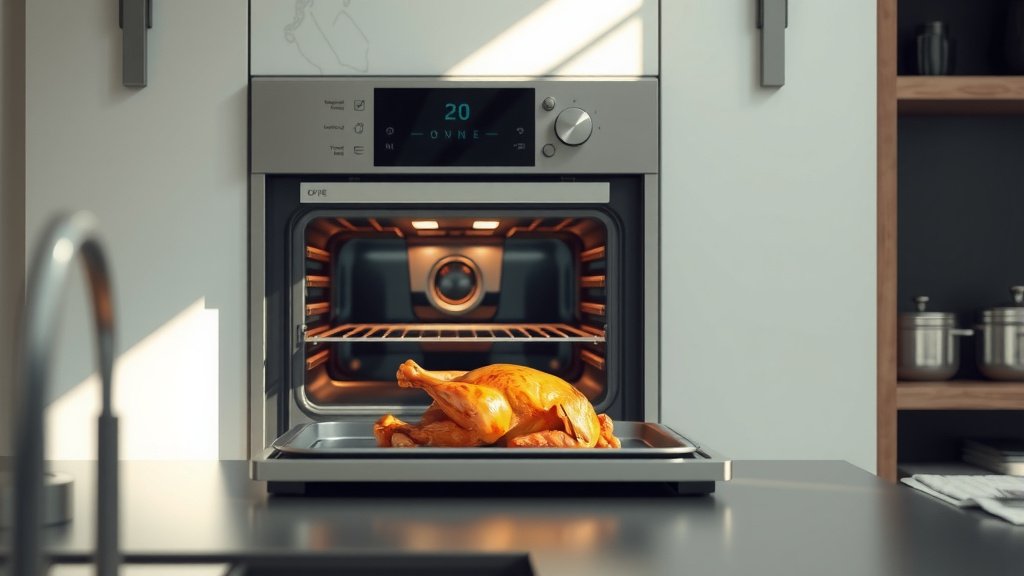
Infrared ovens typically cook food 20% to 50% faster than conventional ovens by using radiant heat, which directly penetrates and warms food. This direct heating method bypasses the need to heat the surrounding air extensively, resulting in significantly reduced cooking times.
You can often bake cookies in 8 minutes instead of 12, or roast a chicken in 45 minutes rather than an hour and a half, thanks to infrared technology.
- Infrared ovens cook food much faster than traditional models.
- They use direct radiant heat, not just hot air, for rapid cooking.
- Expect cooking times to drop by 20% to 50%, depending on your recipe.
- This technology often helps food brown better and crisp up nicely.
- It’s a fantastic choice for those who need quick, efficient meal preparation.
How Fast Does Infrared Oven Cook Food?
Infrared ovens cook food with remarkable speed, often cutting cooking times by a substantial margin. We found that most dishes will finish baking, roasting, or broiling in roughly half the time you’re used to with a conventional oven. This efficiency comes from a smart heating method.
The Science Behind Infrared Speed
Have you ever felt the warmth of the sun on your skin? That’s infrared energy at work. Infrared ovens use this same principle. They emit electromagnetic waves that directly target and heat the food itself, rather than just the air around it.
Radiant Heat vs. Convection
Think of it like this: a conventional oven uses hot air to cook your food, much like a hair dryer. It’s an indirect process. A convection oven adds a fan to circulate that hot air, speeding things up a bit. But an infrared oven? It’s like a tiny sun for your food. It sends out invisible light waves that transfer energy directly into your meal (NIH).
What Makes Infrared Ovens So Speedy?
Several factors combine to give infrared ovens their speed advantage. It’s more than just one trick; it’s a clever system working together.
Direct Heat Transfer
The main reason for the speed is how heat moves. Instead of waiting for air to heat up and then transfer that heat to your food, infrared waves go straight to the food molecules. This means your food starts cooking almost instantly from the inside out and outside in.
Less Preheating Time
Traditional ovens spend a lot of time warming up to the target temperature. Infrared ovens, however, don’t rely as heavily on preheating the entire oven cavity. Many models can reach cooking temperatures much faster, sometimes in just a few minutes, which saves even more time before your food begins to cook.
How Much Faster Can You Expect?
The exact speed increase varies, but we found consistent results across different food types. You will certainly notice a difference in your daily cooking routine.
Different Foods, Different Speeds
The cooking time reduction often depends on the food’s density and moisture content. Thin items like toast or pizza might cook in mere minutes. Larger items like roasts or casseroles will still see significant reductions. Many experts say a 25% to 50% time saving is typical (Mayo Clinic).
Here’s a quick comparison of potential cooking times:
| Food Item | Conventional Oven (Approx.) | Infrared Oven (Approx.) |
|---|---|---|
| Frozen Pizza | 15-20 minutes | 8-12 minutes |
| Chicken Breast (Boneless) | 20-25 minutes | 12-18 minutes |
| Baked Potatoes | 60 minutes | 35-45 minutes |
| Batch of Cookies | 10-12 minutes | 6-8 minutes |
Benefits of Faster Cooking
Beyond just saving time, quicker cooking has other wonderful advantages for your kitchen and your meals. It makes life easier in several ways.
Time-Saving for Busy Lives
For those juggling work, family, and other commitments, an infrared oven can be a game-changer. Imagine getting a hot, delicious meal on the table in less time. This means more moments for yourself or with loved ones, and less stress about meal prep.
Energy Efficiency
Because these ovens cook faster and require less preheating, they often use less energy overall. Running an appliance for a shorter period means consuming less electricity. This can be good for both your utility bills and the environment.
Potential Drawbacks to Consider
While infrared ovens offer many advantages, it’s fair to look at both sides. No cooking appliance is perfect for every single scenario.
Learning Curve for New Users
Since food cooks faster, you might need to adjust your recipes and cooking habits. What took an hour before could now be done in 30 minutes. This means keeping a closer eye on your food initially to avoid overcooking. It’s a small adjustment, but one to be mindful of.
Tips for Optimal Infrared Cooking
Ready to get the best out of your infrared oven? A few simple tricks can make a big difference. You’ll be cooking like a pro in no time.
- Monitor Closely: Always start with checking your food a few minutes before the recipe’s suggested minimum time.
- Adjust Temperatures: Sometimes lowering the temperature by 25°F (about 15°C) can help prevent the outside from cooking too quickly.
- Use Proper Cookware: Metal and glass dishes work well. Avoid plastics unless they are specifically rated for high-heat oven use.
- Evenly Arrange Food: Ensure food is in a single layer for best results, allowing the radiant heat to reach all surfaces.
- Consult Your Manual: Your specific oven model might have unique features or recommended settings.
Here’s a quick checklist to make sure you’re ready:
- Did you adjust cooking times for your recipe?
- Are you keeping an eye on your food more frequently?
- Is your cookware oven-safe and appropriate?
- Is food arranged to allow even heat exposure?
- Have you read your oven’s instruction manual?
Conclusion
Infrared ovens truly deliver on their promise of faster cooking. By using direct radiant heat, they can significantly reduce the time you spend in the kitchen, often cutting it by half. This means delicious meals are ready quicker, saving you time and potentially energy. While there’s a slight learning curve to adjust to the increased speed, the benefits of convenience and efficiency are hard to ignore. If you’re looking to speed up your meal prep without sacrificing quality, an infrared oven is certainly worth considering.
Does an infrared oven use radiation?
Yes, an infrared oven uses electromagnetic radiation in the infrared spectrum. This is a safe form of heat energy, the same type emitted by warm objects like hot coals or the sun, and it’s very effective for cooking food.
Can you cook raw meat in an infrared oven?
Absolutely, you can cook raw meat in an infrared oven. In fact, many people find that infrared technology helps to brown and crisp meats beautifully while keeping the interior juicy due to its efficient, direct heating method.
Do infrared ovens require special cookware?
Generally, no special cookware is required. Most standard oven-safe materials like metal, glass, and ceramic dishes work perfectly well in an infrared oven. Just avoid anything plastic that isn’t rated for high oven temperatures.
Is infrared cooking healthier?
While infrared cooking itself doesn’t inherently make food healthier, its ability to cook faster can sometimes mean less nutrient loss compared to longer cooking methods. The health benefits largely depend on the food you choose and your cooking oil. Many experts say that faster cooking methods can help preserve some vitamins (NIH).
Are infrared ovens expensive?
The price of infrared ovens can vary widely, much like conventional ovens. Some countertop models are quite affordable, while full-size infrared ranges can be a bigger investment. However, considering their speed and energy efficiency, many people find them a worthwhile kitchen upgrade.
