
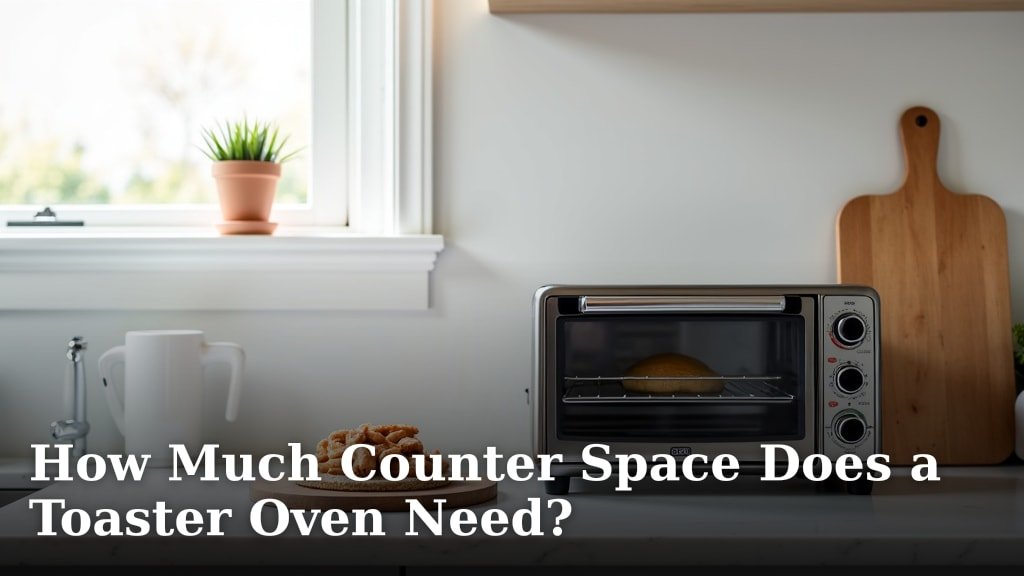
When figuring out how much counter space a toaster oven needs, plan for a minimum of 12 inches of depth and 15 inches of width. You also need to consider clearance for heat. Most toaster ovens require at least 4-6 inches of space above them for ventilation and to prevent heat damage to cabinets.
It’s not just about the oven’s footprint; it’s about creating a safe and functional kitchen zone. We found that adequate airflow prevents overheating and extends your appliance’s life. Think about where you’ll place it to ensure easy access for toasting and cleaning.
- Toaster ovens need at least 12 inches deep and 15 inches wide.
- Always allow 4-6 inches of vertical clearance.
- This space is for heat and air circulation.
- Placement matters for safe and easy use.
Let’s walk through exactly how much space you should budget for your toaster oven so it fits perfectly and works safely in your kitchen.
Figuring Out Your Toaster Oven’s Space Needs
So, you’re ready to bring a toaster oven into your kitchen! That’s fantastic. These versatile appliances can toast, bake, broil, and reheat. But before you hit “buy,” let’s talk about the real estate it will occupy. It’s not just about fitting it on the counter; it’s about making sure it works safely and efficiently for you. We’ve researched the common requirements, and planning ahead will save you headaches later.
You need to consider three main things: the footprint of the oven itself, the clearance needed for heat to escape, and the workspace around it. Think of it like finding a parking spot for a car – you need enough room for the vehicle, plus a little extra space to open doors and maneuver safely.
The Oven’s Footprint: More Than Meets the Eye
First, let’s look at the physical size of the toaster oven. They come in all shapes and sizes, from compact models that can handle just two slices of toast to larger ones that can fit a whole chicken. When you’re browsing, you’ll see dimensions listed as width, depth, and height.
You’ll typically need a counter space that’s at least 15 inches wide and 12 inches deep. This measurement is for the oven itself. Larger models might require 18 inches or more in width. Always double-check the manufacturer’s specifications for the model you’re interested in. We found that many common models hover around this 15×12 inch mark for the base.
Width: How Wide Does It Need to Be?
The width is usually the most significant dimension for counter placement. Think about how much room you have between your backsplash and the edge of your counter, or between other appliances. A 15-inch width is a good starting point for most standard toaster ovens. Some family-sized models can stretch to 18, 20, or even 22 inches wide.
Consider what you plan to cook. If you’re just toasting bread and bagels, a smaller width might suffice. But if you envision roasting small chickens or baking pizzas, you’ll likely need a wider oven, which means a wider counter footprint. We recommend measuring your intended spot before you shop to avoid surprises.
Depth: How Far Back Does It Go?
Depth is often overlooked, but it’s just as important. Most toaster ovens need about 12 inches of depth. This measurement includes the oven itself plus any handles or knobs that might stick out slightly. Ensure your counter is deep enough so the oven doesn’t overhang the edge.
An overhanging appliance isn’t just unsightly; it can be a safety hazard. You might bump into it, or it could easily fall. We found that a standard kitchen counter is usually around 25 inches deep, so a 12-inch deep oven typically fits well within this space, leaving room for other essentials.
Height: Will It Clear Your Cabinets?
While height primarily affects placement under cabinets, it’s worth noting for overall space planning. Even if you plan to keep your toaster oven on an open counter, understanding its height helps visualize its presence. We found that height usually ranges from 8 inches for compact models to over 16 inches for larger, convection-style ovens.
Essential Clearance: Letting Your Toaster Oven Breathe
This is arguably the most critical part of toaster oven placement. Toaster ovens generate heat, and they need space to dissipate it safely. Without proper ventilation, you risk damaging your countertops, cabinets, and even the appliance itself. Think of it like needing space around a heater – you don’t want to cover it up.
Top Clearance: The Sky’s the Limit (Almost!)
Most manufacturers recommend at least 4 to 6 inches of clearance above the toaster oven. This space allows hot air to escape freely. If you have cabinets hanging over your counter, this is where you’ll need to be particularly mindful. Check the oven’s manual, as some might require more or less space.
We’ve seen many kitchens where a toaster oven is crammed under low cabinets. This can cause cabinets to warp or discolor over time due to the constant heat exposure. It can also make the oven less efficient as it struggles to vent properly. If your cabinets are low, consider a model with a lower profile or designate an open counter spot.
Side and Back Clearance: Airflow is Key
Don’t forget the sides and the back! While the top is usually the most critical, many toaster ovens also need a few inches of space on the sides and behind them. This allows for better air circulation and prevents heat from building up against walls or other appliances.
Manufacturers often suggest around 2 to 4 inches of clearance for the sides and back. This ensures that the heat generated by the oven can escape efficiently. We found that placing a toaster oven directly against a wall or other appliance can lead to overheating and potential damage. Always check the owner’s manual for these specific recommendations.
Workspace Around the Oven: Functionality Matters
Beyond the oven’s direct footprint and ventilation needs, you need functional workspace. Think about how you’ll actually use the oven. Where will you place your food before putting it in? Where will you put the hot tray when you take food out? You need a safe and convenient area for these tasks.
We recommend having at least 12 inches of clear counter space next to your toaster oven. This provides a landing zone for hot dishes and a place to prep ingredients. It also makes cleaning the oven and the surrounding counter much easier. Imagine trying to place a hot pizza peel on a crowded counter – it’s a recipe for disaster!
Loading and Unloading: A Smooth Transition
When you open the door of your toaster oven, it swings down. This means you need space in front of the oven to accommodate the open door, plus room for you to stand there comfortably. If the oven is too close to the backsplash or other items, it can be awkward to access.
Consider the height of the oven door when it’s open. Does it clear any items on the counter in front of it? Does it allow you to easily slide trays in and out? We found that having ample space directly in front makes the entire process much smoother and safer. A good rule of thumb is to have at least 18-24 inches of clear space in front when the door is open.
Cleaning and Maintenance: Keeping It Tidy
Let’s be honest, cleaning is part of owning any kitchen appliance. You’ll need access to wipe down the interior, clean the crumb tray, and keep the exterior looking spick and span. If your toaster oven is pushed tightly against a wall or other appliances, cleaning can become a real chore.
Having some wiggle room around the appliance makes it easier to reach all the necessary spots. We found that dedicating a little extra space for cleaning can make a big difference in how often you actually do it. A clean appliance also tends to work better and last longer!
A Quick Checklist for Your Toaster Oven Space Planning
To make things super simple, here’s a quick checklist to help you visualize the space you’ll need:
- Oven Footprint: Measure the width and depth of your desired oven.
- Counter Depth: Ensure your counter is deep enough (at least 12″ for the oven + clearance).
- Counter Width: Make sure you have at least 15-18″ of width available.
- Top Clearance: Aim for 4-6″ of clear space above the oven.
- Side/Back Clearance: Allow 2-4″ for airflow on the sides and back.
- Workspace: Have 12″+ of clear space next to and 18-24″ in front of the oven.
Considering Different Countertop Layouts
Your kitchen layout plays a huge role in where your toaster oven can go. Some kitchens have long, open stretches of counter, while others are more compact with appliances tucked into corners.
Open Counter Space: The Ideal Scenario
If you’re lucky enough to have a generous expanse of countertop, you have more flexibility. You can place the toaster oven away from walls and cabinets, ensuring it gets excellent ventilation. This is the easiest scenario for meeting all clearance requirements.
We found that an island or a dedicated countertop section away from the main cooking zone is often perfect. This keeps your primary prep areas clear and gives the toaster oven its own functional spot. It also means the heat won’t interfere with other appliances.
Under Cabinets: A Common Challenge
This is where careful measurement is absolutely essential. If you plan to place your toaster oven under cabinets, you MUST confirm that the oven’s height, plus the required top clearance, fits comfortably beneath them. Many modern kitchens have cabinets set about 18 inches above the counter.
If your cabinets are lower, you might be limited to very compact toaster ovens or need to rethink placement entirely. Many experts advise against placing toaster ovens directly under cabinets if possible, due to the heat concerns (Cleveland Clinic). We’ve seen this cause discoloration even with minimal use.
Corner Placement: Is It Workable?
Corners can be tricky. While they might seem like a good place to tuck something away, they often lack adequate airflow. Placing a toaster oven in a corner might mean it’s too close to two walls, hindering side and back ventilation.
It can also make accessing the oven and cleaning it more difficult. If you do opt for a corner, ensure you pull the oven out sufficiently from both walls to allow for proper airflow. We recommend measuring the diagonal space available to see if it truly fits your needs.
Toaster Oven Size vs. Counter Space Needed
The size of the toaster oven itself is directly proportional to the counter space it requires. This seems obvious, but it’s worth breaking down.
| Toaster Oven Size | Typical Footprint (W x D) | Recommended Clearance (Top/Sides) | Ideal Counter Space Needed |
|---|---|---|---|
| Compact (2-slice) | 14″ x 10″ | 3-4″ / 2″ | ~18″ W x 16″ D (with landing space) |
| Medium (4-slice/small pizza) | 16″ x 12″ | 4-6″ / 3″ | ~20″ W x 18″ D (with landing space) |
| Large (9×13 pan/12″ pizza) | 18-20″ x 14″ | 6″ / 4″ | ~24″ W x 20″ D (with landing space) |
As you can see from the table, larger ovens demand more real estate. This includes the oven’s physical dimensions, the necessary ventilation, and the practical workspace you’ll need around it. We found that planning for the “Ideal Counter Space Needed” column provides the most comfortable and safe user experience.
Conclusion
You’ve learned that fitting a toaster oven involves more than just its physical size. Proper clearance for heat and ample workspace are just as important for safety and function. We’ve seen that by planning for about 15-18 inches of width, 12 inches of depth, and essential top and side ventilation (4-6 inches above, 2-4 inches on sides/back), you create a great setup. Don’t forget the 12+ inches of landing space next to it for convenient prep and hot item placement. Your next step is to measure your current counter space and compare it to the requirements of the toaster oven you’re eyeing. Doing this ensures your new appliance will be a perfect, safe fit in your kitchen!
Frequently Asked Questions
What’s the minimum counter space needed for a compact toaster oven?
For a compact toaster oven, plan for a footprint of about 14 inches wide by 10 inches deep. You’ll still need around 3-4 inches of clearance above and 2 inches on the sides for ventilation. We recommend having at least 18 inches of width and 16 inches of depth available to accommodate these needs plus a small landing area.
Can I place my toaster oven directly on a granite countertop?
Yes, you can place a toaster oven directly on granite countertops. Granite is heat-resistant and durable. However, you must still ensure you provide the recommended clearance for ventilation to prevent heat damage to your cabinets and the oven itself.
How much space do I need in front of the toaster oven?
You’ll want about 18-24 inches of clear space directly in front of your toaster oven. This allows enough room for the door to open fully, for you to stand comfortably, and to safely place or remove items like hot trays without obstruction.
What happens if I don’t provide enough top clearance for my toaster oven?
Insufficient top clearance can lead to overheating. The trapped heat can damage your cabinets, causing discoloration or warping. It can also make the toaster oven less efficient and potentially shorten its lifespan by straining its components.
Is it okay to use a toaster oven on a wooden cutting board?
While a wooden cutting board can offer some protection, it’s generally not recommended as a permanent solution. Toaster ovens generate significant heat that could still damage the board or the counter beneath it over time. Always ensure proper ventilation is maintained regardless of what surface you use.
