
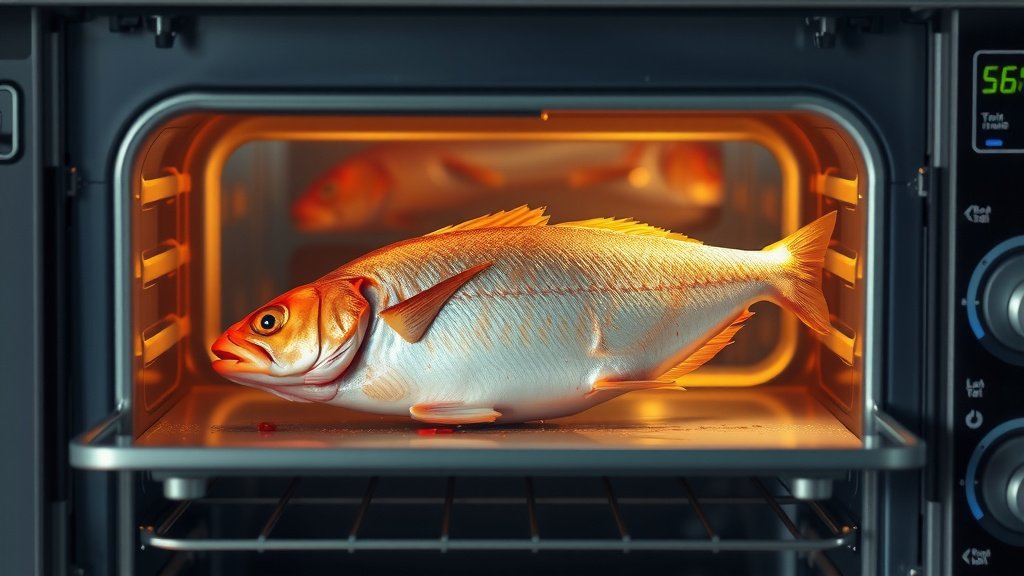
To cook a whole fish in a gas oven, you’ll want to preheat your oven to around 400°F (200°C), making sure to clean and season your fish well, then roast it until the flesh is opaque and flakes easily.
For a moist result, stuff the fish with aromatics like lemon and herbs, place it on a prepared baking sheet, and consider covering it loosely with foil for part of the cooking time.
- Preheat your gas oven to 400°F (200°C) for even cooking.
- Clean and score the whole fish to help it cook uniformly and absorb flavors.
- Stuff the fish cavity with aromatics like lemon slices, herbs, and garlic.
- Roast on a lined baking sheet, covering with foil initially to retain moisture.
- Check for doneness when the internal temperature reaches 145°F (63°C) or the flesh flakes.
How To Cook A Whole Fish In A Gas Oven?
Cooking a whole fish in a gas oven means you’re aiming for a perfectly tender inside with a slightly crispy skin. The key is controlling the heat and adding moisture.
You’ll want to prepare your fish with care, get your oven ready, and then roast it until it’s beautifully cooked through.
Why Choose a Gas Oven for Your Whole Fish?
Many home cooks swear by gas ovens for their roasting jobs, and for good reason. Gas ovens often create a **moister cooking environment** compared to electric models.
This can be a real plus when you’re cooking something delicate like a whole fish, helping to prevent it from drying out.
Understanding Gas Oven Heat
Gas ovens tend to have a “wet” heat because of the combustion process. This humidity can actually **benefit your fish**, keeping it succulent.
However, they can also have hot spots. Rotating your fish halfway through cooking can help ensure **even browning and doneness** (Cleveland Clinic).
Selecting and Preparing Your Whole Fish
The journey to a delicious whole fish starts long before it hits the oven. Choosing a fresh fish and prepping it properly makes all the difference.
Think of it as laying the **perfect foundation** for your culinary masterpiece.
Picking the Freshest Catch
When you’re at the fish counter, look for bright, clear eyes, red gills, and firm, shiny skin. The fish should smell like **clean ocean water**, not “fishy.”
Many experts recommend cooking fresh fish within a day or two of purchase for the **best flavor and texture**.
Cleaning and Scoring the Fish
First, rinse your fish under cold water, inside and out. Pat it completely dry with paper towels; this helps the skin get crispy later.
Next, use a sharp knife to make 2-3 shallow diagonal slits across each side of the fish. These scores help **heat penetrate faster** and let your seasonings truly sink in.
Seasoning for Maximum Flavor
Don’t be shy with your seasonings! A generous rub of salt, black pepper, and maybe some garlic powder is a great start.
You can also use fresh herbs like rosemary or thyme, and citrus slices (lemon or orange) both inside the cavity and nestled around the fish.
Gathering Your Essential Cooking Tools
Having the right tools on hand makes the cooking process much smoother. You wouldn’t build a house without the right hammer, right?
A few key items will **set you up for success** when roasting your whole fish.
The Right Roasting Pan Makes a Difference
Choose a baking sheet or roasting pan large enough to hold your whole fish without crowding it. Line it with parchment paper or aluminum foil for **easy cleanup**.
If you have a wire rack that fits inside, even better! This allows air to circulate around the fish, encouraging **crispier skin all around**.
Don’t Forget Your Meat Thermometer
A reliable instant-read meat thermometer is your best friend here. It takes the guesswork out of knowing when your fish is perfectly cooked.
We found that many chefs consider this tool **essential for food safety** and optimal texture (USDA).
Step-by-Step Guide to Roasting Your Fish
Alright, you’ve prepped your fish and gathered your gear. Now, let’s get down to the actual roasting. It’s simpler than you might think!
Follow these steps, and you’ll be enjoying a **restaurant-quality meal** in no time.
Preheat Your Gas Oven Correctly
Always preheat your oven. Set your gas oven to 400°F (200°C) and let it fully come to temperature. This takes about 15-20 minutes.
A preheated oven ensures your fish starts cooking immediately at the right temperature, leading to **more even results**.
Adding Aromatics and Stuffing
Inside the fish cavity, place lemon slices, a few sprigs of fresh parsley or dill, and crushed garlic cloves. This infuses incredible flavor from the inside out.
You can also drizzle a little olive oil over the fish and place additional lemon slices or herbs on top before cooking.
The Perfect Roasting Temperature and Time
Roast your fish at 400°F (200°C). The cooking time will depend on the size and thickness of your fish. As a general guide:
| Fish Weight | Approximate Roasting Time at 400°F (200°C) |
|---|---|
| 1-2 pounds (0.45-0.9 kg) | 15-20 minutes |
| 2-3 pounds (0.9-1.36 kg) | 20-25 minutes |
| 3-4 pounds (1.36-1.8 kg) | 25-30 minutes |
Many experts suggest roasting for about 10 minutes per inch of thickness at its thickest point (FDA).
Ensuring a Perfectly Moist and Flaky Result
Nobody wants a dry, tough fish. The goal is a delicate, moist texture that melts in your mouth. Let’s talk about how to achieve that.
A couple of tricks can **make all the difference** in your final dish.
To Cover or Not to Cover?
For the first half of the cooking time, you might want to loosely tent the fish with foil. This traps steam and helps **keep the fish moist**.
Then, remove the foil for the last 5-10 minutes to allow the skin to **crisp up beautifully**.
Checking for Doneness Like a Pro
The best way to check for doneness is with your instant-read thermometer. Insert it into the thickest part of the fish, avoiding the bone.
The internal temperature should reach 145°F (63°C) for safe consumption (USDA).
- The flesh should look **opaque and white**.
- It should **flake easily** with a fork.
- The skin, if uncovered, should be **slightly crispy**.
- The eyes, if left in, might turn **white and cloudy**.
- No raw, translucent spots should remain.
Troubleshooting Common Whole Fish Roasting Challenges
Even seasoned cooks run into hiccups sometimes. Don’t worry if your first attempt isn’t perfect.
Knowing how to fix common issues means you’re **prepared for anything**.
Preventing a Dry Fish Disaster
If your fish seems dry, you might have overcooked it. Next time, pull it from the oven as soon as it hits 145°F (63°C).
Basting it with pan juices, olive oil, or even white wine every 10 minutes can also help **keep it hydrated** during cooking.
Handling Uneven Cooking
Gas ovens can have hot spots. If one side of your fish is cooking faster, simply rotate the pan halfway through the roasting time.
Also, ensure your fish is **similar in thickness** throughout, or adjust placement if one end is much thinner.
Conclusion
Cooking a whole fish in your gas oven is a rewarding experience that offers delicious results. From choosing the freshest catch to the final check for doneness, each step contributes to a meal that’s both impressive and satisfying.
With the right preparation and a bit of attention to detail, you’ll master this technique and create memorable dishes for your table. Enjoy the process and savor the incredible flavor!
FAQs About Cooking Whole Fish
Do I need to descale a whole fish before cooking?
Yes, it’s generally a good idea to descale your fish before cooking, especially if you plan to eat the skin. Descaling prevents tiny, unpleasant scales from ending up in your meal. Your fishmonger can often do this for you, or you can easily do it yourself with a fish scaler or the back of a knife.
How do I know if my whole fish is undercooked without a thermometer?
While a thermometer is best, you can check for doneness by inserting a knife into the thickest part of the fish near the bone. If the flesh appears opaque and flakes easily when gently pulled with a fork, it’s likely cooked through. If it’s still translucent or resists flaking, it needs more time.
Can I stuff the fish with anything other than lemons and herbs?
Absolutely! Get creative with your stuffing. Sliced onions, fennel, bell peppers, or even thin slices of potatoes can add wonderful flavor and moisture. Just be sure not to overstuff the cavity, as this can hinder even cooking.
What if my fish skin sticks to the pan?
To prevent sticking, make sure you thoroughly oil your roasting pan or, even better, use parchment paper underneath the fish. A wire rack is also excellent for preventing sticking and promoting even browning. Ensure your oven is fully preheated before placing the fish inside.
What kind of whole fish works best for gas oven roasting?
Many types of whole fish roast beautifully in a gas oven. Popular choices include snapper, branzino, trout, sea bass, or even a smaller salmon. Look for fish that are firm-fleshed and fit comfortably in your roasting pan. The most important thing is starting with a fresh, good-quality fish.
