
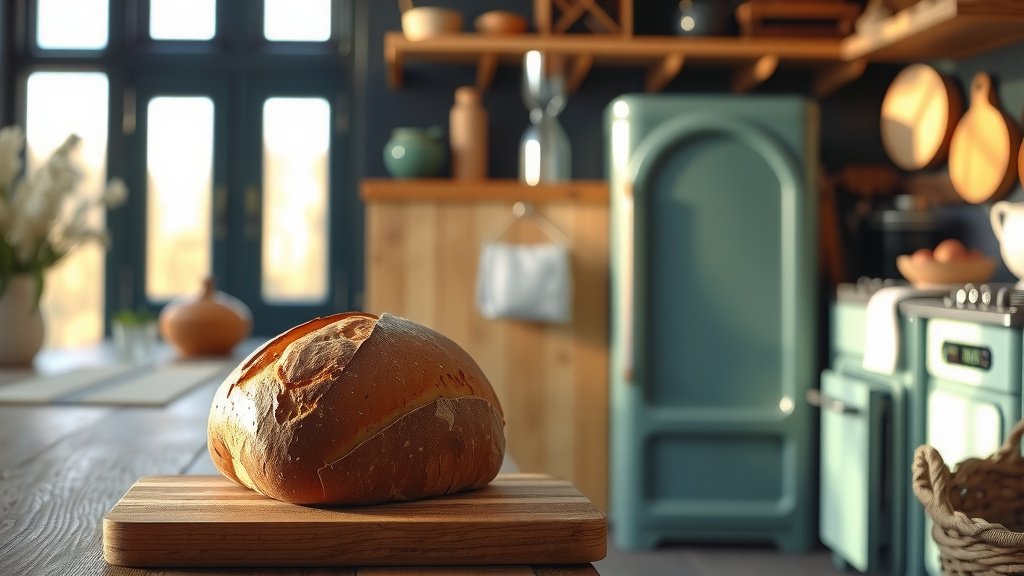
Making sourdough bread in a gas oven is absolutely possible by understanding its unique heating patterns and adjusting your technique accordingly. You can achieve a beautiful crust and airy crumb with specific tricks to manage heat and moisture.
While gas ovens might pose a few challenges like uneven heat distribution and dry air, with the right approach, you’ll be baking artisan-quality sourdough loaves like a pro.
- Gas ovens require specific adjustments to achieve ideal sourdough results.
- Managing inconsistent heat and maintaining moisture are your primary focus points.
- A Dutch oven or other enclosed baking method becomes your best friend.
- Preheating thoroughly and using accurate temperature gauges are essential steps.
- Don’t be afraid to experiment with your oven’s “sweet spots” for even baking.
How To Make Sourdough Bread In Gas Oven?
Making delicious sourdough bread in a gas oven often requires a slightly different approach than an electric oven, mainly due to how gas ovens generate and distribute heat. You can absolutely achieve a fantastic loaf by understanding and adapting to these differences.
Understanding Your Gas Oven’s Personality
Every oven has its quirks, and gas ovens are no exception. They typically heat with a flame at the bottom, which can lead to hot spots and less consistent temperatures compared to electric models. You might notice your bread browning faster on the bottom, for instance.
Another common characteristic of gas ovens is their tendency to be drier. The combustion process uses oxygen and releases moisture, often venting it out. This dryness can affect your sourdough’s crust development.
The Power of Preheating: Go Long and Strong
For sourdough, a consistently hot oven is non-negotiable. Gas ovens can take longer to reach and stabilize their set temperature. We found that extending your preheating time significantly helps.
Aim for at least 45 minutes to an hour, even after your oven light indicates it’s ready. This allows the heat to saturate the oven walls and your baking vessel (like a Dutch oven) completely.
Your Sourdough’s Best Friend: The Dutch Oven
A Dutch oven is arguably the most valuable tool for gas oven sourdough. It creates a contained, steamy environment that mimics a professional baker’s oven. This traps steam around your dough, preventing the crust from setting too quickly.
Many experts say this steaming period is critical for oven spring, allowing your loaf to expand fully before the crust hardens (Culinary Institute of America research).
Choosing the Right Dutch Oven Size
Select a Dutch oven that is snug but not too tight for your loaf. A 5-quart round or oval Dutch oven is often ideal for a standard-sized sourdough boule. You want enough room for expansion, but not so much that steam escapes easily.
Managing Moisture: Beyond the Dutch Oven
While a Dutch oven is excellent, you might want extra moisture for an even crisper crust, especially if you’re baking without one. You can try a few simple tricks to introduce steam into your gas oven. Adding a tray of hot water to the bottom rack can help humidify the environment.
Some bakers also recommend spritzing the oven walls with water (carefully!) during the first few minutes of baking. Remember, steam creates that beautiful crackly crust you’re looking for.
Dealing with Hot Spots: Rotation and Observation
Gas ovens often have uneven heating. You might find one corner or side is hotter than another. We found that rotating your sourdough loaf halfway through the baking process helps ensure even browning.
Pay close attention to how your bread is coloring. If one side is browning too quickly, a quick turn can save it. Think of it like rotating a steak on a grill.
Using an Oven Thermometer
Never rely solely on your oven’s built-in thermometer. We’ve often found they can be off by as much as 50 degrees Fahrenheit. A separate, oven-safe thermometer gives you a true reading of your oven’s internal temperature.
| Gas Oven Sourdough Challenge | Effective Solution |
|---|---|
| Uneven Heat Distribution | Thorough preheating, rotate loaf, use oven thermometer. |
| Dry Oven Environment | Use a Dutch oven, add a tray of hot water, spritz walls. |
| Bottom Browning Too Quickly | Place a baking steel/stone on a lower rack, slightly raise Dutch oven. |
| Lack of Oven Spring | Ensure adequate steam during initial bake, maintain high heat. |
Baking Temperatures and Timings
The general baking temperature for sourdough is usually around 450-500°F (232-260°C). With a gas oven, you might need to experiment to find your ideal setting. Some bakers lower the temperature slightly after the initial covered bake to prevent over-browning.
Start with 20 minutes covered at high heat, then uncover and bake for another 25-35 minutes, potentially at a slightly reduced temperature (e.g., 425°F or 220°C). Adjust based on your loaf’s color and internal temperature (aim for 200-210°F or 93-99°C).
Adjusting Rack Placement
Since gas ovens heat from the bottom, placing your Dutch oven on the middle or even upper-middle rack can prevent the bottom of your loaf from burning. Many experts suggest this helps distribute heat more evenly around the dough.
If you find the top of your loaf isn’t browning enough, you can move it to a higher rack for the last 5-10 minutes (carefully!).
A Quick Checklist for Gas Oven Sourdough Success:
- Preheat your oven and Dutch oven for at least 45-60 minutes.
- Use an oven thermometer to verify true temperature.
- Bake in a Dutch oven with the lid on for the first 20-25 minutes.
- Add a tray of hot water for extra steam if not using a Dutch oven.
- Rotate your loaf halfway through the uncovered baking time.
- Keep an eye on the crust for even browning.
Don’t Be Afraid to Experiment!
Baking sourdough, especially in a gas oven, is a journey of discovery. Your first loaf might not be perfect, and that’s totally okay! Each oven is unique, and you’ll learn its nuances over time. Think of each bake as a valuable lesson.
Many baking forums are filled with home bakers sharing their gas oven triumphs and tips. You’re part of a supportive community. Keep notes about what works best in your specific oven.
Conclusion
Baking beautiful sourdough bread in a gas oven is entirely achievable with a bit of understanding and some smart adjustments. By focusing on thorough preheating, leveraging the power of a Dutch oven for steam, and intelligently managing your oven’s heat, you’ll overcome any initial challenges.
Don’t let the “gas oven stigma” deter you. With patience, keen observation, and the practical tips we’ve discussed, you’ll soon be pulling out golden, crusty, and delicious sourdough loaves that will impress everyone, including yourself!
How do I prevent the bottom of my sourdough from burning in a gas oven?
To prevent a burned bottom, try placing your Dutch oven on a middle or upper-middle rack. You can also place a baking steel or a heavy baking stone on a rack below your Dutch oven to act as a heat shield, diffusing the direct heat from the gas burner.
Can I get good oven spring without a Dutch oven in a gas oven?
Yes, you can still achieve good oven spring without a Dutch oven in a gas oven, though it requires more effort to create steam. Place a metal tray on the bottom rack with a cup of boiling water at the start of baking. You can also carefully spritz the oven walls with water during the first 10 minutes, ensuring the oven door is closed quickly to trap the steam.
What is the ideal internal temperature for a finished sourdough loaf?
A perfectly baked sourdough loaf typically reaches an internal temperature of 200-210°F (93-99°C). Use an instant-read thermometer inserted into the center of the loaf to check for doneness. This ensures a fully cooked crumb and proper texture.
My sourdough crust is too pale in my gas oven. What can I do?
If your crust is too pale, try extending the uncovered baking time by 5-10 minutes, or increasing the temperature slightly during the final stage of baking (e.g., to 450°F or 232°C). Ensure your oven is fully preheated, and consider moving the loaf to a higher rack for the last few minutes for more direct heat on top.
How long should I let my sourdough cool before slicing?
You should let your sourdough loaf cool completely on a wire rack for at least 2-4 hours, or even longer for larger loaves, before slicing. Slicing too early can result in a gummy texture inside because the internal cooking process continues as it cools, and moisture needs to redistribute evenly.
