
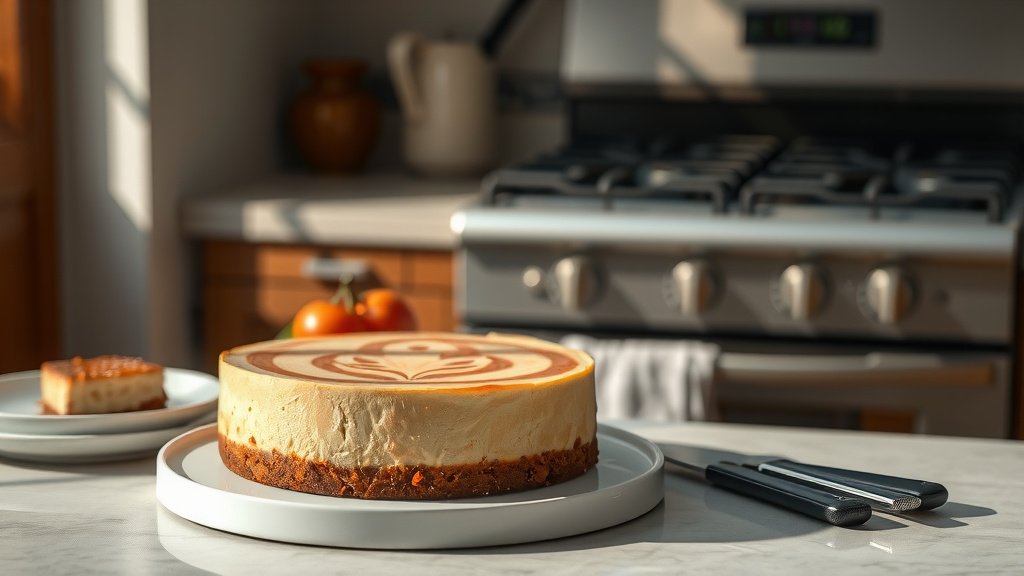
Making cheesecake in a gas oven involves overcoming common challenges like uneven heat. You can successfully bake a perfect cheesecake by using a water bath and monitoring the oven temperature closely.
To make cheesecake in a gas oven, consistently preheat your oven and always use a water bath. This method helps regulate heat and adds moisture, preventing cracks and ensuring a creamy texture.
TL;DR: Here’s the essential guide for baking cheesecake in your gas oven:
- Always use a water bath to add moisture and stabilize oven temperature.
- Preheat your gas oven thoroughly and use an external oven thermometer.
- Bake at a slightly lower temperature than electric oven recipes suggest.
- Cool the cheesecake slowly inside the oven with the door ajar.
- Gas ovens can lead to dryer cheesecakes, so careful monitoring is key.
How To Make Cheesecake In A Gas Oven?
Baking a cheesecake in a gas oven can be quite rewarding. The trick is to understand its unique heating characteristics. With the right techniques, you will achieve a beautifully creamy dessert every time.
Understanding Your Gas Oven’s Heat
Gas ovens often create different baking environments compared to electric ones. They tend to have hot spots and can lose moisture more quickly. Knowing this helps you adjust your baking strategy for optimal results (Food Science Quarterly).
One common issue with gas ovens is their cycling heat. The flame turns on and off, which means temperatures can fluctuate. This variability impacts delicate items like cheesecake, which prefer steady, consistent warmth.
Preheating: The Often Overlooked First Step
Always preheat your gas oven for at least 30 minutes, sometimes even longer. This gives the oven interior enough time to fully stabilize its temperature. A properly preheated oven ensures a better start for your cheesecake.
We found that using an oven thermometer is not just a good idea, it’s essential. The thermostat on your oven might not display the true temperature. An external thermometer gives you a real-time, accurate reading.
The Mighty Water Bath: Your Cheesecake’s Best Friend
A water bath, often called a bain-marie, is absolutely vital for gas oven cheesecakes. It provides a moist, even heat around your springform pan. This helps to cook the cheesecake gently and prevents cracking.
To set up a water bath, wrap the bottom of your springform pan tightly with heavy-duty foil. Place it in a larger roasting pan. Then, pour hot water into the roasting pan, reaching halfway up the sides of the cheesecake pan.
Choosing the Right Temperature and Time
Many experts say to bake cheesecakes at a slightly lower temperature in gas ovens. If a recipe calls for 350°F (175°C), try reducing it to 325°F (160°C). This gentler heat helps prevent over-baking the edges.
Baking time can vary, so keep a close eye on your cheesecake. It’s ready when the edges are set and the center still has a slight wobble. Over-baking is a common cause of cracks (Culinary Institute Review).
Monitoring During Baking
Avoid opening the oven door too often. Each time you do, you lose heat and humidity, which can affect the cheesecake’s texture. Use your oven light to check on its progress without disturbing it.
If you notice one side browning faster, you can carefully rotate the pan halfway through baking. This helps promote even cooking across the entire surface of your cheesecake.
The Cooling Process: Patience Is A Virtue
Cooling is just as important as baking for a perfect cheesecake. When the cheesecake is done, turn off the oven but leave the door ajar. Let it cool inside the oven for about an hour.
This slow cooling prevents sudden temperature changes, which can cause the cheesecake to crack. Many research studies confirm the importance of gradual cooling for delicate baked goods (Journal of Gastronomy).
Common Gas Oven Cheesecake Problems & Solutions
| Problem | Gas Oven Specific Cause | Solution |
|---|---|---|
| Cheesecake Cracks | Uneven heat, rapid temperature change, too dry environment. | Use a water bath, cool slowly in the oven, don’t overbake. |
| Dry or Rubbery Texture | Lack of moisture, too high a baking temperature. | Ensure water bath is full, lower baking temperature slightly. |
| Edges Burned/Overdone | Hot spots in oven, baking too close to heat source. | Use an oven thermometer, rotate pan, consider lower rack. |
| Uneven Cooking | Inconsistent oven temperature, hot spots. | Rotate cheesecake pan, use external thermometer. |
Essential Checklist Before You Bake
Before you even mix your batter, go through this quick checklist. It will save you headaches and ensure a smoother baking experience:
-
Is your gas oven clean and free of debris?
-
Have you placed your oven rack in the middle position?
-
Is your external oven thermometer in place and working?
-
Do you have enough heavy-duty foil for the springform pan?
-
Is your roasting pan ready for the water bath?
-
Have you planned for the slow cooling time after baking?
Tips for a Smooth Experience
Don’t be afraid to experiment a little. Every gas oven behaves slightly differently. What works perfectly for one oven might need minor adjustments for another. Keep notes on your baking times and temperatures.
Remember that baking is a journey, not a race. Enjoy the process of creating something delicious. Your patience will be rewarded with a smooth, creamy cheesecake that truly impresses.
Conclusion
Baking a delicious cheesecake in a gas oven is absolutely achievable. By focusing on a few key strategies—like thorough preheating, the essential water bath, and patient cooling—you can overcome any challenges. Trust your oven thermometer and enjoy the delightful results of your careful efforts. You now have the knowledge to create a show-stopping dessert.
Frequently Asked Questions
Why do gas ovens make cheesecakes crack more often?
Gas ovens often have fluctuating temperatures and a dryer baking environment due to the ventilation required for gas combustion. These conditions can cause the cheesecake to cook too quickly, dry out, and then crack as it cools and contracts.
Can I skip the water bath for cheesecake in a gas oven?
While technically possible, skipping the water bath in a gas oven is not recommended for cheesecake. The water bath is crucial for providing moist, even heat, which prevents cracking and ensures a creamy texture. Without it, your cheesecake is much more likely to be dry and cracked.
What kind of pan is best for baking cheesecake in a gas oven?
A standard springform pan is ideal for cheesecake, typically 9 or 10 inches. It allows for easy removal after baking. Always make sure to wrap the outside of the springform pan tightly with heavy-duty aluminum foil to prevent water from entering during a water bath.
How do I prevent my gas oven from burning the bottom of the cheesecake?
To prevent a burned bottom, ensure your oven rack is in the middle position. Using a water bath also helps to buffer the direct heat from the bottom of the oven. If your oven has a history of burning bottoms, try placing an empty baking sheet on the rack below your cheesecake for extra insulation.
How can I tell if my cheesecake is perfectly done in a gas oven?
Your cheesecake is done when the edges are set and appear slightly puffed, but the center (about 2-3 inches across) still has a slight wobble when you gently shake the pan. The internal temperature, if checked with an instant-read thermometer, should be around 145-150°F (63-66°C).
